Amazon has entered a multi-year commercial agreement with Boston-based Transaera to deploy the startup's high-efficiency Dedicated Outdoor Air Systems (DOAS) across its global network of logistics facilities and buildings - one of the largest single-portfolio HVAC decarbonization commitments by a corporate real estate operator to date. The agreement, announced May 5, 2026, follows a successful six-month field trial at an Amazon logistics facility in Houston, with results validated through independent third-party analysis. The deal positions Transaera's Metal Organic Framework (MOF)-based dehumidification technology as a core component of Amazon's strategy to reach net-zero carbon emissions by 2040 under its Climate Pledge.
Background
HVAC systems account for over one-third of energy use in commercial buildings, according to Transaera CEO and Co-founder Sorin Grama. As Amazon expands its global footprint of warehouses, fulfillment centers, and data-intensive campuses, the company faces mounting pressure to reduce the energy intensity of its real estate operations. According to the International Energy Agency, buildings account for 30 percent of global energy consumption and 26 percent of global energy-related emissions.
The agreement also intersects with tightening refrigerant regulations. Starting January 1, 2025, the U.S. Environmental Protection Agency implemented restrictions on the use of higher global-warming-potential (GWP) hydrofluorocarbons (HFCs) in new refrigeration, air conditioning, and heat pump equipment under the AIM Act. Facilities managers overseeing large commercial portfolios now face parallel pressures: decarbonizing existing HVAC infrastructure while ensuring new installations comply with evolving federal and state standards. For further context on how refrigerant policy is reshaping procurement strategies, see the earlier analysis Global HVAC Market Shaping Toward Low-GWP Refrigerants and Efficiency by 2035.
Technology and Deployment Details
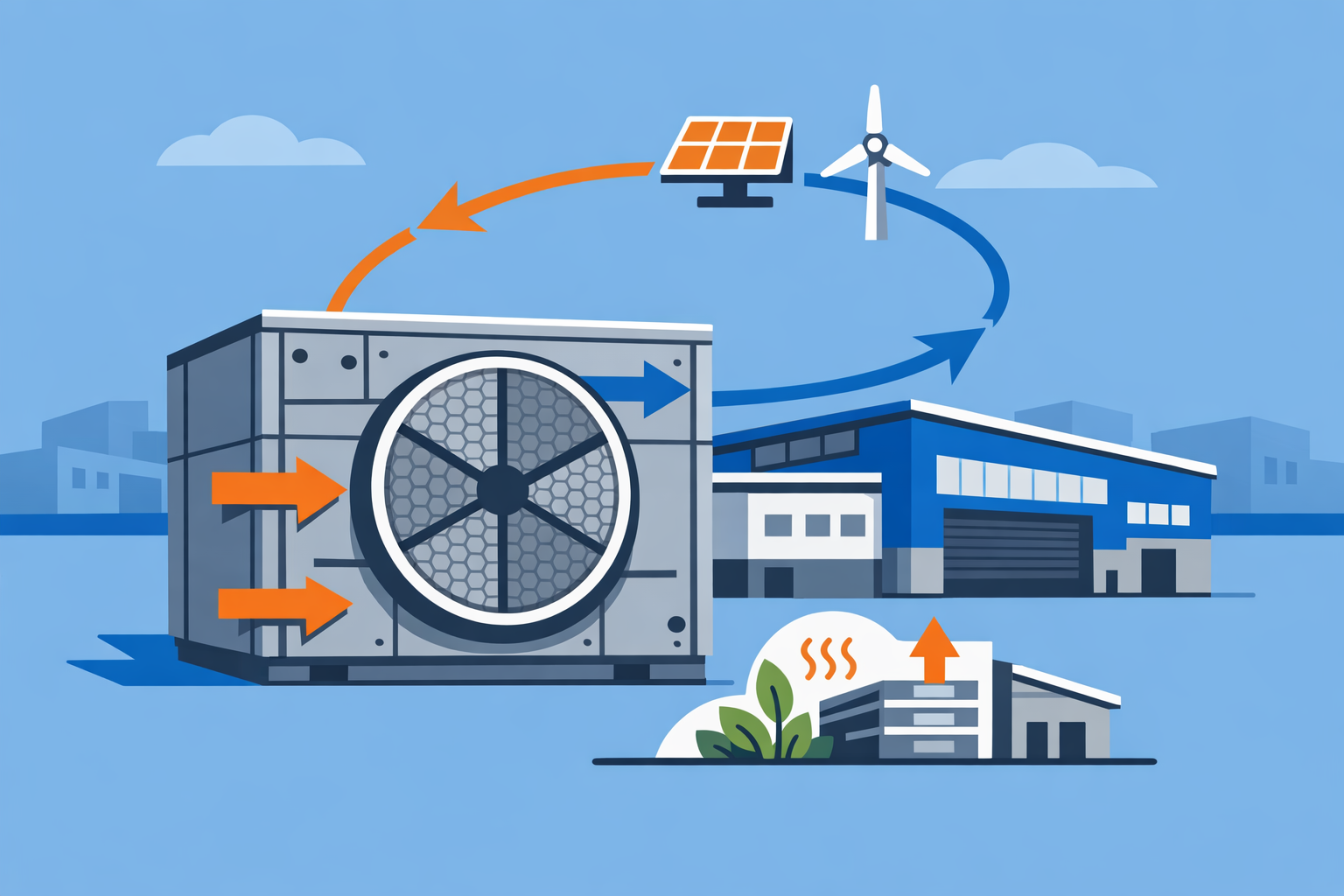
Transaera's system departs from conventional rooftop HVAC design. Rather than overcooling air to remove moisture - a process standard in conventional packaged direct expansion (DX) systems - Transaera uses Metal Organic Frameworks, a family of solid desiccant materials whose discoverers received the 2025 Nobel Prize, to extract humidity before the cooling stage. The process relies on a spinning desiccant wheel that absorbs incoming moisture; stale indoor exhaust air then regenerates the wheel by driving captured water back outside.
The company's DOAS units are engineered as drop-in replacements, matching the rooftop footprint and weight of legacy systems, requiring no structural modifications or roof retrofits. Transaera states the system delivers approximately 40% energy savings compared to conventional packaged DX-only systems and has demonstrated more than double the current federal minimum efficiency standard for moisture removal. The systems function as heat pumps capable of cooling, heating, and dehumidifying without reliance on natural gas reheat, aligning with commercial electrification mandates.
Total customer purchase targets now stand in the nine-figure range, according to Transaera. Under the agreement, Transaera will dedicate a portion of its U.S.-based manufacturing output to Amazon's deployment needs, building a domestic supply chain the company says supports skilled manufacturing jobs.
For service contractors, the maintenance profile is designed to remain familiar: Transaera states that existing HVAC technicians can service the units without specialized training, as maintenance follows standard HVAC protocols. That claim will face scrutiny as deployments scale across geographically and climatically diverse sites.
Amazon's Director of Global Energy, Sustainability, and AGV, Asad Jafry, described the progression: "Our work with Transaera has moved from field trial to readiness for first commercial use, and this new collaboration supports expanding use of this technology within our global network of buildings," Jafry stated.
Outlook
The Amazon-Transaera agreement sets a benchmark that other large commercial real estate operators - including logistics networks, retail chains, and institutional property managers - are likely to reference when structuring their own HVAC retrofit programs. For HVAC professionals navigating enterprise procurement, interoperability with existing building management systems and controls platforms will be a key integration challenge as deployment scales beyond the pilot phase. Coverage of how interoperable, IoT-enabled systems are reshaping commercial building automation is available in MCE 2026 Showcases Broad HVAC Innovations: Industry Signals Interoperability and Regional Architecture Shifts. Transaera was founded in 2018 by MIT engineers and materials scientists and is focused on scalable cooling solutions for commercial buildings worldwide.