A surge in regulatory mandates emphasizing energy efficiency and low-global-warming-potential (GWP) refrigerants is influencing investment and workforce trends in the global HVAC sector through 2035, according to industry forecasts. Multiple reports project increasing capital allocation to sustainable HVAC technologies, with broad impacts on employment and supply chains across commercial and industrial markets.
Background
The Kigali Amendment to the Montreal Protocol, the EU's F-Gas Regulation targeting an 85% HFC reduction by 2036, and the U.S. AIM Act are driving a worldwide shift to low-GWP refrigerants, including HFOs, hydrocarbons, ammonia, and CO₂. These policies reinforce energy efficiency standards for new installations, such as heat pumps and chillers. The HVAC industry is responding with product redesigns, expanded training, and revised supply strategies to meet these requirements.
Details
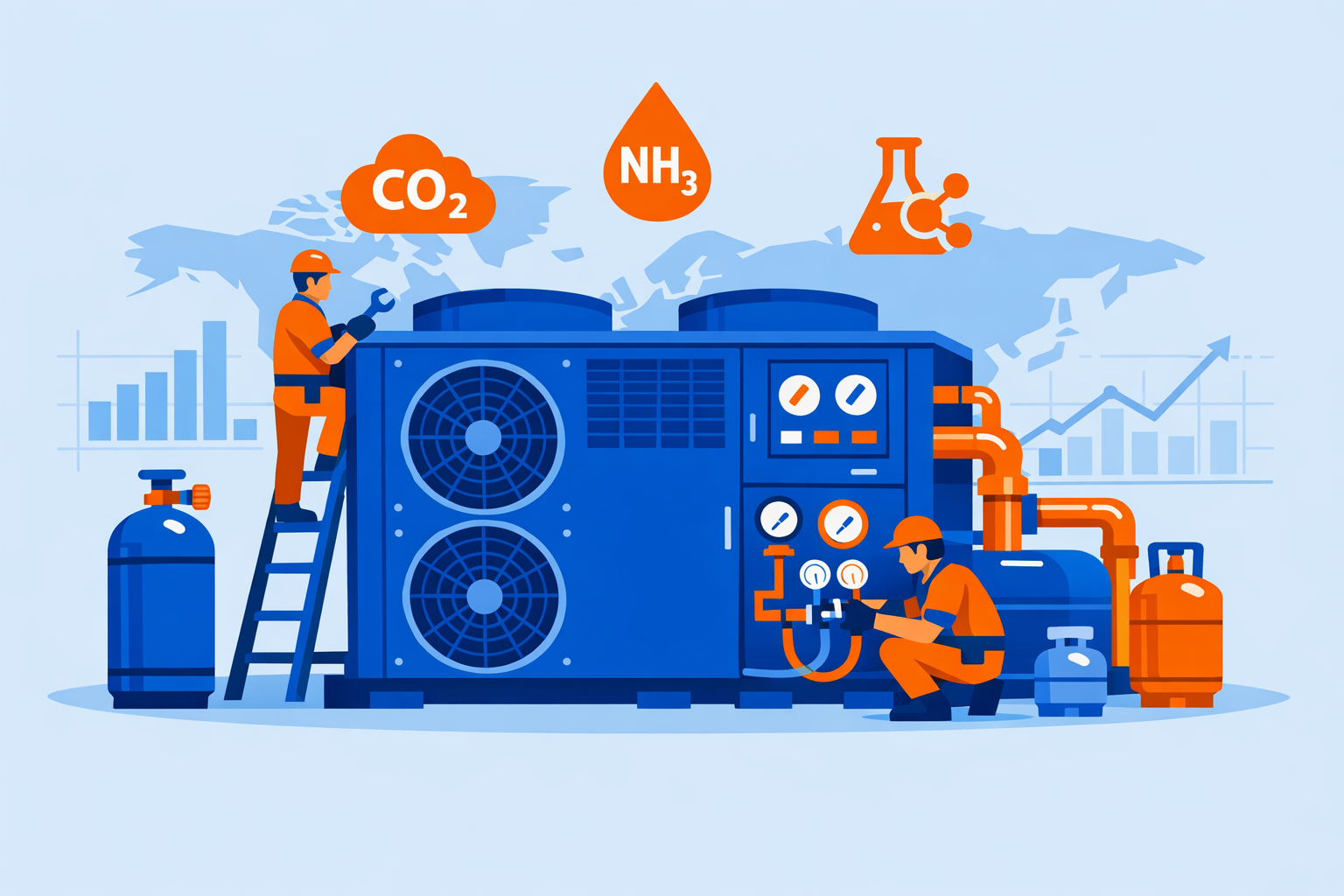
The low-GWP refrigerants market is expected to grow from roughly USD 31.8 billion in 2024 to an estimated USD 106 billion by 2035, indicating a compound annual growth rate (CAGR) of 11.5%. Growth is primarily attributed to regulatory requirements and increasing sustainability commitments. Major producers, including Honeywell, Chemours, and Daikin, are ramping up investments in HFO blends and natural refrigerant technologies. Honeywell has pledged more than USD 1 billion to its Solstice HFO line, including collaborations with manufacturers such as Bosch to deploy low-GWP refrigerants in heat pump platforms. In commercial and industrial refrigeration, low-GWP applications are expanding, with the industrial sector projected to grow at a CAGR of 12.1%. Natural refrigerants like CO₂ and ammonia are gaining traction in food processing, pharmaceuticals, and chemical manufacturing.
Regional policy initiatives reinforce these trends. In Germany, approximately EUR 3.5 billion in subsidies have supported the sale of about 1.2 million residential heat pumps utilizing propane (R-290) refrigerants. The EU's F-Gas Regulation, aligned with the Kigali timeline, imposes strict quotas on high-GWP HFCs. In Asia-Pacific, policies-including India's 3.5 ISEER minimum for split ACs effective January 2025-are accelerating adoption of R-32 and HFO blends. China has allocated CNY 50 billion to upgrade cold-chain systems using ammonia and CO₂ technologies. North America, through EPA SNAP measures and AIM Act requirements, is phasing down high-GWP HFCs to below GWP 150. These developments are prompting manufacturers to retool operations and installers to gain new refrigerant-specific qualifications.
Outlook
Through 2035, capital investment and workforce strategies are projected to increasingly follow regulatory milestones, prioritizing low-GWP refrigerants and energy-efficient solutions. HVAC manufacturers are focusing on R&D and workforce training, while installers and technicians adopt new refrigerant handling practices and safety protocols, as compliance requirements tighten.