South Korean energy company S-Oil unveiled a dedicated immersion cooling solution for data centers at HVAC Korea 2026 in Seoul this week, marking a significant entry by a domestic petrochemical major into the fast-evolving thermal management sector.
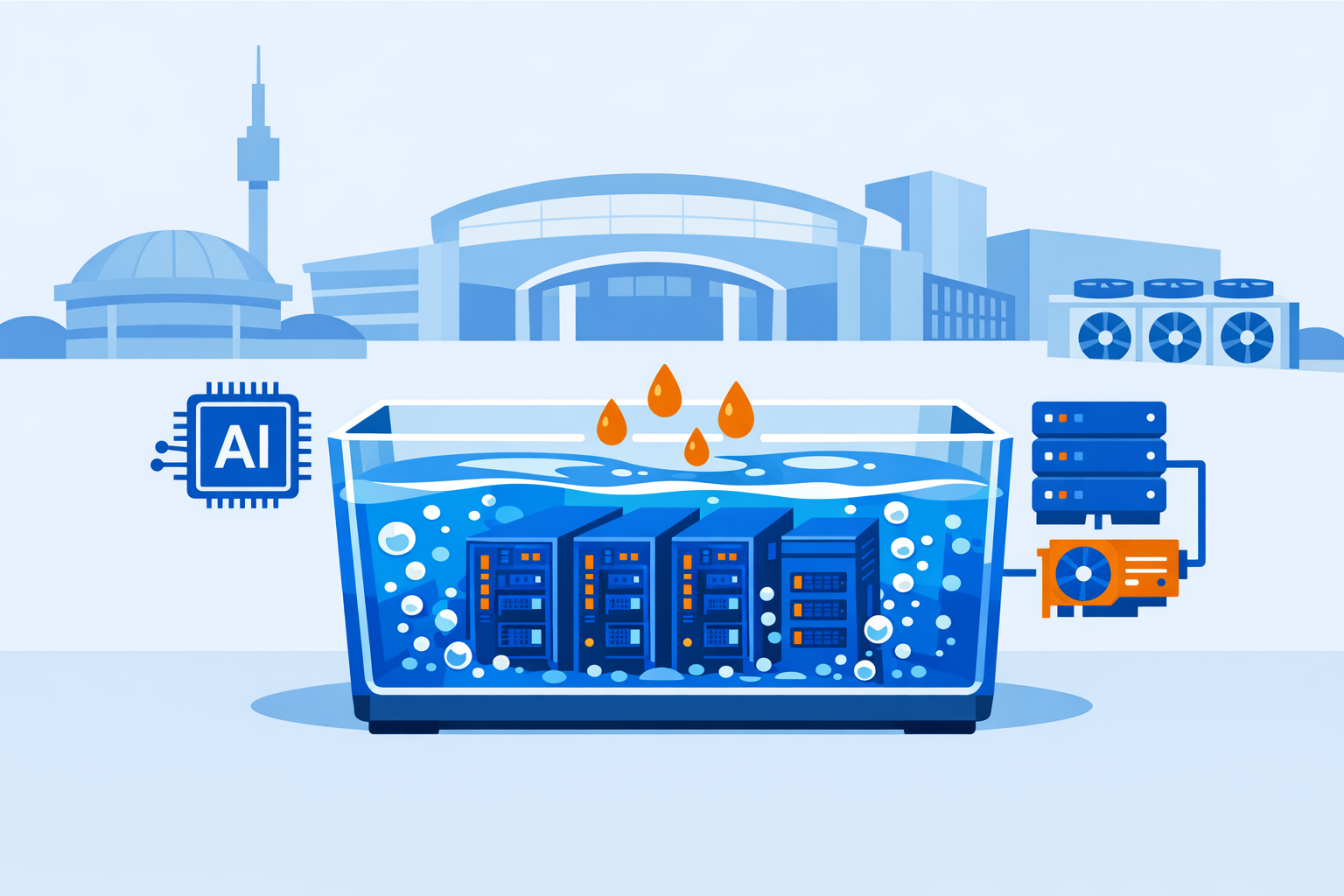
S-Oil announced Wednesday that it had launched the immersion cooling solution in partnership with Global Standard Technology at HVAC Korea 2026, held at COEX in Seoul. S-Oil is supplying immersion cooling oil optimized for data center environments, while Global Standard Technology is presenting equipment that manages heat from high-performance AI and computing servers. The combined solution targets rising electricity demand and heat management challenges at data centers. HVAC Korea showcases all categories of HVAC systems, including heating, ventilation, air conditioning and refrigeration (HVACR), tanks and pumps, piping, and fire protection systems. The exhibition runs through Friday at COEX.
Background
The S-Oil e-Cooling Solution, first developed in 2024, targets two main applications: data centers and batteries, including energy storage systems and electric vehicles. The battery-focused product entered commercial sales in August 2025. The Seoul announcement marks the product's formal positioning within the data center cooling market, a sector undergoing structural transformation driven by AI workloads and tightening refrigerant regulations.
AI servers now operate at 800W-2,000W per chip, generating extreme heat. As rack densities rise, traditional refrigerants and cooling methods face growing limitations. Cooling accounts for 30-40% of a data center's total electricity usage. Across the Asia-Pacific region, the data center cooling market is projected to reach $41.10 billion by 2035, up from $9.46 billion in 2024, growing at a CAGR of 13.61% during that period.
South Korea itself is a rapidly expanding market. The country's data center cooling market is expected to reach USD 176.67 million in 2025 and grow at a CAGR of 17.04% to reach USD 454.12 million by 2031. South Korea is slated to begin work on its seventh supercomputer in 2025, targeting exaflop performance, while the government continues developing its sixth iteration aimed at 600 petaflops - a surge in processing capability expected to drive demand for advanced cooling solutions.
S-Oil's move reflects a broader industry pivot in South Korea. HD Hyundai Oilbank, Seoul National University, and immersion cooling operator Databean signed a memorandum of understanding on an AI infrastructure immersion cooling validation project to address difficulties caused by excessive fan noise and high temperatures in the university's AI research lab. HD Hyundai Oilbank has already launched its immersion cooling fluid brand X Teer E-Cooling Fluid and begun supplying fluid to domestic hyperscaler Naver Cloud.
Details
An S-Oil official stated: "Heat management and power efficiency have become major challenges for data centers as AI expands," adding that the company will "contribute to improving energy efficiency in the data center industry through thermal management solutions centered on immersion cooling oil."
The immersion cooling method involves submerging entire battery cells or server components directly in a highly insulating dielectric coolant. This approach effectively prevents fire propagation during thermal runaway, offers superior cooling efficiency compared to conventional air-cooling systems, extends hardware lifespan, and reduces operational energy consumption.
S-Oil said it verified the performance and safety of the cooling fluid through material compatibility tests, corrosion evaluations, and long-term operational testing. Nations including Singapore, Australia, India, and Japan are imposing stricter energy efficiency standards, water usage laws, and low-GWP refrigerant mandates, pushing data center operators toward low-impact, closed-loop, and hybrid cooling systems. The regulatory landscape across APAC remains fragmented, with varying standards for refrigerant handling, water discharge, and energy efficiency - a factor that industry observers say creates both risk and commercial opportunity for solution providers.
On the refrigerant side, a global regulatory shift is forcing the cooling industry to rethink its dependence on high-GWP refrigerants, with compliance timelines shorter than most in the data center sector are accustomed to.[1] Global policies including the Kigali Amendment and regional F-gas restrictions are accelerating this transition. HFOs such as R-1234yf and R-1234ze are current front-runners for their ultra-low GWP ratings below 10, while HFO/HFC blends such as R-454B and R-513A offer transitional solutions with more familiar handling characteristics.
Outlook
S-Oil plans to expand the application of its immersion cooling technology beyond energy storage systems to include data centers, EV batteries, and other advanced energy systems. A company representative stated that the firm is strengthening its thermal management solution business by leveraging immersion cooling technology that ensures both safety and efficiency. APAC is the highest-velocity growth region for data center cooling, fueled by hyperscale expansions. The region's diversity is creating a dual-track adoption model: advanced markets shifting early to liquid cooling, while emerging markets scale rapidly with high-efficiency air systems before transitioning. For equipment manufacturers, service contractors, and system designers active in the SHK and HVACR sector, the Korean announcements signal that data center immersion cooling fluids are moving from pilot validation into a competitive commercial market across the region.