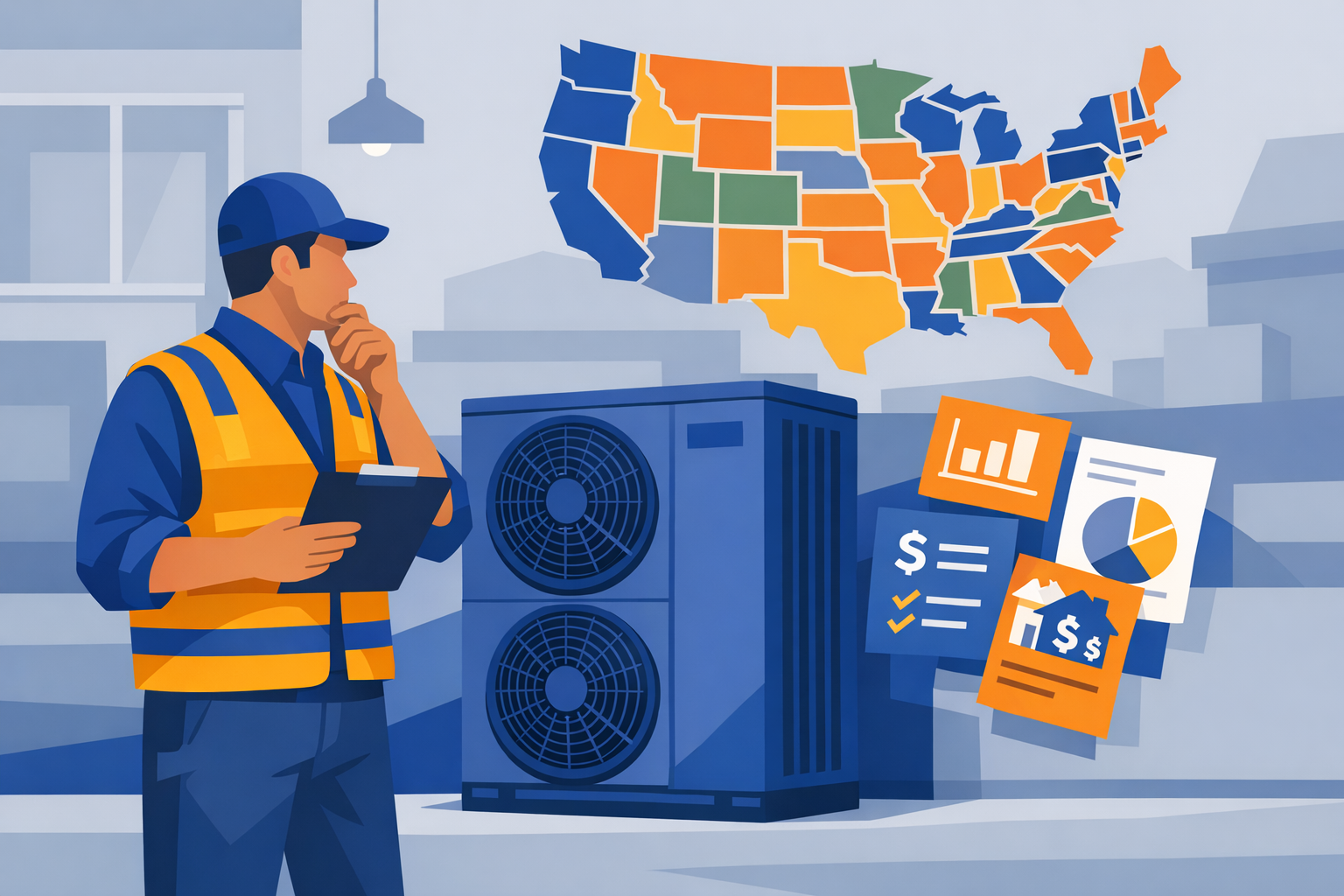
Executive Summary. Public education systems are employing capital planning, targeted funding, and energy performance contracts to replace aging HVAC and electrical switchgear while improving indoor air quality and resilience. By aligning lifecycle cost analysis with updated regulatory requirements and funding programs, districts can modernize critical infrastructure, lower operating costs, and maintain continuity of school operations.
1. Why School HVAC and Electrical Systems Are Now Strategic Assets
K-12 and higher-education facilities constitute one of the largest public building portfolios in many areas. HVAC and electrical infrastructure are central to current policy objectives for health, decarbonization, and cost control.
K-12 school districts in the United States spend over $8 billion annually on energy; more than 30% of that use is considered waste, and at least 10% savings are achievable through low-cost operational measures.[1]
COVID-19 recovery programs and revised indoor air quality (IAQ) guidance have put classroom ventilation and filtration in focus. Federal Elementary and Secondary School Emergency Relief (ESSER) funds explicitly cover HVAC repair, replacement, and air quality improvements, linking public health to facility upgrades.[1]
Many districts face decades of deferred maintenance. State capital planning documents reveal that at least 30 U.S. states reference deferred maintenance in public-infrastructure budgeting, highlighting backlogs in facilities such as schools.[2]
In this context, aging chillers, boilers, air handlers, and switchgear are now pillars of long-range capital programs that integrate:
- Health and IAQ targets (ventilation, filtration, thermal comfort)
- Energy and carbon-reduction goals
- Reliability and resilience requirements
- Compliance with evolving electrical maintenance and safety standards
2. Funding Landscape for Energy-Efficient Schools and Switchgear Modernization
2.1 Federal and State Programs
Various funding channels support energy-efficient school HVAC and electrical projects:
- ESSER I/II/III and ARP funds. These emergency relief funds are eligible for HVAC, IAQ, and controls upgrades tied to safe school operation and learning continuity.[1]
- State energy programs for K-12. For example, California's K-12 Energy Efficiency Program provides zero-interest loans for high-efficiency HVAC, envelope upgrades, and distributed energy resources in public schools.[3]
- Targeted HVAC/ventilation grants. Minnesota's Air Ventilation Pilot Grant Program focuses on improving existing school HVAC, emphasizing energy efficiency and greenhouse-gas reductions in Title I-eligible schools.[4]
- State energy-office or utility rebates. These reduce capital costs for high-efficiency equipment, controls, and advanced metering.
These programs often have limited timeframes and require alignment with local capital plans to maximize benefit before application periods close.
2.2 Energy Performance Contracts (EPC/ESPC)
Energy performance contracts, commonly delivered by energy service companies (ESCOs), have become central to comprehensive school retrofit programs.
In a standard K-12 energy savings performance contract (ESPC):
- The ESCO designs and implements a package of energy-conservation measures (ECMs), including HVAC, lighting, building envelope, and controls.
- Project repayment is structured so that debt service is covered by guaranteed energy and operational cost savings over a contract term, often up to 20 years under many state frameworks.[5]
- Performance guarantees transfer some risk from the public owner to the ESCO.
Case studies from national school-infrastructure initiatives show districts using performance contracts to fund ground-source heat pump conversions and district-wide HVAC modernization when traditional capital budgets are limited.[6]
2.3 Local Capital Programs and County Partnerships
Local capital improvement plans, often relying on bonds and county cost-sharing, are foundational.
In Tennessee, Sullivan County's Department of Education developed a multi-year capital projects list featuring substantial HVAC renewals. The 5-year plan allocates approximately $6 million to re-pipe and convert HVAC piping at Central Middle School, plus multi-hundred-thousand-dollar rooftop HVAC unit replacements at other campuses.[7]
For higher education, a SUNY Sullivan Community College case study demonstrates combining county and state capital programs with public-power financing. The campus implemented about $9.8 million in HVAC and related efficiency improvements, achieving a 46.9% reduction in energy use, roughly $210,000 in annual energy and maintenance savings, and an estimated reduction of 400 metric tons of CO₂ emissions per year.[8]
These cases illustrate how county-level capital planning and state programs can support large-scale mechanical and electrical upgrades.
3. Lifecycle Cost Analysis: Aligning HVAC and Electrical Investments
School capital decisions increasingly use lifecycle cost analyses instead of focusing only on first cost. For HVAC and switchgear, this includes:
- Initial design, equipment, and installation cost
- Energy consumption over 20-30 years
- Preventive and corrective maintenance
- Failure risk and potential impacts on instruction
- Regulatory or code-driven replacement triggers
3.1 HVAC and IAQ Upgrades
Recent retrofit studies in educational buildings confirm that targeted envelope improvements, right-sized high-efficiency HVAC, and optimized controls cut energy use and improve comfort.[9]
Bundled K-12 ESPC HVAC measures often feature:
- High-efficiency condensing boilers or heat pumps
- Dedicated outdoor-air systems with energy-recovery ventilators (ERVs)
- Demand-controlled ventilation using CO₂ or occupancy sensors
- Classroom unit ventilator replacement integrated with digital controls
When combined with lighting and envelope upgrades, districts routinely achieve double-digit percentage reductions in energy use, supporting offset of capital costs via lower utility bills.[10]
3.2 Switchgear and Electrical Distribution
Electrical distribution is increasingly assessed alongside HVAC loads. High-efficiency chillers, large air-handling units, and electrified heating systems shift electrical demand profiles and may stress existing switchgear not designed for today's loading or fault-current characteristics.
Industry standards indicate that well-maintained low-voltage switchgear typically lasts 25-30 years under standard commercial conditions. Published expectations for properly maintained low-voltage switchgear are 25-30 years of operation for standard commercial installations.[11]
When planning HVAC electrification and increased ventilation, capital programs assess:
- Whether existing switchgear has adequate interrupting ratings and spare capacity
- Arc-flash incident energy and labeling for maintenance
- Opportunities to add protective relays and metering during modernization
3.3 Comparing Investment Approaches
Below is a comparison of typical investment strategies:
| Approach | Typical use case | Funding pattern | Advantages | Risks/limitations |
|---|---|---|---|---|
| Reactive replacement (run-to-failure) | Unexpected failure of a single chiller, boiler, or switchboard | Emergency capital or operating reserves | Minimal upfront planning | Higher lifecycle cost, unplanned outages, limited design optimization |
| Like-for-like planned replacement | Scheduled end-of-life equipment replacement, limited scope | Capital budget or bond | Predictable cost, defined scope | Missed opportunity for efficiency, IAQ, and controls upgrades; may not address electrical constraints |
| Integrated high-efficiency retrofit with EPC | Aging HVAC, lighting, and controls across schools | Performance contract repaid from savings | Bundled measures, guaranteed savings, verification | Requires comprehensive M&V, contract administration, clear risk allocation |
Lifecycle modeling increasingly favors the third approach, especially when ESPC frameworks or state support is available.
4. Switchgear Modernization in the Era of NFPA 70B
4.1 Evolving Maintenance Standards
Electrical maintenance standards are now more prescriptive. NFPA 70B, previously a recommended practice, was formalized as a standard in its 2023 edition. The 2023 edition of NFPA 70B changes former recommendations for switchgear, panelboards, and transformers from "should" to "shall" requirements.[12]
For school and campus facilities, these changes promote:
- Documented inspection and testing procedures for switchgear and supporting equipment
- Defined maintenance intervals per equipment criticality and manufacturer specifications
- Integration of infrared scanning, breaker testing, and cleaning into preventive maintenance
Compliance, combined with aging systems, is driving switchgear modernization in capital plans.
4.2 Typical Switchgear Modernization Strategies
Common strategies in educational buildings include:
- Breaker retrofit or replacement. Replacing outdated air-magnetic or oil circuit breakers with modern vacuum breakers while retaining enclosures where feasible.
- Protection and control upgrades. Installing microprocessor relays, digital meters, and communications to enable remote monitoring and integration with building management systems.
- Arc-flash risk mitigation. Adjusting protection settings, adding maintenance modes, or reconfiguring system topology to lower incident energy exposure.
- Condition-based monitoring. Adding temperature and partial-discharge sensors for predictive maintenance analytics.
Upgrading switchgear alongside HVAC electrification projects also provides capacity for:
- Higher ventilation or filtration loads
- Kitchen electrification
- EV bus charging and other new electrical demands
4.3 Coordination with Classroom Operations
Switchgear replacement or reconfiguration often requires full electrical shutdowns. In active schools, this typically involves:
- Scheduling switchovers during summer recess, holidays, or weekends
- Temporary power for essential systems (IT, alarms, refrigeration)
- Coordination with AHJ inspections and utility cutovers in limited time windows
Combining electrical and mechanical scopes into one capital package shortens outages and streamlines commissioning.
5. Procurement and Delivery Strategies for School Infrastructure Programs
5.1 Traditional Design-Bid-Build
Design-bid-build (DBB) is prevalent for major new construction and additions. It separates design from construction but may lack agility during shifting market conditions (such as long switchgear or air-handler lead times).
For HVAC and switchgear upgrades in existing buildings, DBB is effective when:
- The scope is well defined and not reliant on operational energy savings
- Districts have the capacity to manage multiple contracts
- Funding is pre-allocated through bonds or budgets
5.2 Energy Performance Contracts and Bundled Retrofits
ESPCs allow districts to bundle mechanical, electrical, and controls upgrades, paying over time from guaranteed savings.[5]
Recent K-12 case studies document:
- Replacement of aging HVAC, improved IAQ, and new cooling in previously unconditioned areas
- Campus-wide automation system integration
- Electrical distribution and emergency power upgrades to support new loads
In California, one district used ESSER funds paired with a performance contract to accelerate HVAC replacements before funding deadlines, with future savings servicing the contract.[10]
5.3 Cooperative Purchasing and Framework Agreements
State and multi-state cooperative purchasing contracts can expedite standard HVAC and sometimes electrical gear procurement. These frameworks:
- Shorten bid and negotiation processes
- Provide pre-negotiated pricing and terms
- Are often used alongside ESPCs or capital projects
For example, Clovis Unified used a cooperative purchasing group to obtain HVAC equipment as part of a performance-contract upgrade.[10]
5.4 Selecting an Appropriate Model
Key factors for district leaders and facility teams:
- Timing and availability of grants or relief funding
- Internal capacity for project management
- Portfolio-wide consistency for controls and equipment
- Risk tolerance for performance guarantees and long-term contracts
6. Planning and Phasing: Minimizing Classroom Disruption
6.1 Phasing HVAC Retrofits
Effective HVAC retrofit phasing for occupied schools typically involves:
- Prioritizing high energy intensity, IAQ issues, or high failure-risk buildings
- Sequencing over multiple summers to align with procurement lead times
- Using modular or packaged systems to reduce construction durations
- Commissioning and balancing outside exam periods and peak occupancy
Temporary ventilation or portable classrooms may be needed if deep retrofits coincide with the heating or cooling season.
6.2 Coordinating Electrical and Mechanical Work
When switchgear modernization is linked to mechanical upgrades, integrated planning can:
- Align panel schedules with new HVAC equipment requirements
- Complete coordination and fault-current studies before gear ordering
- Minimize redundant trenching, riser, and access work
Joint commissioning that includes both electrical and HVAC verifications reduces rework and supports stable initial operation.
6.3 Training and Ongoing Operations
New systems introduce additional operational demands. Training plans should cover:
- Building automation system operation and trending for HVAC
- Routine inspections and troubleshooting for new switchgear
- Safe work practices per NFPA 70E and maintenance scheduling per NFPA 70B
Some districts incorporate multi-year service, monitoring, or operator training into ESPCs or major capital projects.
7. Lessons from Sullivan County and Peer Districts
Experience from districts modernizing HVAC and electrical systems highlights recurring themes:
7.1 Sullivan County's Multi-Track Approach
Sullivan County's capital planning shows how grants, relief funds, and sequenced projects reinforce each other.
- The 2021 five-year capital plan includes major HVAC piping replacement, new rooftop units, and building envelope projects impacting energy performance.[7]
- In 2025, the County Commission reallocated a Department of Energy Block Grant to complete an HVAC retrofit at a county building, directly tying grant compliance to energy and indoor environmental results.[13]
Although covering both school and administrative buildings, this capital planning logic-connecting grants, deferred maintenance, and operating savings-applies to K-12 HVAC and switchgear modernization efforts.
7.2 Campus-Scale Retrofits: SUNY Sullivan
SUNY Sullivan's retrofit demonstrates integrated upgrades across HVAC, lighting, and envelope.
- The project included air- and water-source heat pumps, ERVs, high-efficiency boilers, LED lighting, and window replacements, delivering a 46.9% reduction in campus energy use and over $200,000 annual savings.[8]
This level of improvement highlights benefits when HVAC and electrical planning addresses total energy performance, not just isolated equipment replacement.
7.3 Broader K-12 Trends
Other U.S. K-12 examples reinforce trends:
- Districts use performance contracts and state programs to add cooling and modern ventilation where HVAC was previously inadequate.[14]
- Geothermal and advanced heat-pump systems are increasingly used in new high-efficiency schools, leveraging federal incentives.[15]
- Multi-school projects often pair HVAC replacements with building automation, lighting, and envelope upgrades to optimize savings.
These case studies stress the importance of:
- Treating HVAC and electrical as integrated energy and reliability systems
- Using capital plans and funding windows to bundle projects strategically
- Embedding measurable performance targets in procurement
8. Actionable Conclusions and Next Steps for Facility Teams
To implement these strategies, public-sector owners and engineers should:
- Conduct portfolio-wide facilities condition assessments. Include mechanical, electrical, and controls systems, rating age, condition, and risk.
- Benchmark energy and IAQ performance. Use ENERGY STAR Portfolio Manager for energy benchmarking and track basic IAQ metrics.[1]
- Map funding sources to project timelines. Align ESSER deadlines, state grants, and bond cycles with phased capital packages.
- Screen for performance-contract opportunities. Identify campuses suitable for bundled ESPC delivery.
- Integrate NFPA 70B standards into maintenance planning. Document inspection and testing procedures for switchgear and use insights to drive capital investment priorities.[12]
- Plan for operator training and knowledge transfer. Ensure staff training for new HVAC equipment, controls, and electrical systems.
By combining structured capital planning, funding tools like energy performance contracts, and adherence to evolving IAQ and electrical standards, municipalities and districts can modernize HVAC and switchgear infrastructure, improving energy performance, safety, and learning conditions.
Frequently Asked Questions
What is an energy performance contract in the context of schools?
An energy performance contract (EPC), also called an energy savings performance contract (ESPC), is a delivery and financing method in which an energy service company implements efficiency improvements-such as HVAC, lighting, and controls-and the public owner repays the investment over time from guaranteed energy and operational savings. In K-12 settings, these agreements usually span 10-20 years and can address multiple campuses within a single program.[5]
How do energy-efficient HVAC upgrades contribute to overall school capital strategy?
Energy-efficient HVAC upgrades lower utility and maintenance costs, improve IAQ and comfort, and help districts comply with health and ventilation requirements. When combined with lighting and control improvements, they significantly reduce energy use, supporting financing, ESPC repayment, and district or state sustainability targets.[1]
Why is switchgear modernization increasingly linked to school HVAC projects?
Electrification of heating and added ventilation raise electrical demand and fault-current levels, which may exceed the ratings of older switchgear. Modernization upgrades capacity, enhances protection and coordination, and aligns with new safety requirements such as NFPA 70B. Coordinating switchgear with HVAC projects also limits the frequency and duration of outages in active school facilities.[12]
Which funding sources are most relevant for energy-efficient school HVAC projects today?
Key sources include remaining ESSER and ARP allocations, state K-12 energy programs and HVAC grants, utility incentives, and performance-contract financing backed by future savings. Some county or state capital programs-such as community-college or joint-use facility funds-can also co-fund infrastructure serving both schools and community functions.[3]
How should facilities teams prepare operations staff for new HVAC and electrical systems?
Preparation should include structured training on building automation systems, standard operating procedures for air handling and ventilation, and electrical safety practices per NFPA 70E and 70B. Many projects include handover documentation, on-site sessions, and sometimes remote monitoring support to help maintain more sophisticated yet efficient systems.[12]