Stricter HFC regulations in the United States and the European Union are elevating reclaimed refrigerants from a niche servicing option to a core compliance instrument. HVAC professionals, facility managers, and procurement teams must now reassess supply chains, certification requirements, and procurement timelines.
The EPA's AIM Act - designed to cut U.S. HFC production and consumption by 85 percent over 15 years - has triggered overlapping regulatory obligations that make certified reclaimed refrigerant a practical necessity for operators of legacy HFC systems.
Background
On both sides of the Atlantic, regulators are tightening conditions for the use of high-GWP virgin refrigerants while carving out explicit permissions for reclaimed alternatives.
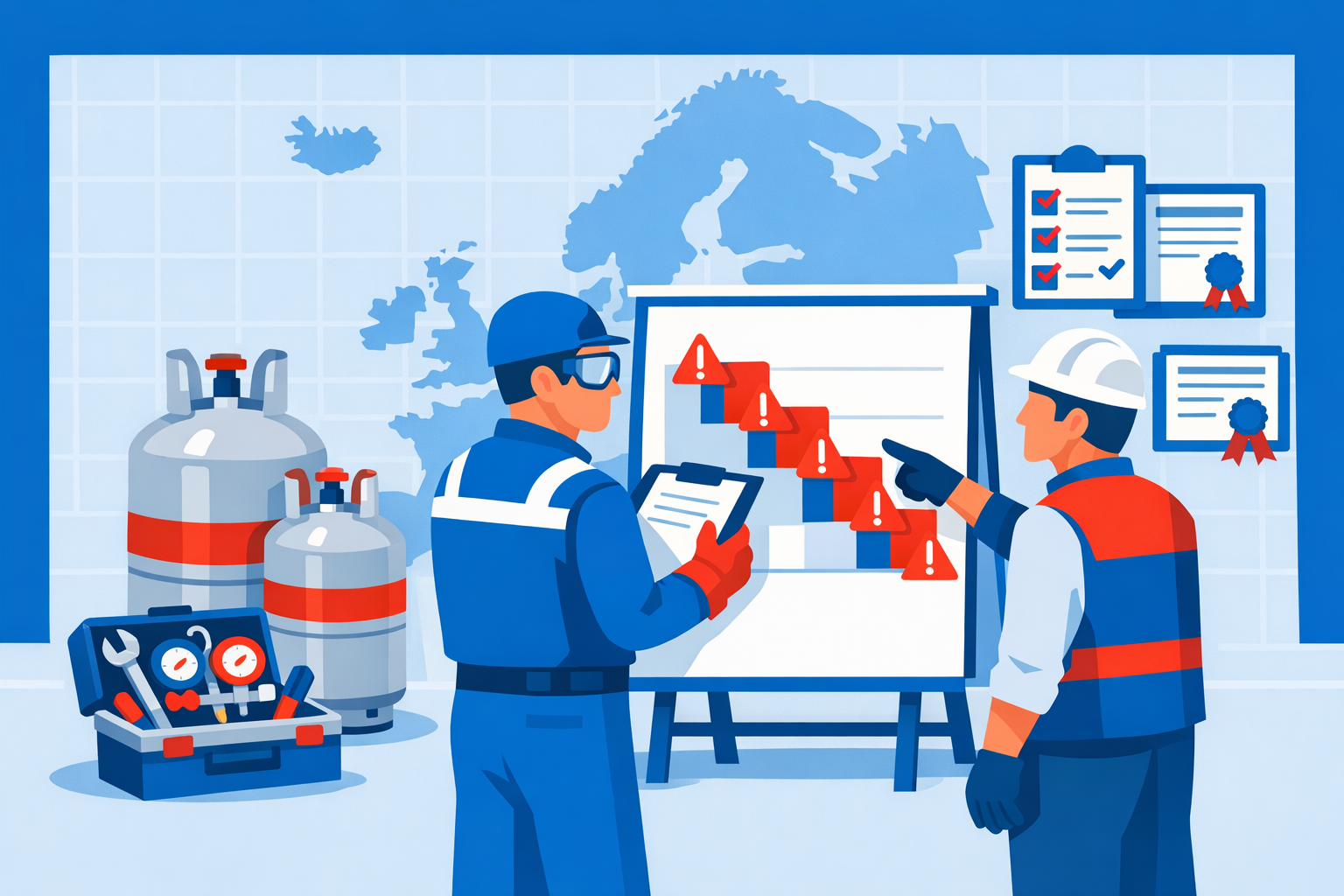
Under EU F-Gas Regulation 2024/573, effective January 1, 2025, virgin fluorinated refrigerants with a GWP of 2,500 or higher are prohibited for servicing all refrigeration equipment - unless the gases are reclaimed or recycled, in which case a derogation applies until January 1, 2030. For existing air conditioning systems and heat pumps, the same ban on virgin F-gases with GWP above 2,500 takes effect on January 1, 2026.
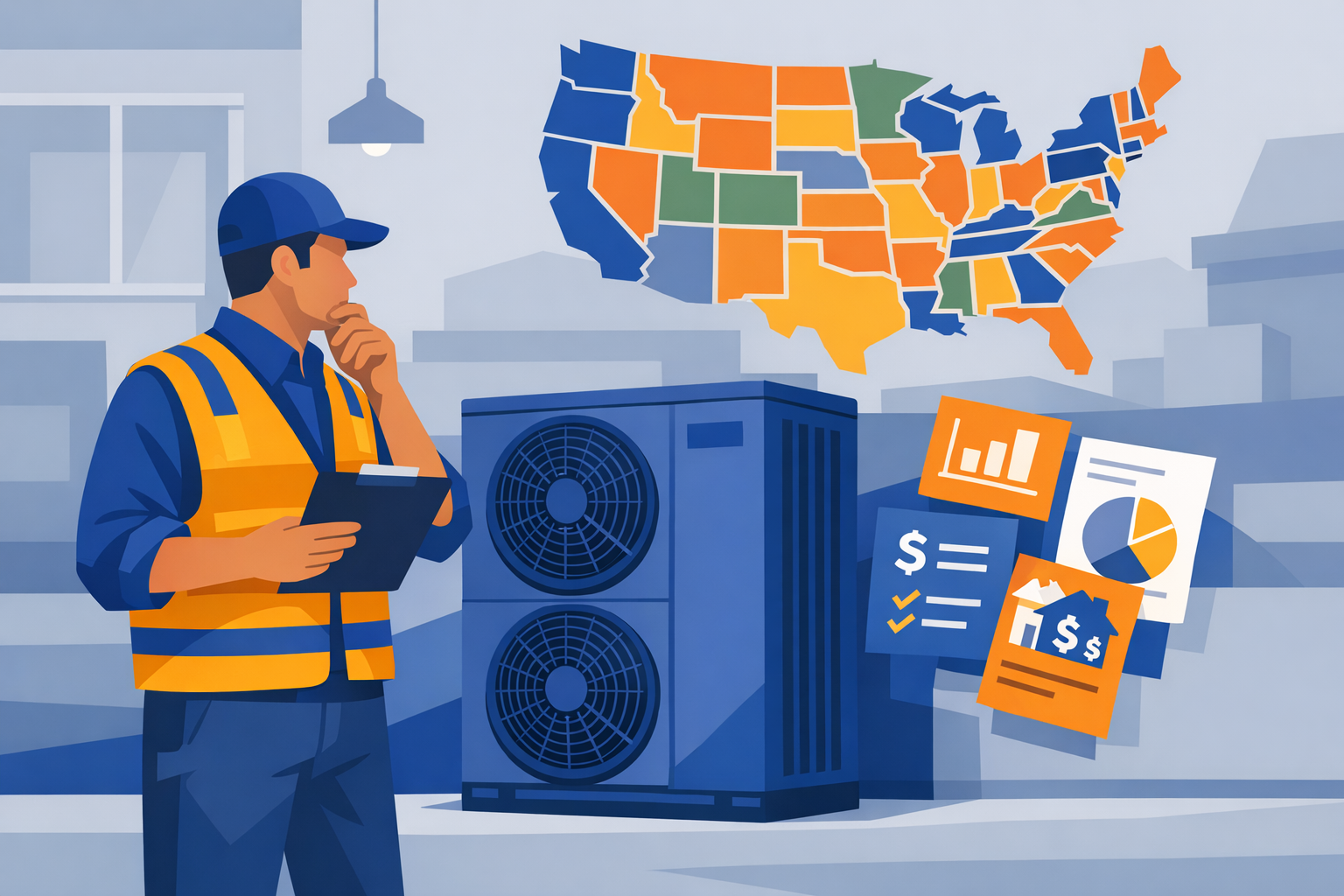
In the United States, California led on supply-side restrictions. Beginning January 1, 2025, virgin HFC refrigerants with a GWP above 2,200 cannot be sold in the state, while reclaimed refrigerants remain permitted - making reclaim a direct compliance pathway for servicing affected systems. At the federal level, the AIM Act's Technology Transitions Rule restricts the manufacture and import of new equipment using refrigerants with a GWP above 700. The 2025 EPA regulations banned new R-410A equipment production, while supply-chain strain for low-GWP alternatives such as R-454B has pushed cylinder prices up more than 300%[1] - increasing demand pressure on reclaimed supplies.
Quality and Certification Standards
Regulatory permission to use reclaimed refrigerant does not eliminate quality risk. Both U.S. and international frameworks require reclaimed product to meet the same purity levels as virgin material.
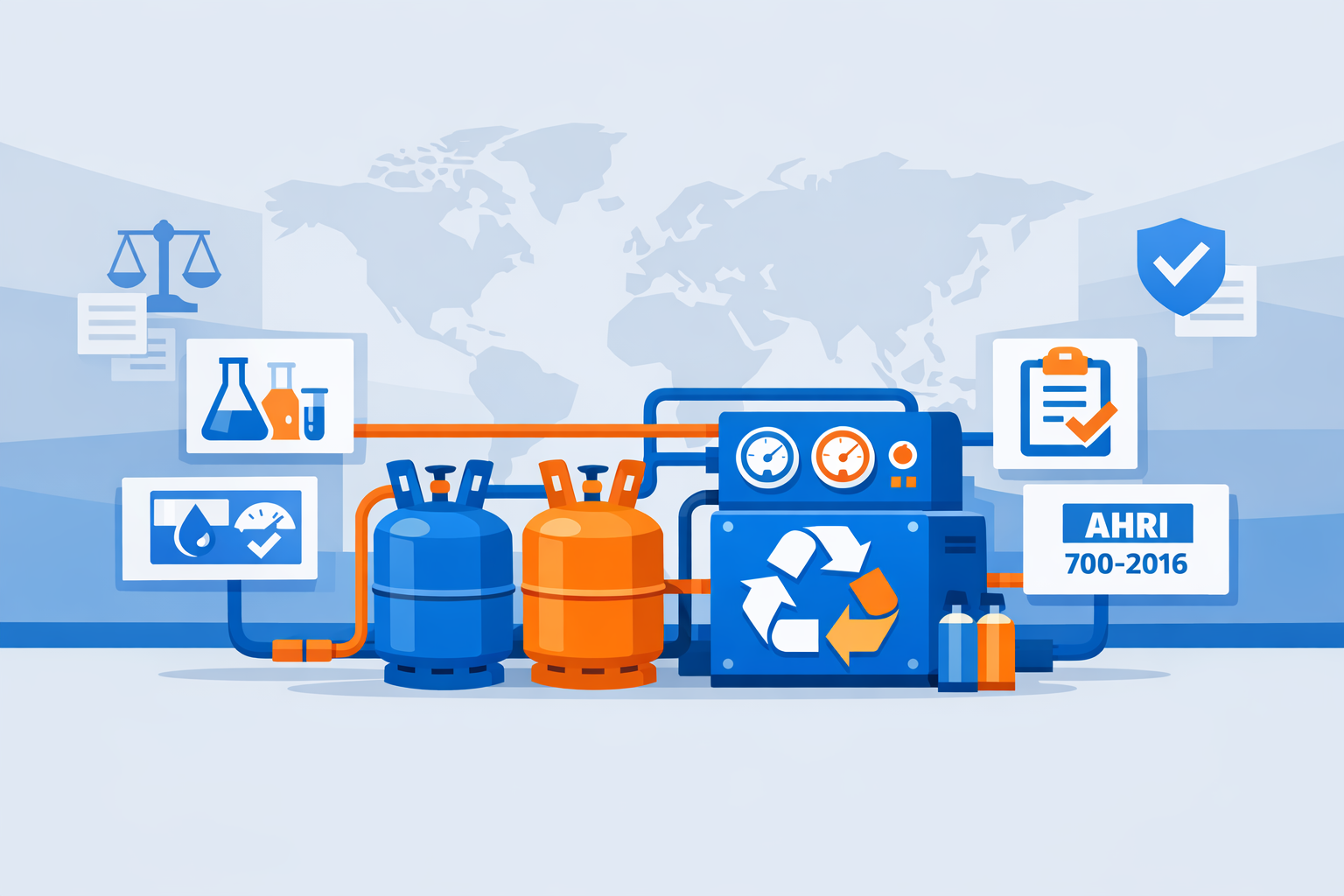
Under EPA regulations at 40 CFR Part 82, Subpart F, resale of used refrigerant to a new owner is prohibited unless it has been reclaimed by an EPA-certified reclaimer and reprocessed to at least the purity level specified in Appendix A, based on AHRI Standard 700-2016. AHRI Standard 700 establishes purity specifications and testing methods for refrigerants regardless of source - new, reclaimed, or repackaged - for use in new and existing refrigeration and air-conditioning products.
Both reclaimed and newly produced refrigerants must meet the same AHRI 700 standards and performance characteristics. Reclaimed refrigerants that pass chemical analysis through an AHRI-approved test program are considered equivalent to newly produced grade product. Procurement teams should request complete laboratory certifications with every purchase.
A new U.S. federal threshold adds further specificity. Effective January 1, 2026, under 40 CFR Part 84 Subpart C, no refrigerant may be sold, identified, or reported as reclaimed if it contains more than 15% virgin-regulated substance by weight. This standard could affect how refrigerants are processed and resold.
Demand Drivers and Supply-Chain Barriers
Mandatory reclaim-use requirements are already generating structural demand. California's R4 Program requires AC and VRF manufacturers to use a specified minimum amount of reclaimed R-410A refrigerant in new equipment or in the servicing of existing equipment.[2] VRF manufacturers face a 25% reclaimed refrigerant use requirement for 2025.[3]
Despite regulatory tailwinds, adoption barriers remain significant for critical facilities. Upgrading or retrofitting existing cooling systems demands substantial capital investment, while compatibility issues with existing infrastructure and concerns about performance and reliability also hinder widespread adoption. Facilities such as hospitals and data centers, where uptime requirements are stringent, have historically favored the predictability of virgin-grade supply chains.
Professional-grade refrigerant recovery systems - typically costing between $3,000 and $15,000 for advanced multi-refrigerant units - create market entry barriers, particularly for smaller HVAC contractors. The technical complexity also requires specialized training and certification, adding operational hurdles beyond equipment costs. Technicians must understand refrigerant properties, system compatibility, safety protocols, and regulatory requirements.
Traceability presents another challenge. Under proposed EPA cylinder-tracking provisions, any entity purchasing, receiving, or handling cylinders containing regulated substances must register with the EPA's tracking system. Once disposable cylinders are used, contractors must return them to registered reclaimers to ensure heels are efficiently recovered - with cylinders tracked until they reach a certified reclaimer.
Outlook
The EU HFC phase-down applies only to virgin HFCs, not to HFCs recovered and recycled or reclaimed within the EU - a structural advantage that will make certified reclaim increasingly valuable as quota pressure intensifies through 2030. The EU F-Gas Regulation additionally requires the European Commission to establish training and certification program requirements by March 12, 2026, a step expected to standardize technician competency across member states.
In the United States, the EPA's ongoing reconsideration of Technology Transitions Rule deadlines creates near-term compliance uncertainty. Facility managers and contractors should document refrigerant procurement, maintain laboratory certifications for all reclaimed product used in service, and monitor rulemaking timelines through 2026 as final compliance dates are established.