Regulatory mandates, rising virgin refrigerant prices, and tightening production allowances are accelerating industry adoption of refrigerant reclamation as a core component of HVAC lifecycle management. The convergence of U.S. and European policy frameworks with evolving quality standards is reshaping how installers, service technicians, and facility managers handle refrigerants across maintenance and retrofit projects.
Regulatory Foundations Driving Reclaim
The U.S. American Innovation and Manufacturing (AIM) Act, enacted in December 2020, directs the EPA to address hydrofluorocarbons (HFCs) through three parallel programs: phasing down production and consumption, maximizing reclamation and minimizing releases from equipment, and facilitating the transition to next-generation technologies. The EPA finalized its Emissions Reduction and Reclamation (ER&R) program in September 2024, establishing mandatory leak detection and repair requirements for HFC-containing appliances with a refrigerant charge of 15 pounds or greater, effective January 1, 2026.
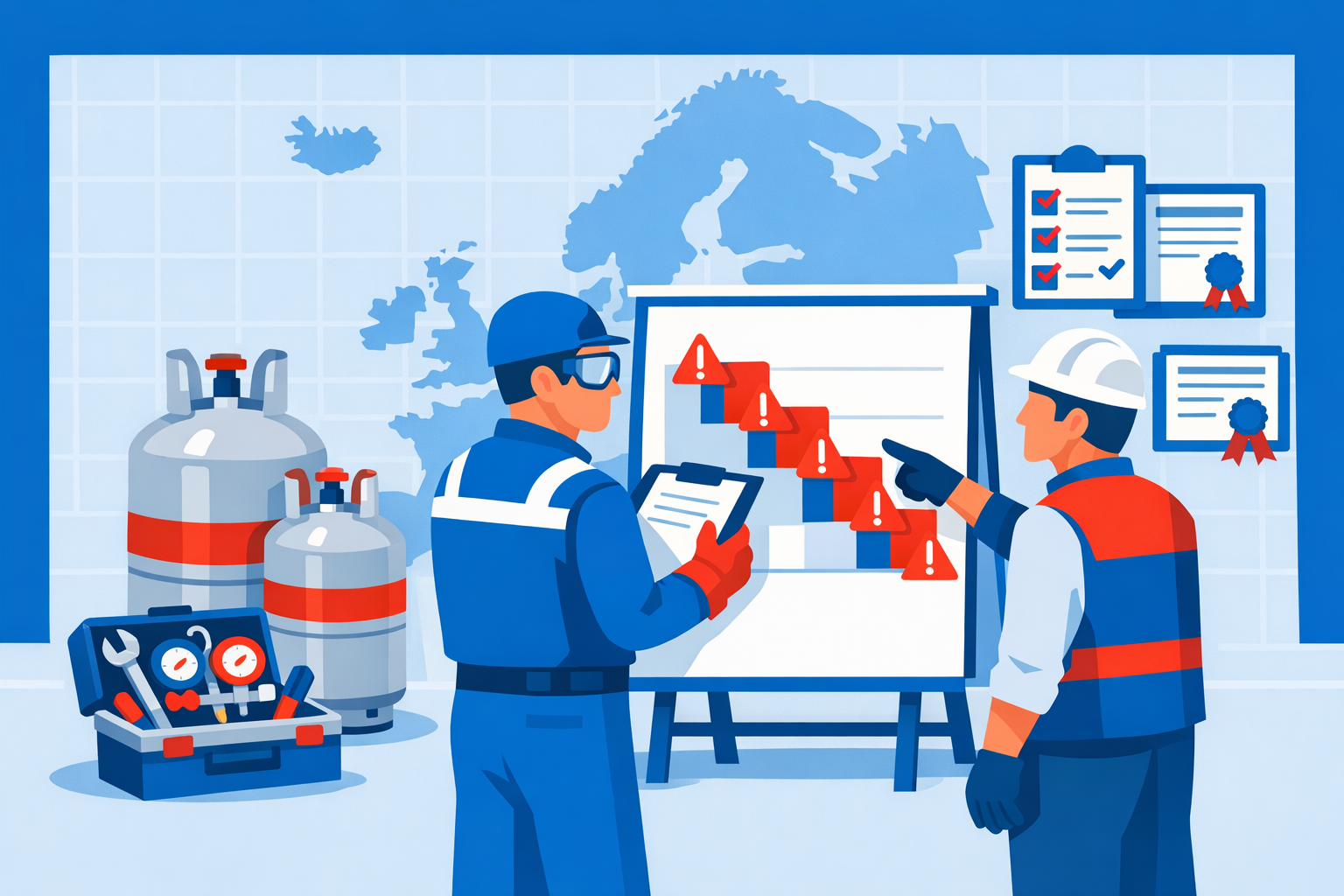
Under the AIM Act's phasedown schedule, the EPA is required to reduce total HFC production and consumption allowances by 85% below the 2011-2013 baseline by 2036, with a significant stepdown programmed for 2029. As virgin production and import volumes contract, reclaimed refrigerant is becoming essential to the remaining supply for existing commercial and industrial HVAC equipment.
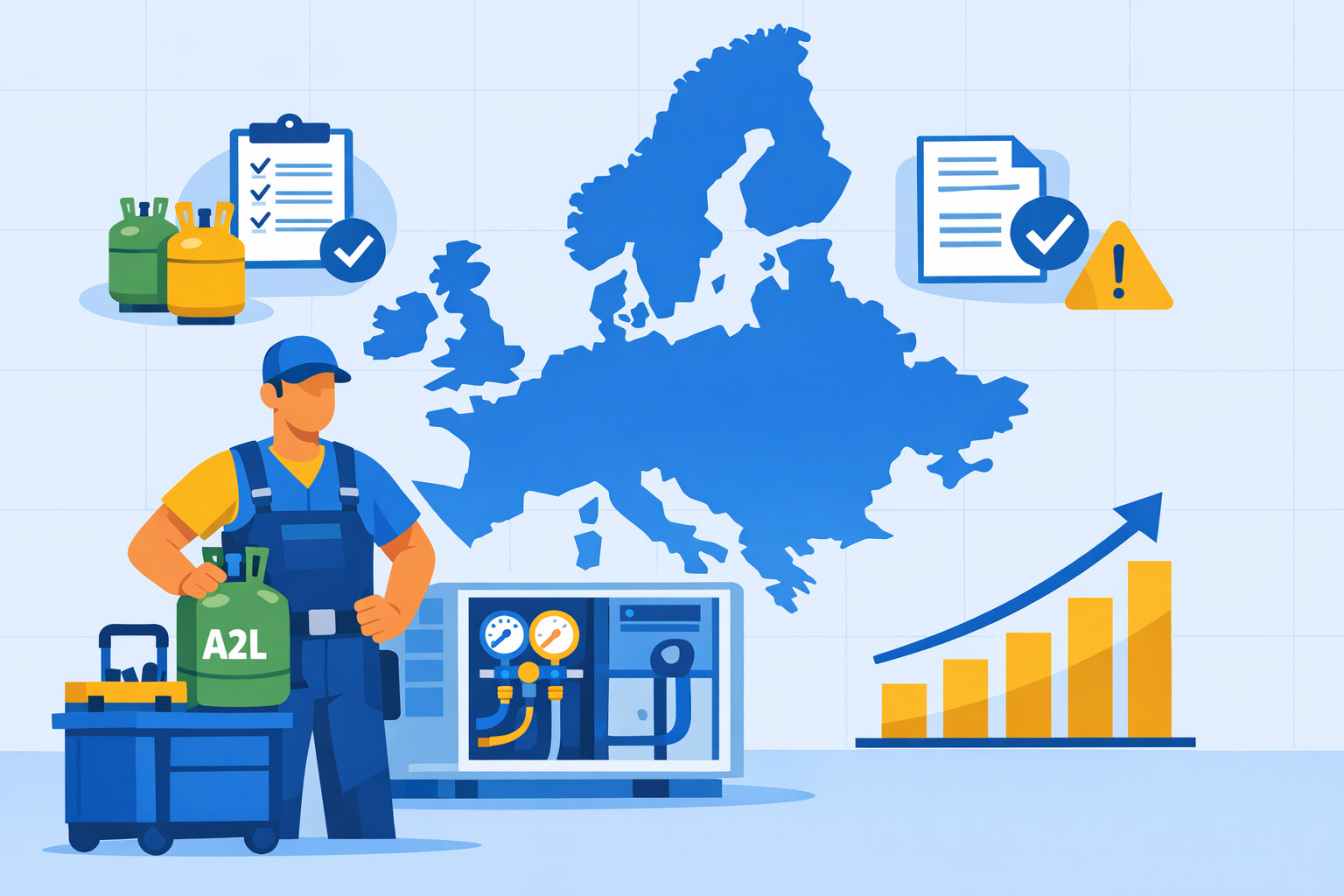
In Europe, EU F-Gas Regulation 2024/573 is progressively tightening quotas on virgin HFCs and introducing service bans, making the use of reclaimed or properly recycled refrigerants a compliance necessity for legally maintaining existing systems.
Quality Standards and the Certification Framework
The technical benchmark for reclaimed refrigerant quality is AHRI Standard 700, which establishes purity specifications for fluorocarbon, hydrocarbon, and carbon dioxide refrigerants regardless of source - new, reclaimed, or repackaged. Under the standard, reclaimed refrigerant must be reprocessed to meet the same contaminant thresholds as virgin-grade product, covering parameters including moisture, acidity, non-condensables, and volatile impurities.
Reclaimed refrigerants that pass chemical analysis by an AHRI-approved test program are considered equal to newly produced grade product, according to certification guidelines. The reclamation process involves purification through filters, dryers, distillation columns, and non-condensable gas removal equipment to restore used refrigerant to virgin-grade specification.
Hudson Technologies, one of the largest EPA-certified refrigerant reclaimers in the United States, operates multiple reclamation facilities and owns one of six AHRI-certified laboratories in the country. The company reports that millions of pounds of refrigerant have been reclaimed to AHRI standards through its programs.
Manufacturer-led programs are also scaling. Daikin's L∞P circular economy initiative, active since 2019, uses reclaimed refrigerant certified by an independent laboratory to AHRI 700 standards in the production of new VRV units across European markets. A third-party assessment cited by Daikin found that the carbon footprint of reclaimed refrigerant reuse can be up to 90% lower than that of virgin production.
Barriers and Market Dynamics
Despite regulatory pressure, adoption remains uneven. Market analysts note that the cost disparity between reclaimed and virgin refrigerants, systemic leak rates, and the absence of robust labeling and tracking mechanisms undermine supply chain accountability. Imported refrigerants that do not adhere to the same reclamation standards compete with certified domestic reclaimed product, further complicating enforcement.
HFC refrigerant prices have already begun reflecting the phasedown, with the spread between current spot prices and replacement cost for high-GWP blends widening as production allowances tighten. Blends such as R-448A and R-449A face constrained reclamation supply due to their patented formulations.
Outlook
As the AIM Act's HFC allowance phasedown continues with further cuts expected by 2029, service organizations and facility operators that have not integrated reclaim programs into maintenance protocols face escalating refrigerant procurement risk. Digital trading platforms such as Retradeables - supported by Daikin as a consortium partner - are emerging to connect service companies with certified reclaimed refrigerant distributors. Policy incentives, improved tracking infrastructure, and expanded EPA-certified reclaimer capacity will determine how quickly the industry closes the loop on refrigerant lifecycle management.