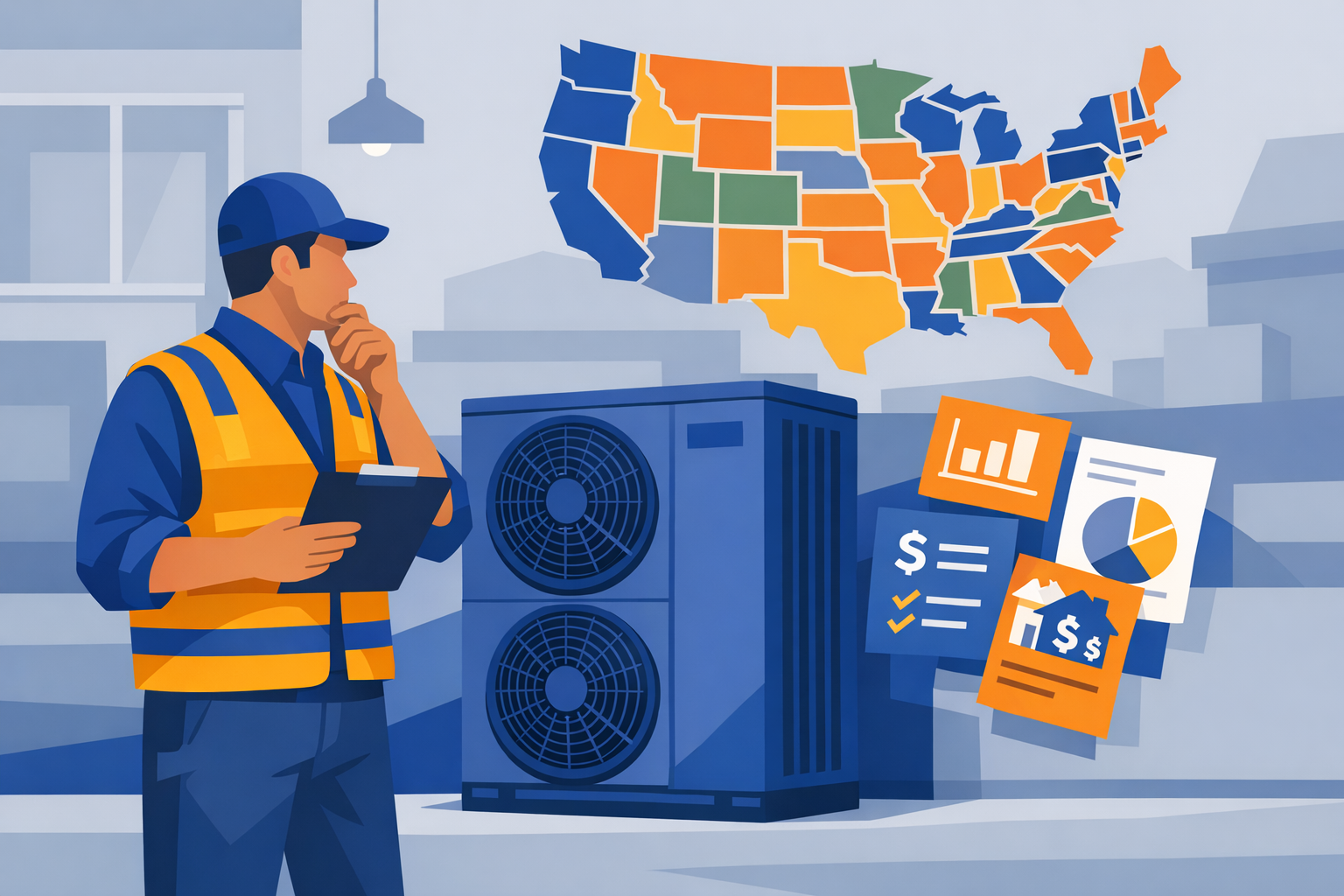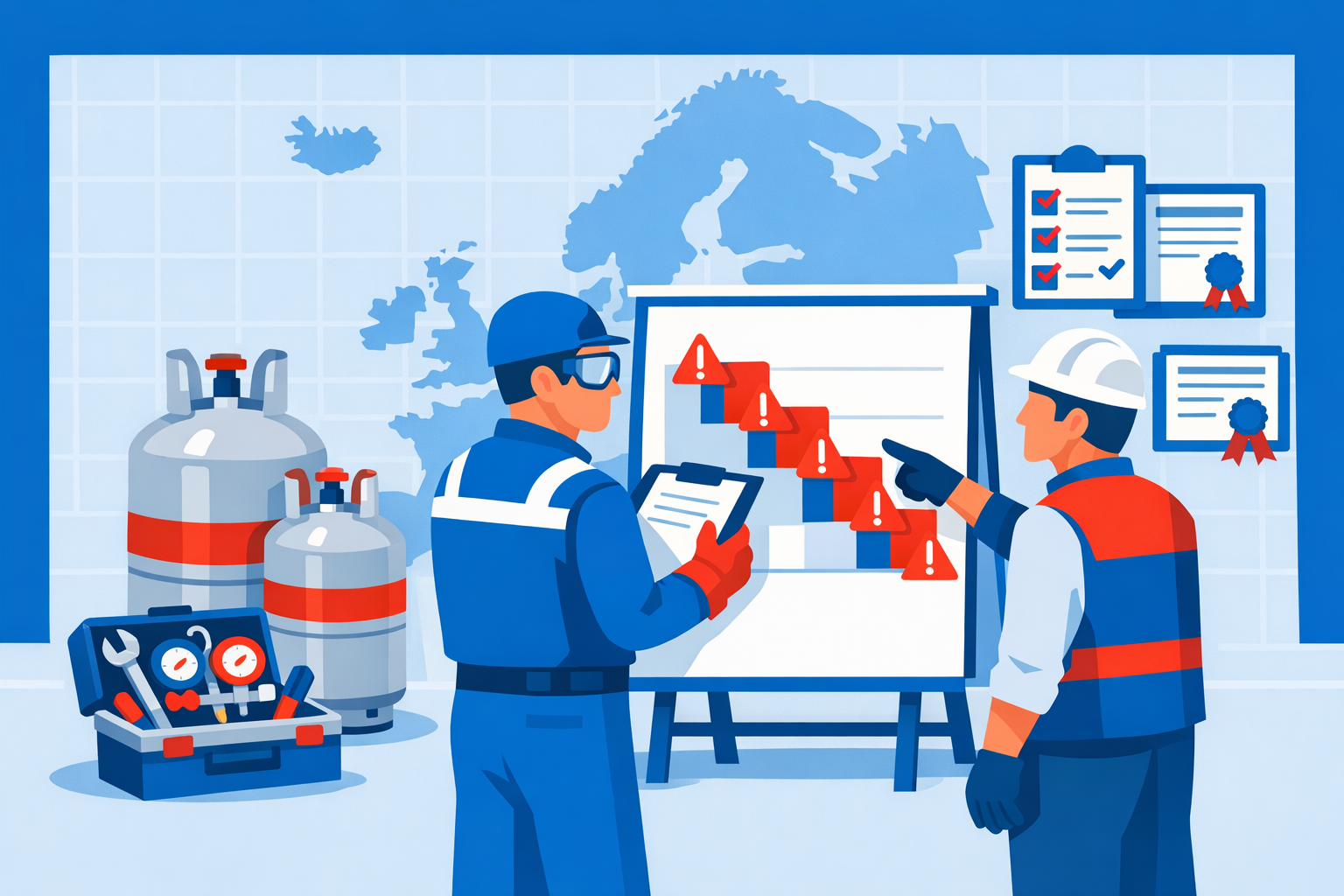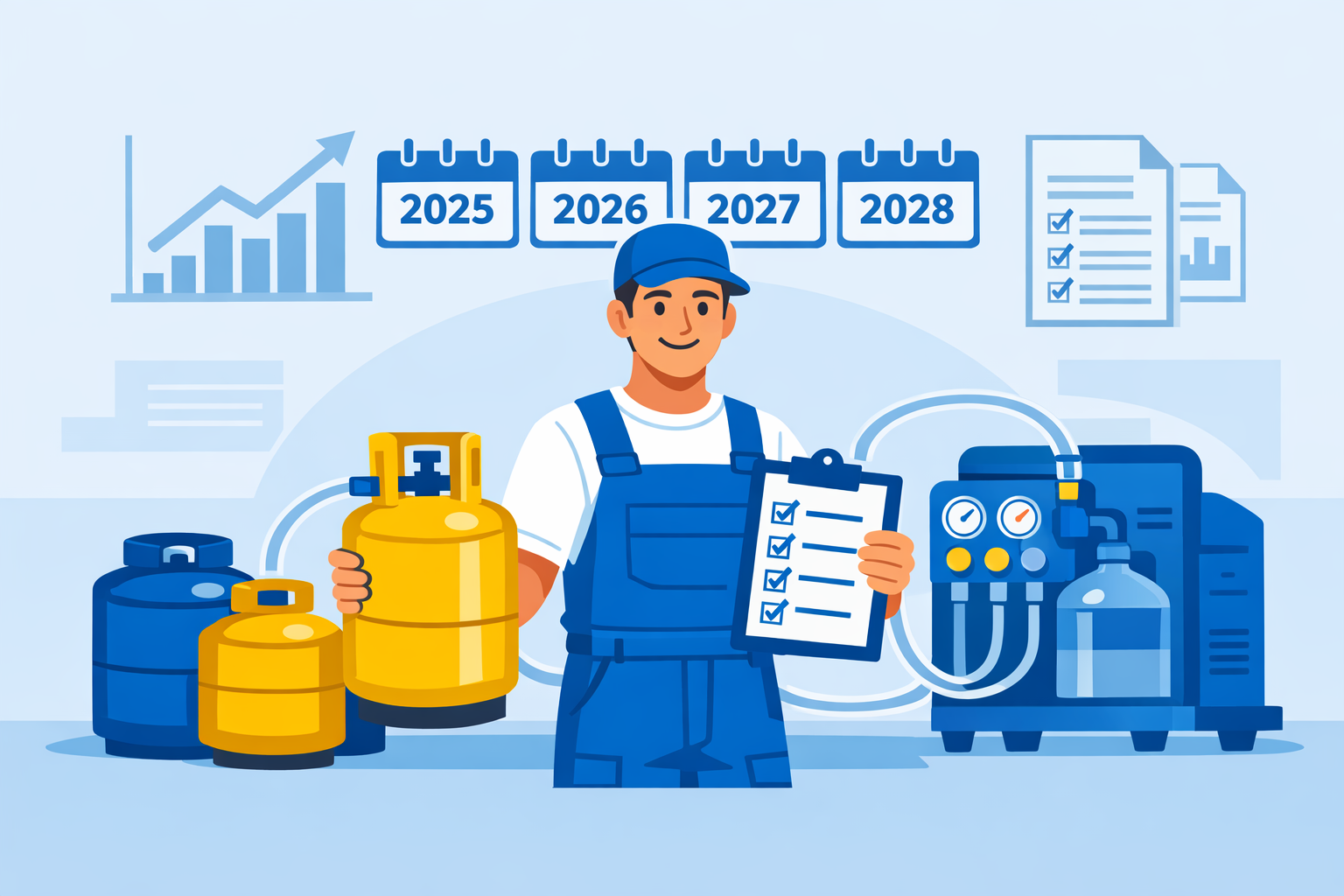
The U.S. Environmental Protection Agency's accelerating phase-down of high-global-warming-potential (GWP) hydrofluorocarbons is transforming refrigerant reclamation from an operational consideration into a compliance imperative. Under the American Innovation and Manufacturing (AIM) Act, a cascade of regulatory deadlines from 2025 through 2028 is compelling distributors, service contractors, and end users in the HVAC and refrigeration sector to restructure procurement, field practices, and supply chain planning around reclaimed HFC refrigerants.
Background
EPA regulations enacted under the AIM Act represent a significant shift in how businesses must manage refrigeration practices. The AIM Act mandates an 85% phase-down of HFCs by 2036 through a schedule of gradual production and consumption reductions. The law authorizes EPA to act across three parallel tracks: phasing down production and consumption of listed HFCs, maximizing reclamation and minimizing releases from equipment, and facilitating the transition to next-generation technologies through sector-based restrictions.
The Technology Transitions Rule, which took effect in phases beginning January 1, 2025, set the initial compliance boundaries. It restricted the use of certain HFCs in three sectors and over 40 subsectors, prohibiting-among other things-the manufacture and import of factory-completed products and the installation of certain refrigeration, air conditioning, and heat pump systems using HFCs or HFC blends with GWPs above specified limits.
The Final Rule on HFC Management, published by EPA in October 2024, establishes emissions reduction measures and mandates reclamation and proper disposal of HFCs. For HVAC and plumbing professionals, this marks a structural shift: reclamation is no longer a discretionary channel for used refrigerant-it is becoming the enforced norm for a broadening range of service activities.
Key Regulatory Requirements and Quality Standards
Beginning January 1, 2026, the EPA's HFC Leak Repair and Management Rule takes effect, imposing mandatory leak detection and repair requirements on owners or operators of HFC-containing appliances with a refrigerant charge of 15 pounds or greater.
Also effective January 1, 2026, no refrigerant can be sold, identified, or reported as reclaimed if it contains more than 15% virgin-regulated substance by weight. Virgin-regulated substance refers to any refrigerant that has never been used in equipment. This threshold significantly limits the amount of virgin refrigerant permissible in reclaimed products.
Purity requirements are equally exacting. To qualify as properly reclaimed, used refrigerant must be reprocessed to at least the purity level specified in Appendix A to 40 CFR Part 82, Subpart F, based on AHRI Standard 700-2016. This purity level must be verified using the laboratory protocol set forth in that same standard. Refrigerant reclaimers must hold EPA certification.
Contamination risk and quality verification therefore sit at the center of any compliant reclamation operation. Depending on the quality of recovered refrigerant, reclaimers determine whether to process HFCs to the required purity standard or send them to destruction facilities-for example, when contamination makes reclamation cost-prohibitive or technologically infeasible.
Beginning January 1, 2028, reclaimed HFCs must be used to service or repair equipment in the following subsectors: stand-alone retail food refrigeration, supermarket systems, refrigerated transport, and automatic commercial ice makers. Reclaimed HFCs must also be used for initial charges of equipment in several RACHP sectors by the same date.
Market Economics and Supply Chain Pressures
Tightening virgin HFC availability is already reshaping procurement economics. R-454B shortages have pushed cylinder prices up more than 300%, leaving many contractors contending with delays, rising costs, and frustrated customers. Specifically, supply chain disruptions have driven R-454B cylinder prices from $345 in 2021 to over $2,000 in 2025.
Against that backdrop, the reclaimed refrigerant market is gaining strategic value. Refrigerant reclamation creates value for used refrigerants recovered from equipment-for example, during routine servicing-and helps embed sound practices in refrigerant management throughout the supply chain. Industry stakeholders have cited significant barriers to scaling reclamation, including increasing recovery volumes, handling mixed refrigerants returned to reclaimers, and reclaiming certain patented blends-alongside the need for a clear definition of reclaimed HFCs and improved supply chain tracking.
Trade associations have raised concerns about the pace and scope of mandatory reclamation. AHRI and the Alliance have suggested that EPA develop an alternative to the proposed rule's requirements for reclaimed refrigerant, including basing reclaim mandates on relevant data to ensure achievability, phasing in mandates gradually, and conducting annual reviews in light of market data and practical considerations.
Outlook
With the HFC Management Rule now in effect and the 2028 mandatory reclamation deadline approaching, pressure on service networks to build certified reclamation pathways is intensifying. The rule includes cylinder management and tracking provisions, requiring anyone involved in purchasing, receiving, or handling cylinders containing regulated substances to register with EPA's tracking system. Once disposable cylinders are used, contractors must return them to registered reclaimers, ensuring heels within the cylinders are efficiently reclaimed.
Distributors and service providers that establish certified reclamation partnerships and verifiable chain-of-custody documentation now will be better positioned to absorb the 2028 mandate without supply disruption. EPA enforcement continues to target the unlawful import and sale of HFCs outside the allowance framework, according to the agency's March 2025 enforcement guidance-making regulatory compliance a dual concern of both reclamation standards and allowance accountability.
For related coverage on EPA enforcement timelines and compliance relief measures, see EPA Deprioritizes Enforcement of January 2026 HVACR Transition Deadlines and EPA Considers Extended Deadlines for Low-GWP Refrigerant Rollout in HVAC/R.