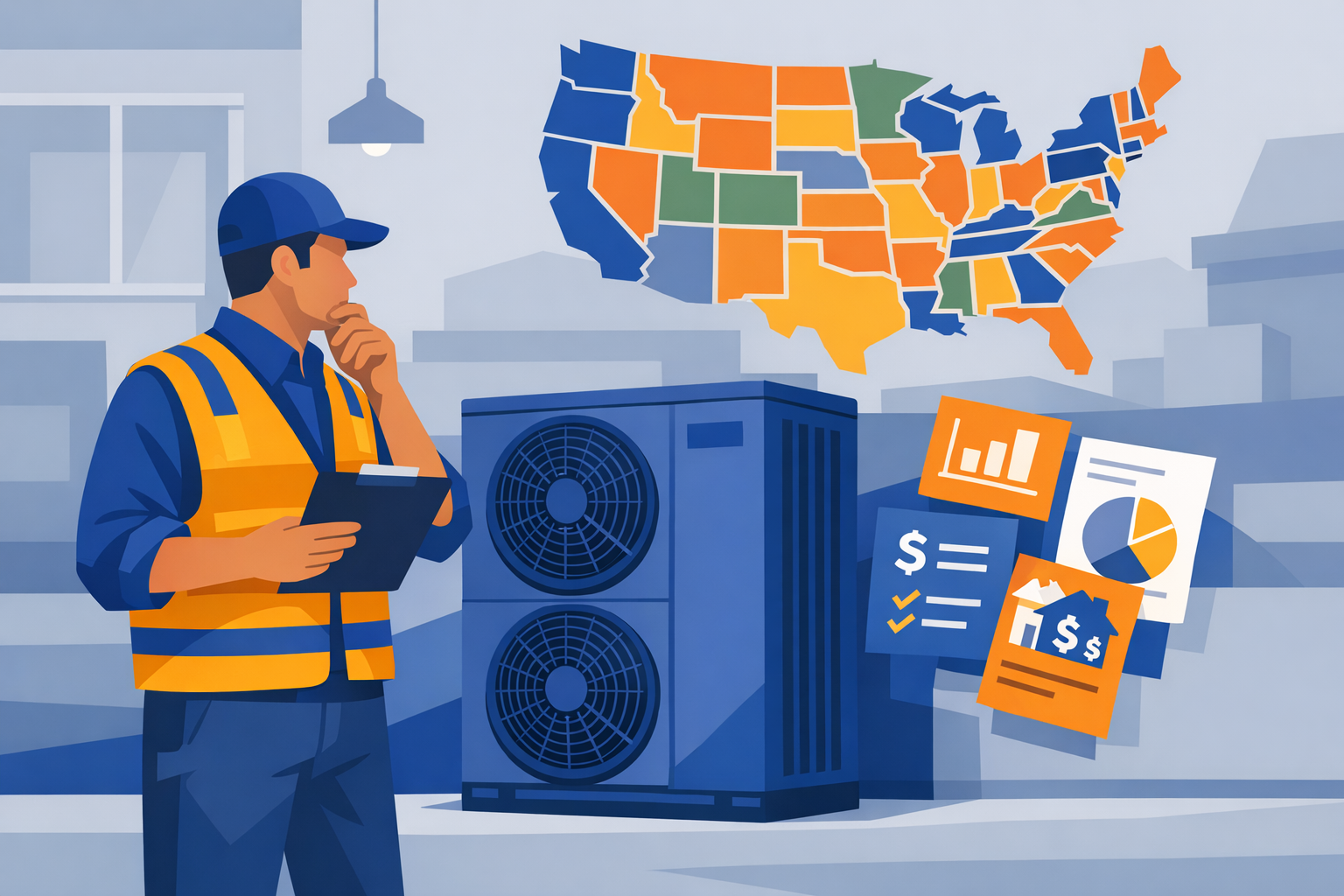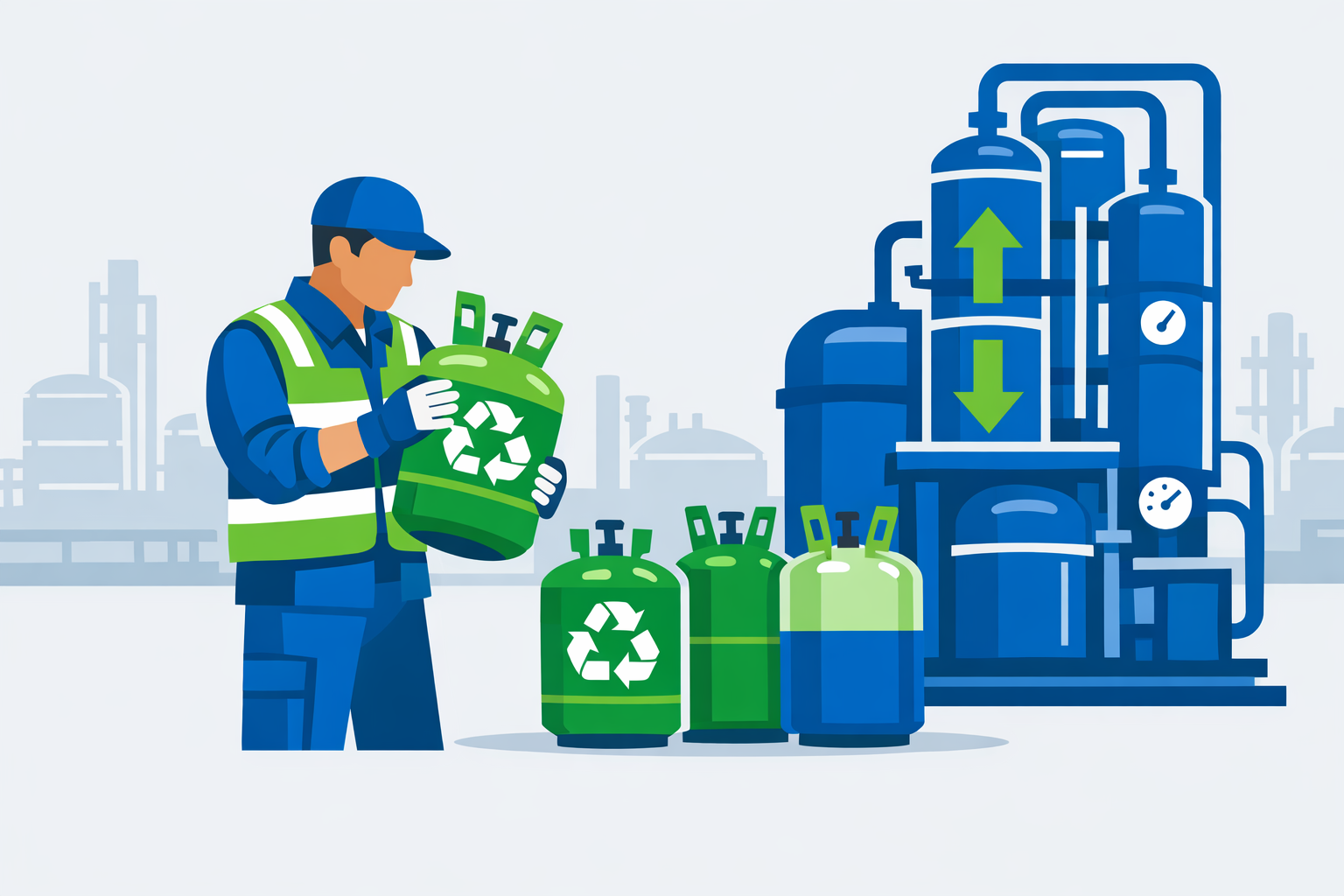
The accelerating U.S. phase-down of hydrofluorocarbons (HFCs) under the American Innovation and Manufacturing (AIM) Act is driving a structural shift toward reclaimed refrigerant, reshaping supply chains, pricing dynamics, and compliance obligations for distributors and HVAC/R technicians. With virgin HFC supply quotas declining on a fixed statutory schedule and major new management rules now in force, the reclamation market is transitioning from a niche recovery activity to a primary pillar of refrigerant supply.
Background
The AIM Act, enacted December 27, 2020, directs the EPA to phase down HFC production and consumption to 15% of historic baseline levels by 2036 through an allowance allocation and trading program. The phasedown schedule started with a 10% reduction in 2022 and a further decrease in 2024 to 60% of baseline levels, according to EPA data. Alongside supply quotas, the statute directs EPA to maximize reclamation and minimize HFC releases from equipment - a mandate that has produced distinct regulatory programs governing how refrigerants are managed, recovered, and reused.
Internationally, the Kigali Amendment to the Montreal Protocol, adopted in 2016, established a binding global timetable for HFC phase-downs, with most developed nations implementing quota systems or product bans as their primary compliance mechanism, according to the Global Cold Chain Alliance. The EU's revised F-Gas Regulation, published February 20, 2024, targets a full long-term phase-out of F-gases, with service bans on virgin refrigerants above GWP 2,500 already applying to small refrigeration systems in 2025, per Danfoss. Reclaimed and recycled refrigerant remains permitted under EU rules even as virgin supply is restricted.
Details
In the United States, regulatory pressure on the reclamation market intensified in 2025 on multiple fronts. Beginning January 1, 2025, disposable refrigerant cylinders must be sent to a reclaimer to remove the refrigerant heel, per AIM Act requirements. The EPA's Emissions Reduction and Reclamation Program establishes requirements for recordkeeping, reporting, and labeling associated with HFC management and reuse, according to the EPA's regulatory actions page. Starting January 1, 2026, the HFC Leak Repair and Management Rule requires mandatory leak detection and repair for owners and operators of HFC-containing appliances with a refrigerant charge of 15 pounds or greater, as documented by Hunton Andrews Kurth. These requirements are expected to generate substantially greater volumes of recovered refrigerant entering the reclamation stream.
The supply constraint on virgin HFCs is strengthening the economic case for reclaimed product. According to market analysis, prices for reclaimed R-22 in North America reached as high as $55 per pound during supply-tight periods in 2024 and early 2025, creating significant margin opportunities for certified reclaimers. In Europe, prices of R-404A and R-410A doubled between 2017 and 2019 during the initial phase-down, a precedent analysts cite as a model for what U.S. HFC markets may experience as AIM Act quotas tighten further, according to Reports and Data. Similar price spikes have already been observed in the U.S. as AIM Act quotas tightened in 2024.
Distributor investment in reclamation infrastructure is accelerating. A-Gas completed additional separation towers at its Rhome, Texas facility in April 2024 to increase reclaimed output and support AHRI-grade product quality, according to Mordor Intelligence. In 2025, Honeywell announced expanded reclamation partnerships with HVAC equipment manufacturers to increase the supply of certified reclaimed refrigerant to the North American servicing market. Reclaimers process recovered HFCs to the purity standard defined by AHRI Standard 700-2016 before returning them to service channels; material too contaminated for reclamation is routed to destruction facilities, according to EPA's analysis of the U.S. HFC reclamation market.
The EPA's proposed reconsideration of the 2023 Technology Transitions Rule - published October 3, 2025, with the comment period closing November 21, 2025 - introduces additional complexity. EPA is proposing to adjust the GWP threshold for supermarket systems and remote condensing units from 150 or 300 to 1,400 starting January 1, 2026, reverting to original limits from January 1, 2032, per Hunton's regulatory update. While this would extend the serviceability of high-GWP HFC systems in certain sectors, it simultaneously sustains near-term demand for reclaimed legacy refrigerants. EPA's enforcement focus under its March 2025 memorandum is directed at the unlawful import and subsequent sale of HFCs, rather than installation ban violations under reconsideration.
Outlook
Technicians and service organizations should anticipate tighter reclaimed refrigerant supply chains and higher costs as AIM Act allowance step-downs continue. The AIM Act directs HFC production and consumption allowances to decrease to 15% of historic baseline levels by 2036, meaning the window for cost-competitive virgin HFC sourcing will narrow progressively. Distributors investing now in certified reclamation networks and AHRI-compliant processing capacity are positioned to meet growing service demand across the large installed base of HFC-dependent HVAC and refrigeration systems. The EPA's ongoing work on its proposed Emissions Reduction and Reclamation Program - if finalized - is expected to impose further requirements on reclamation volumes and reporting, reshaping supply chain obligations across the distribution tier.
Related coverage: EPA Downgrades Enforcement of Jan. 1, 2026 HVACR Rule | EPA Considers Extended Deadlines for Low-GWP Refrigerant Rollout in HVAC/R