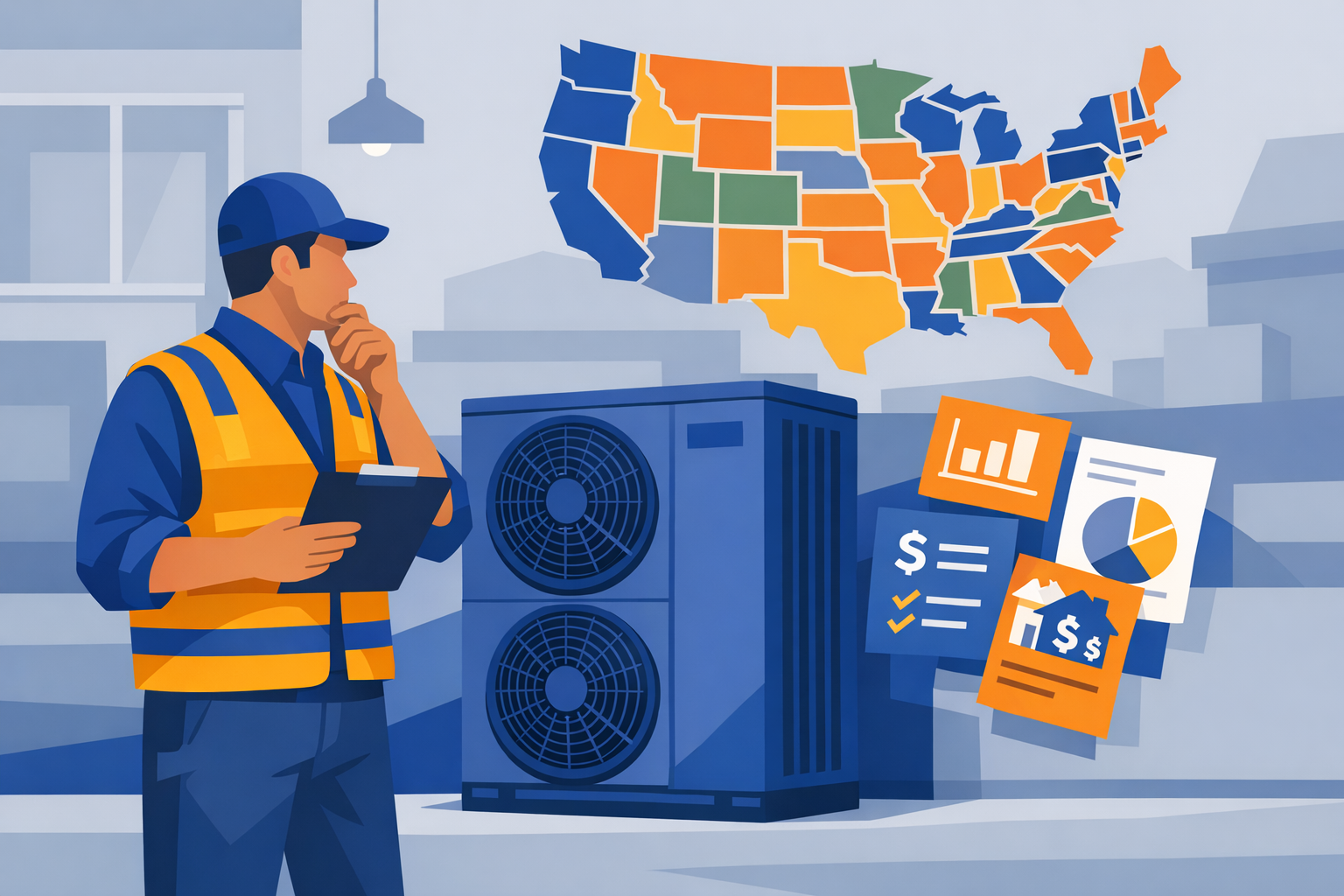
The U.S. HVAC industry is accelerating adoption of digital, simulation-based training systems to standardize credentials and move new technicians into the field faster, as a shortage exceeding 110,000 skilled workers strains contractors nationwide. The push combines online learning management systems, 3D equipment simulations, and structured pathways to recognized certifications - arriving as the simultaneous A2L refrigerant transition raises the technical bar for every technician in the trade.
Background
The HVAC labor shortage has reached crisis levels, with industry experts reporting a gap exceeding 110,000 skilled technicians nationwide. The deficit reflects a fundamental demographic shift: experienced technicians are retiring faster than new workers enter the field. More than 50% of the current HVAC workforce is over age 45, and replacements are not keeping pace.
Demand is rising simultaneously. According to the U.S. Bureau of Labor Statistics, employment for heating, air conditioning, and refrigeration mechanics and installers is projected to grow 8% from 2024 to 2034 - much faster than the average for all occupations - generating approximately 40,100 job openings each year on average.
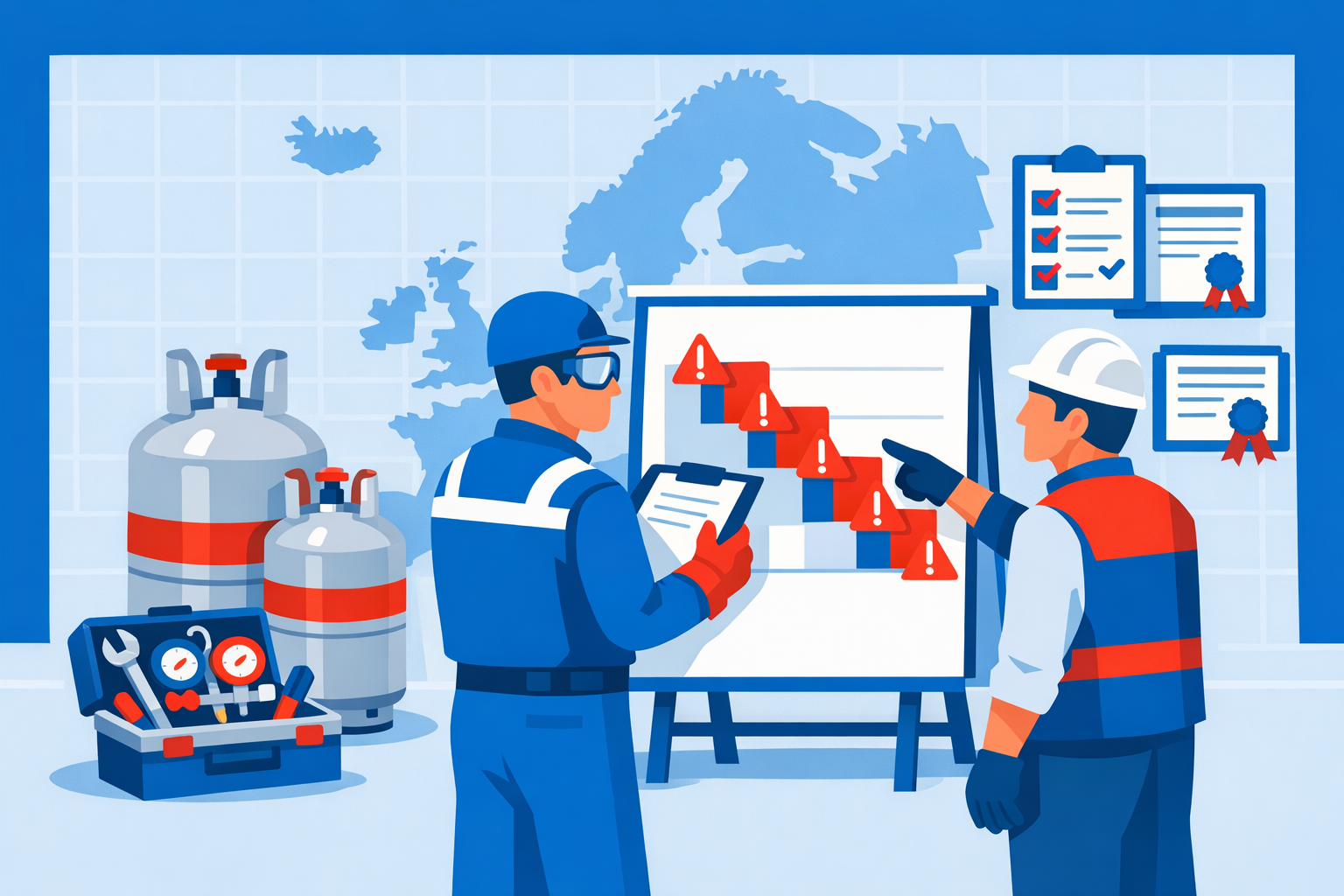
The refrigerant transition compounds the urgency. As of January 1, 2025, the manufacture and importation of refrigerants with a global warming potential greater than 700 is prohibited. With the industry shifting to mildly flammable A2L refrigerants under the AIM Act, specialized safety and handling training has become essential. Technicians are now expected to hold credentials beyond EPA Section 608, with certifications covering smart HVAC controls, IoT device installation, and energy-efficient systems gaining traction.
Details
NATE - North American Technician Excellence - has partnered with Interplay Learning to create the NATE Training Academy, an online platform that enables technicians to prepare for NATE certification exams at their own pace. Technicians earn NATE Continuing Education Units (CEUs) upon completing Interplay Learning HVAC courses, helping them accumulate the 16 CEUs required for recertification every two years. NATE also offers a Low-GWP study guide and a one-hour Low-GWP training module on the academy to support preparation for A2L refrigerant handling.
The NATE Low-GWP certification exam covers A2L refrigerants and verifies that technicians possess the skills and knowledge to use these refrigerants safely. NATE Recognized Training Providers (RTPs) span manufacturers, wholesalers, distributors, contractors, trade associations, and educational organizations across the HVACR industry.
Broader platform adoption is also accelerating among contractors. A Learning Management System (LMS) hosts training content, enrolls staff, and tracks progress from a central hub - ensuring every technician receives standardized training regardless of location, whether a single city or multiple states. Employers are further upgrading methods by integrating virtual and augmented reality (VR/AR), which offer immersive, hands-on experiences in a safe environment. These tools allow technicians to practice complex repairs and troubleshoot equipment without the risks and costs of on-site training.
Industry research indicates that investing in robust training programs can increase technician retention rates by 30-50%, with companies that do so reporting a 24% higher profit margin.
To address the ongoing labor shortage, many companies are incentivizing young talent to enter the trades through apprenticeships and accelerated education paths. Participants receive competitive pay during training without the burden of college debt.
Outlook
Training programs are increasingly structured as accelerated, certification-focused courses - often six to twelve months - designed to make new hires "truck-ready" faster than traditional models. These programs emphasize high-demand credentials such as EPA 608 and NATE certification, combined with intensive hands-on lab work. The technician shortage is not expected to improve significantly until 2028 or later, when current apprentices graduate at scale. Additional regulatory changes are anticipated as local jurisdictions realign codes with federal standards; the 2027 International Mechanical Code includes key revisions intended to ease the transition to A2L refrigerants.