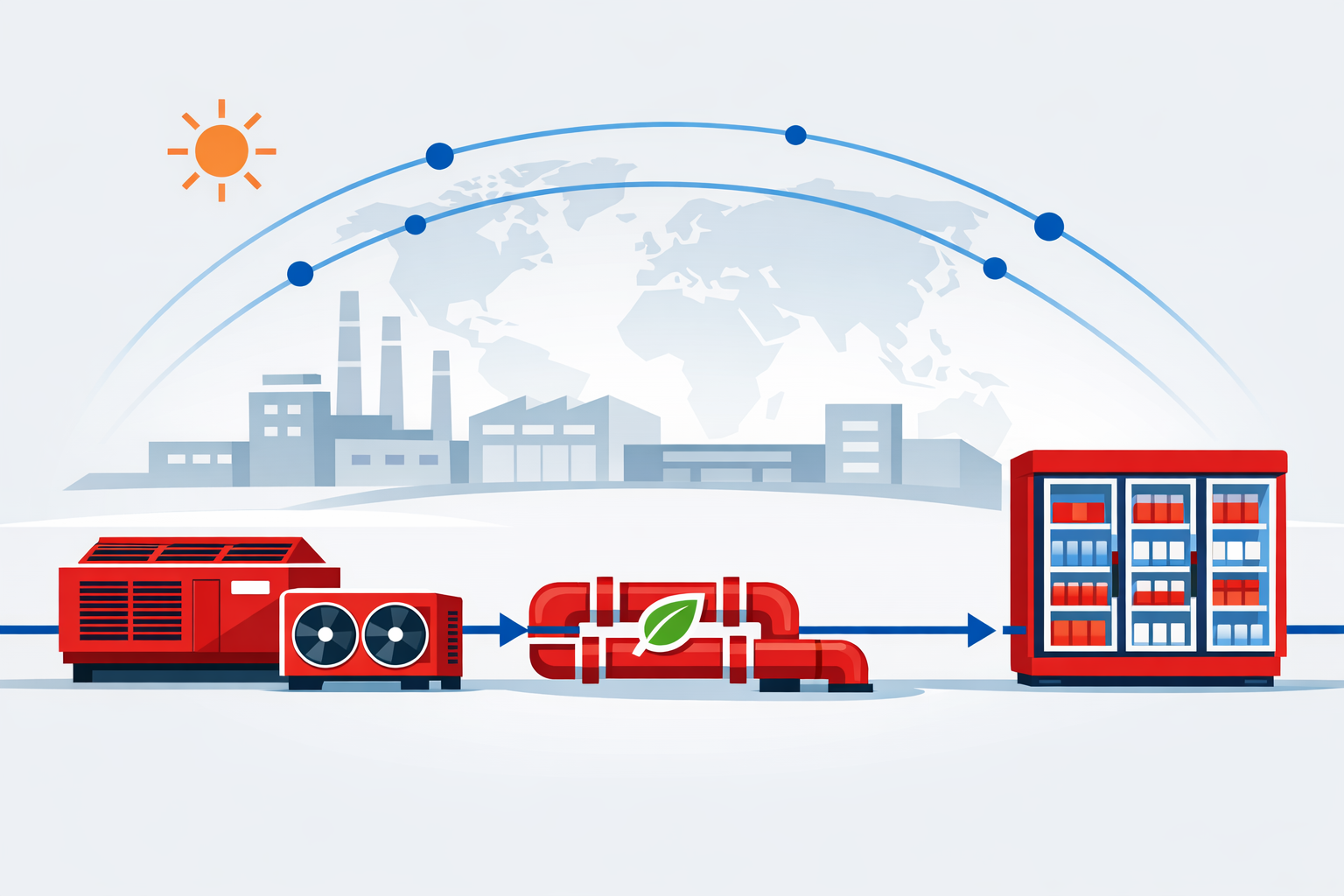
Panasonic Holdings Corporation will merge its Heating & Ventilation A/C Company with divisions of its Cold Chain Solutions Company to create new operating entities, effective April 1, 2026. This move consolidates HVAC and refrigeration functions under a single vertical structure. Following the reorganization, operations will span three companies within the Sustainable & Climate Tech Group. One will be renamed Panasonic HVAC & CC Co., Ltd.[1]
Background
In July 2025, Panasonic announced plans to consolidate its HVAC and cold-chain business units. Legal and structural changes will take effect April 1, 2026.[1] The restructuring integrates residential air conditioning, A2W (air-to-water) and hydro solutions, heating and cooling devices, and indoor air quality divisions with elements of the cold-chain business. Commercial HVAC and cold-chain divisions will form Panasonic HVAC & CC Systems Co., Ltd., while facility engineering moves to Panasonic Environmental Systems & Engineering Co., Ltd.[1]
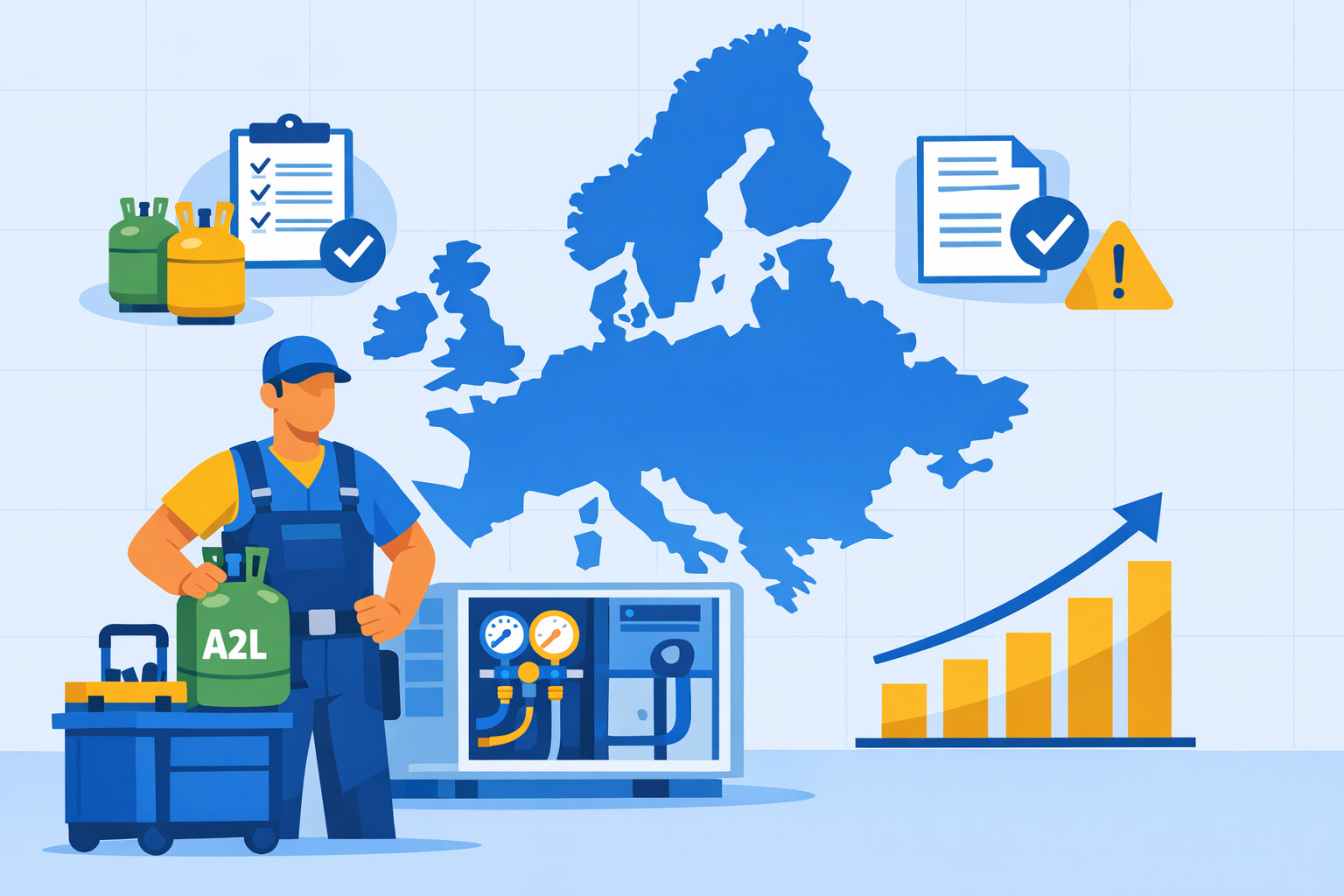
This vertical integration aligns climate control and refrigeration expertise within unified leadership. Industry analysts view the move as a response to rising demand for low-GWP (global warming potential) refrigerants and enhanced system interoperability. In Europe, Panasonic's acquisition of Area Cooling Solutions (excluding compressors) in December 2024 established Panasonic Cold Chain Poland (PCCPL), advancing local manufacturing and R&D capabilities.[2]
Details
PCCPL now operates as Panasonic's fourth European manufacturing site. It includes a dedicated R&D team and a refrigeration laboratory set to open in early 2026, focused on condensing unit and refrigerant system innovation.[3] Panasonic's iCORE and iCOOL lines, introduced in mid-2025, offer natural CO₂ (R744) systems and inverter-controlled models designed for HFCs and A2L refrigerants, supporting efficiency and regulatory compliance.[4]
According to market data, Panasonic holds over 30% of the European CO₂ condensing unit market, driven by a 200% year-on-year sales increase from 2023 to 2024. Growth is attributed to expanding demand for natural refrigerants and favorable regulatory conditions.[5]
Outlook
The integration is expected to streamline Panasonic's development of unified HVAC, refrigeration, diagnostics, and refrigerant management systems. This positions the company to influence industry standards, guide service practices, and allocate resources across a consolidated platform, with potential implications for regulatory adaptation and supply-chain strategies in HVAC and cold-chain markets.