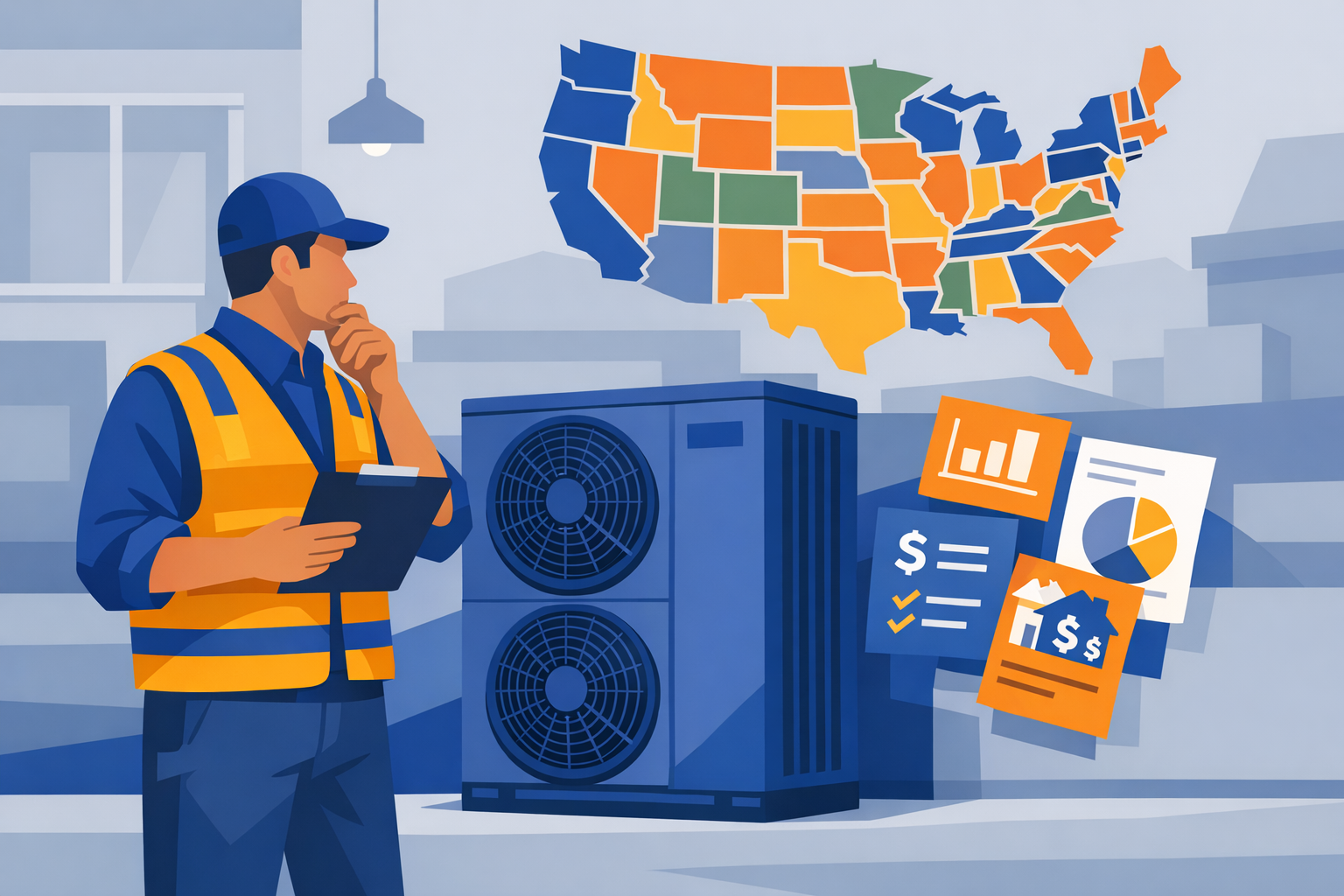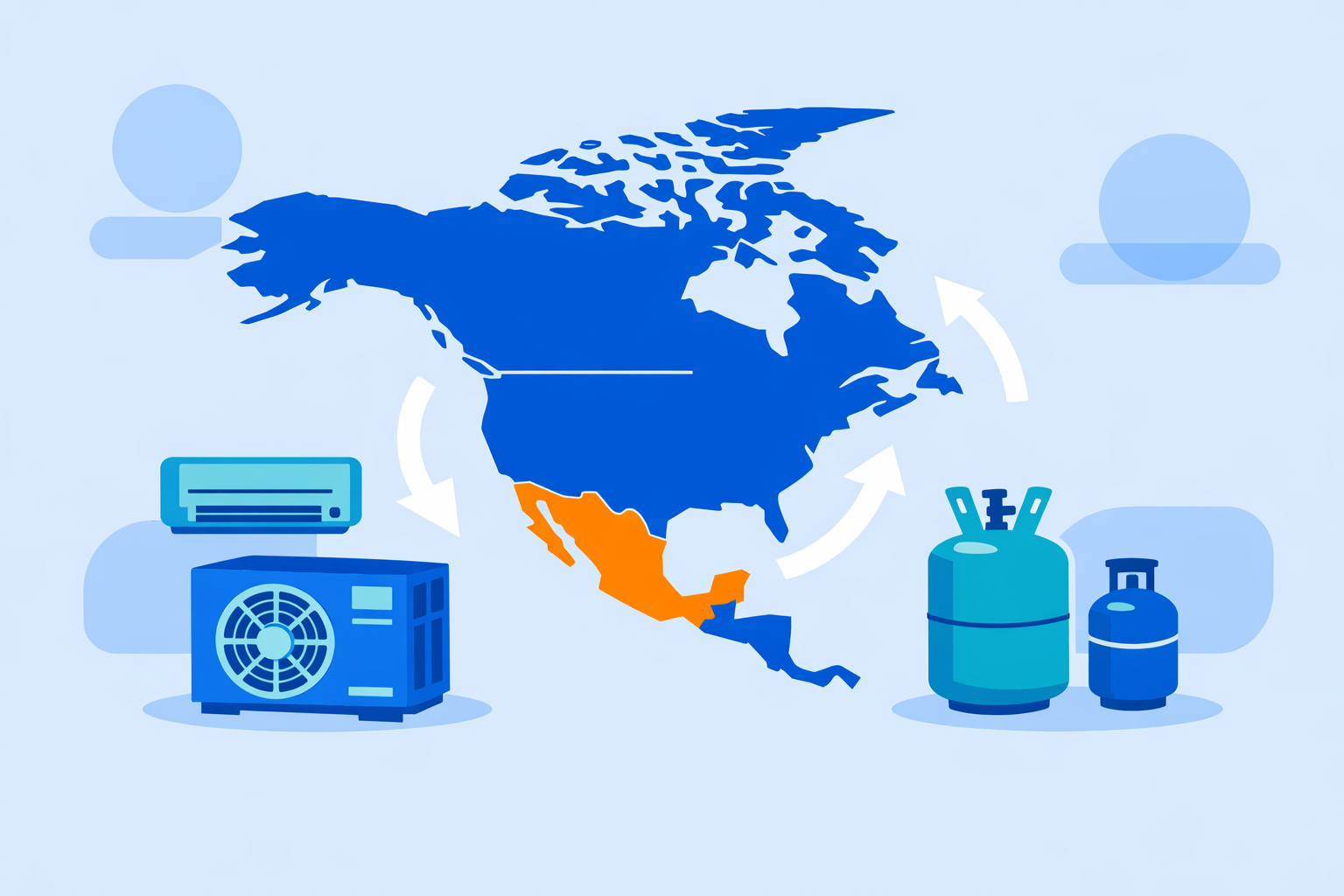
Mexico has codified new consumption limits for ozone-depleting and high-GWP refrigerants, imposing stricter controls on the HVAC and refrigeration sector as diverging enforcement postures in the United States and Canada already create cross-border compliance complexity. The regulation establishes maximum allowable consumption levels for hydrochlorofluorocarbons (HCFCs) for the 2026-2030 period, published on January 23, 2026, in the Official Gazette of the Federation by the Ministry of Environment and Natural Resources (SEMARNAT). It defines the final phase of Mexico's national HCFC phaseout while signaling parallel tightening of hydrofluorocarbon (HFC) controls - affecting contractors, distributors, and equipment manufacturers across North American markets.
Background
The Kigali Amendment to the Montreal Protocol, adopted in 2016, established binding timetables for HFC phase-downs and has become the centerpiece of international refrigerant collaboration. Under its roadmap, Mexico committed to freezing HFC consumption in 2024, achieving a 10% reduction by 2029, and ultimately cutting HFC consumption by 80% by 2045.
Mexico's progress on legacy HCFCs has been substantial. By 2024, the country achieved an 84.2% reduction in HCFC consumption compared with the 2013 baseline. The plan has already phased out HCFCs in commercial and domestic refrigeration, aerosols, foams, and solvents. Mexico has also built a parallel control structure for HFCs. Since July 2022, SEMARNAT has been authorized to assign import quotas for HFCs, which took formal effect on January 1, 2024. Additional requirements include the General Import and Export Tax Law published in June 2022, which introduced 22 specific customs tariffs for HFCs, pure or in blends, to ensure correct classification and control.
In 2022, the predominantly consumed substances in Mexico were R-410A, accounting for 45.4% of total HFC consumption in CO₂-equivalent tonnes, R-404A at 25.1%, and HFC-134a at 13.7%. These are precisely the refrigerants now facing the steepest regulatory headwinds globally.
Regulatory Details and Enforcement Mechanisms
SEMARNAT reviewed the National Refrigerant Life-Cycle Management Plan in October 2025 to identify improvement opportunities, with particular focus on strengthening the network of Recovery and Recycling Centers for Refrigerants (CRRR) and Collection and Destruction Centers (CAyD). The review aimed to consolidate a technical document to help prevent and reduce emissions of ozone-depleting substances and HFCs, support circular economy models, and foster environmentally sound refrigerant management.
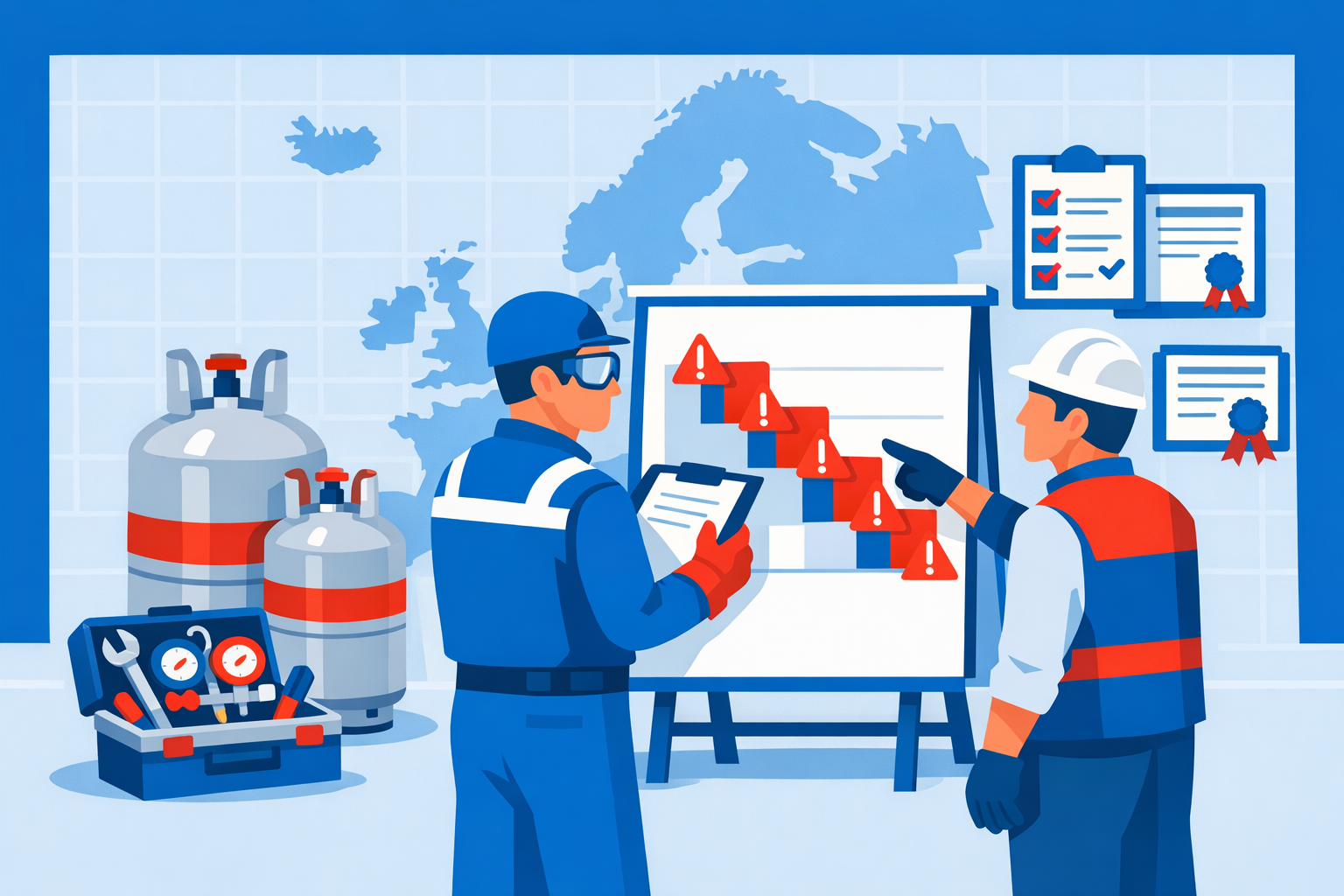
The final phase of the HCFC phaseout plan focuses on technical support for the service sector, which still relies on HCFCs. Measures include training programs, equipment donations, and official certification for refrigeration and air-conditioning technicians. Additional enforcement steps cover training customs personnel to prevent illicit HCFC trade.
Mexico's Kigali implementation roadmap adopts a sectoral approach centered on refrigeration and air conditioning, with a policy architecture resting on four pillars: regulation - including import/export licensing systems - strategic planning, implementation, and reporting and verification mechanisms.
The North American context is complicated by diverging U.S. regulatory signals. On January 1, 2026, the U.S. EPA's HFC Leak Repair and Management Rule took effect, placing mandatory leak detection and repair requirements on owners or operators of HFC-containing appliances with a refrigerant charge of 15 pounds or greater. However, on March 12, 2025, the EPA announced reconsideration of its Technology Transitions Rule as one of 31 deregulation priorities. Under the reconsideration proposal, the EPA would adjust the GWP threshold for remote condensing units and supermarket systems from 150 or 300 to 1,400 starting January 1, 2026.
Tariffs have generated pronounced supply-chain volatility, with distributors facing unpredictable pricing cycles as international suppliers attempt to offset import control costs. In Mexico, HCFC replacements include natural refrigerants such as hydrocarbons, ammonia, and carbon dioxide. The most common low-GWP alternatives are classified by ASHRAE as mildly flammable (A2L), and their adoption requires updates to standards and building codes to allow safe installation.
Outlook
SEMARNAT, in collaboration with the Government of Canada and the United Nations Development Programme (UNDP), is advancing a project supporting Kigali Amendment implementation for the HFC phase-down in Mexico. The initiative focuses on promoting adoption of low-GWP refrigeration technologies and strengthening energy efficiency in the commercial sector. Trilateral cooperation between Canada, Mexico, and the United States on phasing out these pollutants dates to 2010 under the Montreal Protocol framework.
For HVAC contractors and distributors operating across borders, Mexico's tightening quota system, expanding customs controls, and mandatory technician certification requirements represent concrete compliance obligations that diverge from the U.S. federal deregulatory pivot - requiring firms to manage two distinct regulatory regimes simultaneously within the same continental supply network.