UNEP OzonAction convened Italy and China for a joint training initiative in November 2025, bringing EU certification frameworks for natural refrigerants to Chinese technicians for the first time under a multilateral protocol structure.
UNEP OzonAction organized the workshop titled "Good Servicing Practices for Cold Storage Applications and Safe Handling of Natural Refrigerants" in Guangzhou, China, from November 4 to 7, 2025. The event took place under Stage II of China's HCFC Phase-out Management Plan (HPMP), supported by the Multilateral Fund for the Implementation of the Montreal Protocol. It brought together the Italian training institute Centro Studi Galileo and China's Foreign Environmental Cooperation Center (FECO) under the Ministry of Ecology and Environment, alongside the Chinese Association of Refrigeration (CAR). The training focused on best practices for servicing cold storage systems using ammonia (NH3) and ammonia-carbon dioxide (NH3/CO2) cascade systems.
Background
The collaboration comes as both regions face accelerating regulatory pressure to eliminate high-GWP refrigerants and build credentialed workforces capable of handling alternatives. On March 11, 2024, the EU's revised F-gas Regulation (EU) 2024/573 entered into force, setting a complete ban on HFCs by 2050 and mandating that member states develop new training and certification programs for technicians working with natural refrigerants. The regulation introduces six types of certification for installing, servicing, and repairing equipment using CO2 (R744), ammonia (R717), hydrocarbons, and synthetic refrigerants.
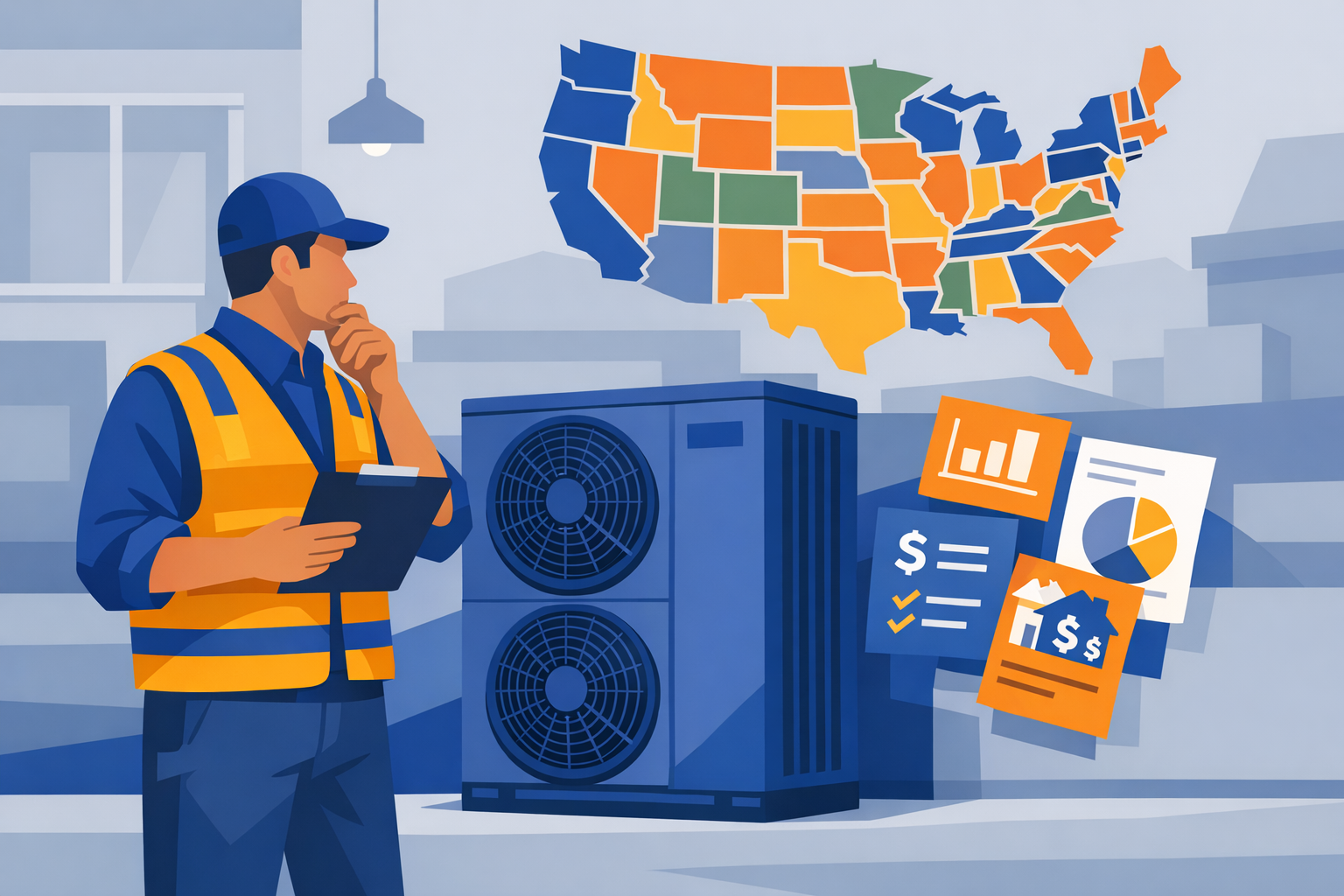
China is simultaneously operating under its own phase-down obligations. As a Group 1 Article 5 party to the Kigali Amendment, China initiated formal controls on HFC consumption from 2024, with the national baseline established at 905 Mt CO2-equivalent. China's national implementation plan targets a 97.5% reduction in HCFC production and consumption by 2030 from baseline levels, retaining only 2.5% for refrigeration and air conditioning maintenance. In April 2025, China announced a ban on refrigerants with a GWP greater than 150 in new passenger vehicles starting July 2029.
Details
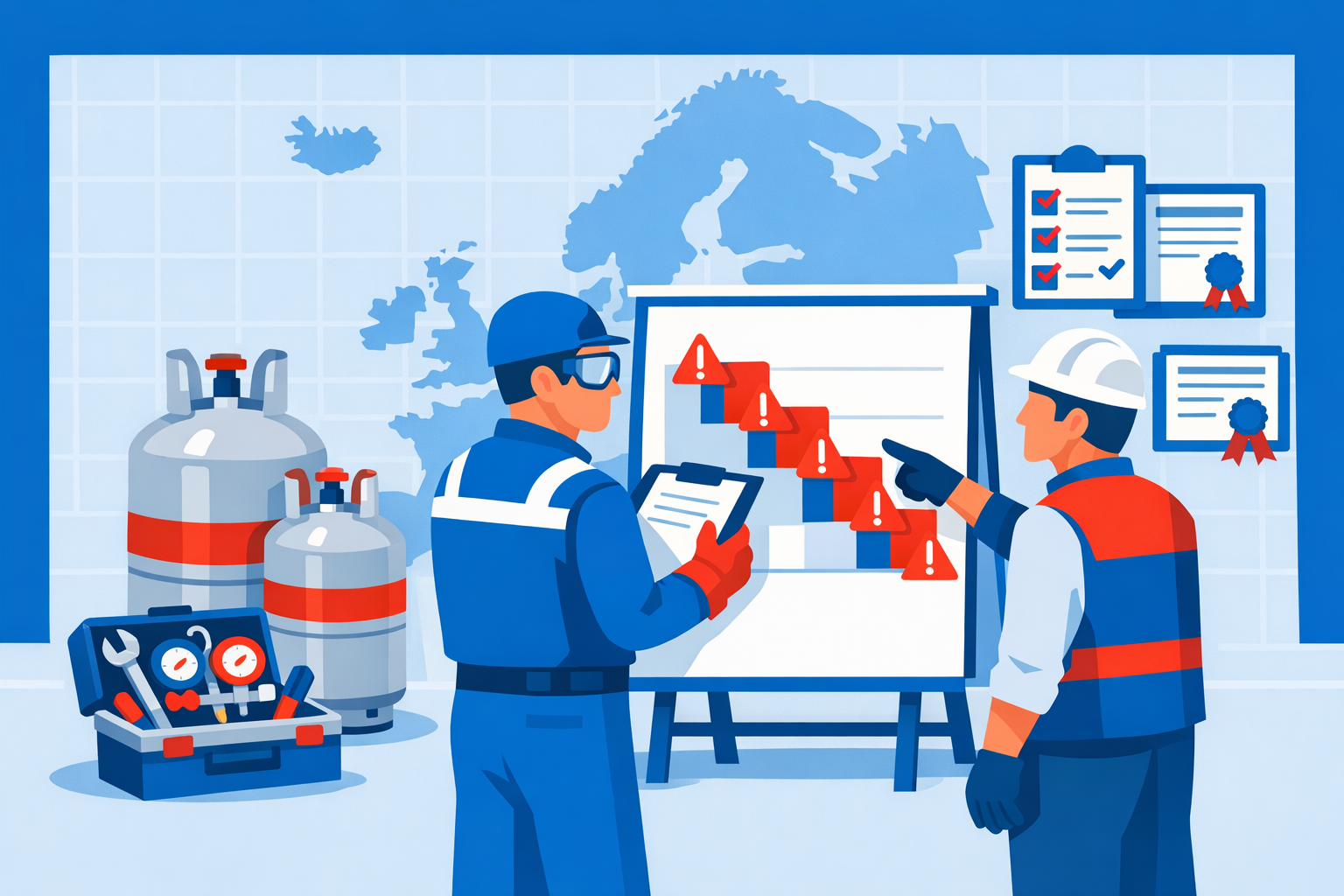
At the Guangzhou workshop, Marco Buoni, director of Italy's Centro Studi Galileo, presented the new EU training requirements for HVAC technicians. The session outlined how the EU's revised F-gas Regulation (EU) 2024/573 requires certificates for technicians to conduct leak checks and to install, repair, service, and decommission equipment using both fluorinated and natural refrigerants, covering stationary refrigeration, air conditioning, and heat pumps.
Under the EU's implementing regulation finalized in September 2024, member states had until September 2025 to adapt their national training and certification programs, with all existing F-gas handling certifications required to be updated to the new EU-wide standards by March 11, 2027. The six-certificate framework covers separate credentials for CO2 and ammonia systems, replacing the previous approach that addressed only F-gas equipment.
As part of China's South-South cooperation efforts, 20 refrigeration technicians and trainers from 13 countries across Asia, Africa, and the Pacific participated in the Guangzhou event. China's deployment of natural refrigerant technology is expanding: as of December 2025, an estimated 25 stores and 10 industrial sites in China were using transcritical CO2 refrigeration systems, according to ATMOsphere. In January 2026, Haier Carrier announced the completion of China's first automated production line for CO2 racks, which the company stated would increase production eightfold.
Centro Studi Galileo has established itself as a key international training partner for UNEP OzonAction. The institute has previously led F-gas certification workshops across African Francophone countries, and its director holds international affairs responsibilities within AREA, the European association of refrigeration, air conditioning, and heat pump contractors.
Outlook
The alignment of EU and Chinese technician training content marks an early step toward cross-border curriculum harmonization, though mutual accreditation recognition between the two regulatory regimes remains unresolved. China's national plan calls for a full phase-out of HCFCs across all industries by January 1, 2030, retaining only a maintenance allowance, which will accelerate domestic demand for technicians certified on natural refrigerant alternatives. With the EU standardized training framework entering national implementation by September 2025, pressure is mounting on global manufacturers and training bodies to develop mutually recognized credential pathways ahead of tightening market access requirements on both sides.