Representatives from the Italian and Chinese national ozone units met in Rome to align on technician training for natural refrigerants, signaling a broader cross-border push to harmonize certification standards as both markets accelerate their transitions away from high-GWP refrigerants. Discussions covered the EU's evolving certification framework, China's RACHP decarbonization strategy, and potential pathways for mutual recognition of technician qualifications across jurisdictions.
Background
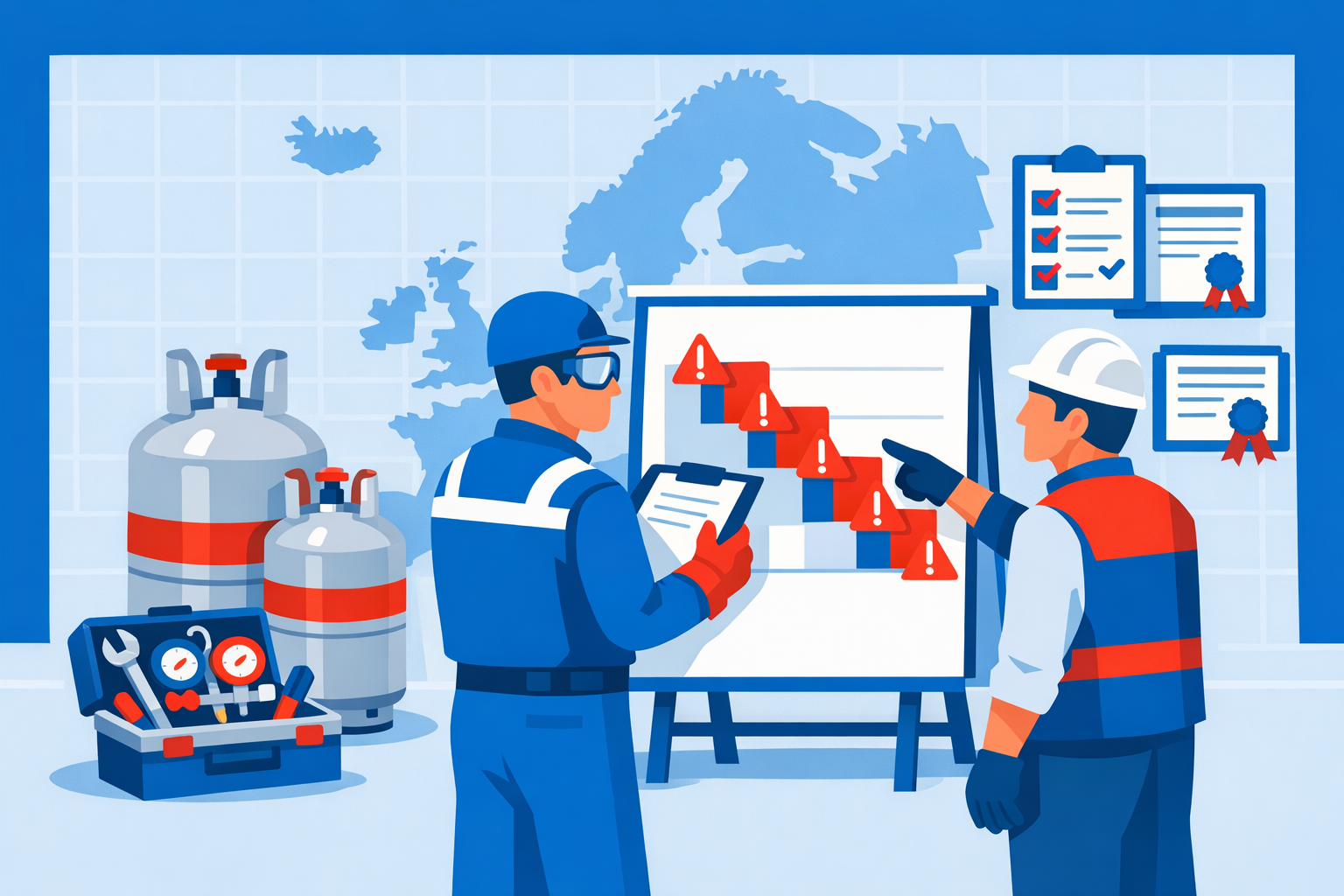
The meeting comes amid intensifying regulatory pressure on both sides. The EU's revised F-gas Regulation requires the development of training and certification programs for technicians working with natural refrigerants. The regulation introduces six certification categories for installing, servicing, and repairing equipment using CO2 (R744), ammonia (R717), hydrocarbons, and synthetic refrigerants.
In parallel, China has been building its own national infrastructure for refrigerant management. China's Country Program for 2025-2030 introduces specific requirements for servicing, recovery, reclamation, and destruction of refrigerants, mandates proper record-keeping of refrigerant procurement and usage, and promotes enhanced training and certification for professionals.
The bilateral talks also follow a series of multilateral efforts. At the 47th Open-Ended Working Group (OEWG-47) of the Montreal Protocol, held in Bangkok in July 2025, Centro Studi Galileo and the European association of refrigeration and air conditioning-with support from the International Institute of Refrigeration (IIR) and the Institute for Governance and Sustainable Development (IGSD)-convened global experts to raise awareness of the need for harmonized training, recognition for certified professionals, and adequate monitoring in the RACHP sectors.
Details
Members of the Chinese and Italian national ozone units met in Rome to discuss technician training for natural refrigerants and China's refrigerant transition in the refrigeration, air-conditioning, and heat pump sectors. Marco Buoni, director of Italy's Centro Studi Galileo, led a presentation detailing new training requirements for technicians in the European Union.
Separately, UNEP OzonAction organized an international training workshop on "Good Servicing Practices for Cold Storage Applications and Safe Handling of Natural Refrigerants" in Guangzhou, China, from 4 to 7 November 2025. The event took place under Stage II of China's HCFC Phase-out Management Plan (HPMP), supported by the Multilateral Fund for the Implementation of the Montreal Protocol. The workshop was conducted in collaboration with the Foreign Environmental Cooperation Center (FECO) of China's Ministry of Ecology and Environment and the Chinese Association of Refrigeration (CAR).
Training focused on best practices for servicing cold storage systems using natural refrigerants such as ammonia (NH3) and ammonia-carbon dioxide (NH3/CO2) cascade systems. As part of China's South-South cooperation efforts, 20 refrigeration technicians and trainers from 13 countries across Asia, Africa, and the Pacific participated.
China's natural refrigerant market remains nascent but is developing rapidly. As of December 2025, an estimated 25 stores and 10 industrial sites in China were operating transcritical CO2 refrigeration systems, according to an ATMOsphere market report. In January 2026, Haier Carrier announced it had completed China's first automated production line for CO2 racks, which it said would increase production eightfold.
On the regulatory compliance side, the European Commission has clarified that F-gas certification alone is insufficient for technicians handling ammonia or hydrocarbons. The Commission confirmed that occupational safety and health directives fully apply to technicians working with natural refrigerants and are not superseded by F-gas certification under the new EU fluorinated gas regulation. The ruling followed a petition filed by Italian training and consultancy firm CSIM SRL. For ammonia specifically, the Commission's position establishes that a technician certified for F-gas handling must still hold a toxic gas licence under Italian national law and that the employing company must carry out a specific chemical and ATEX risk assessment.
Outlook
Technician competence in installing, maintaining, and servicing RACHP systems is considered as critical as technological innovation. Without proper training, even the most advanced systems risk underperformance-leading to refrigerant leaks, excessive energy use, and increased safety hazards. The Rome bilateral meeting is expected to inform future cooperation frameworks under the Montreal Protocol, as both countries face pressure to build technically certified workforces capable of handling CO2, ammonia, and hydrocarbon systems at scale. UNEP OzonAction has expressed hope that training initiatives will help countries align with the Kigali Amendment and promote adoption of natural refrigerants in refrigeration servicing.