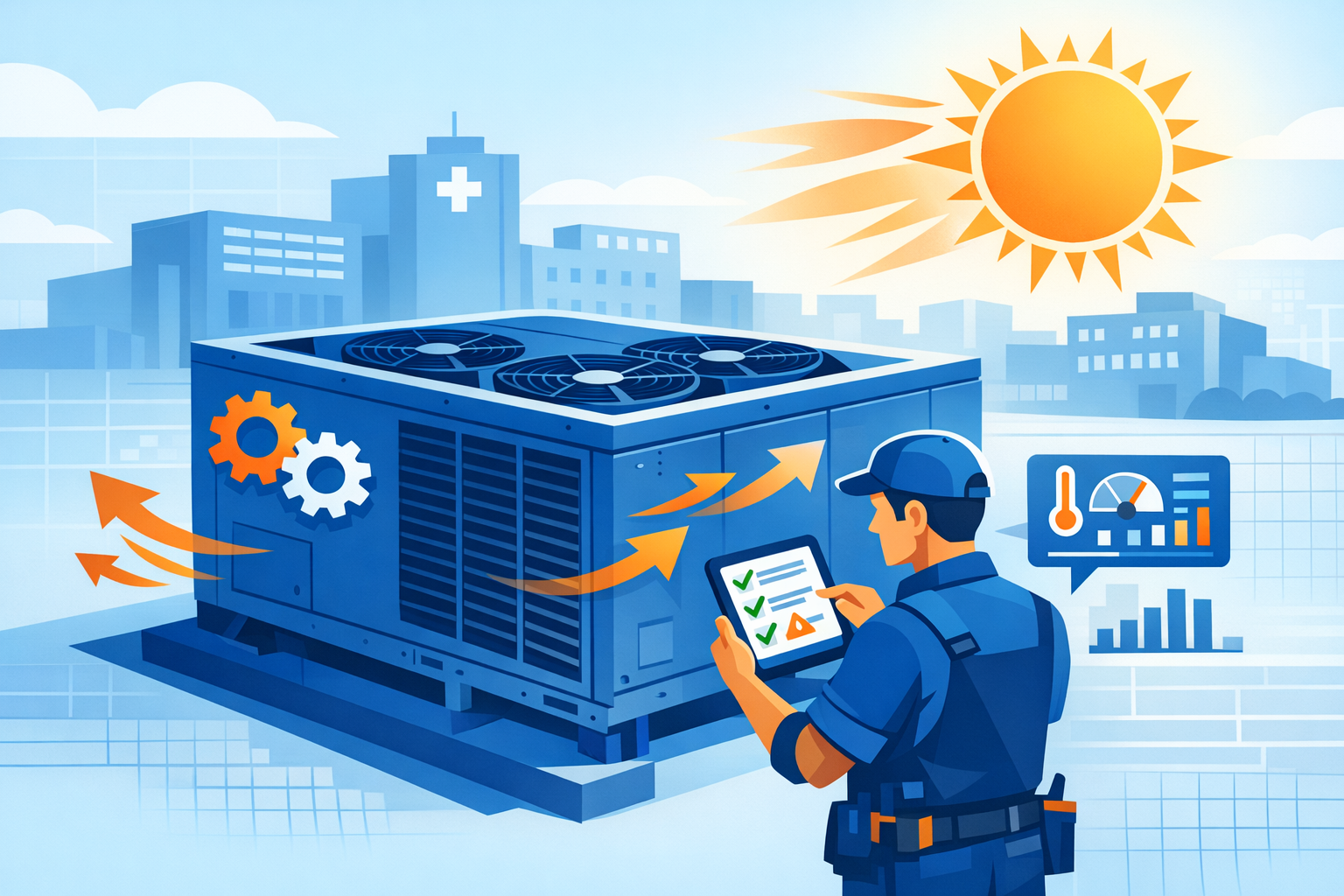
Building operators, manufacturers, and service providers are increasing preventive maintenance to enhance HVAC resilience as heatwaves intensify this spring. Stakeholders in commercial, critical, and institutional facilities are accelerating maintenance planning to minimize downtime and ensure reliability during peak cooling periods.
Background
Heatwaves and rising power grid pressures have revealed weaknesses in building cooling systems, leading to a renewed focus on HVAC resilience. Recent refrigerant regulations and changing compliance thresholds have elevated operational demands for facilities managers and service contractors[1]. The growing risk of downtime in healthcare, IT, and educational environments has reinforced preventive maintenance as a critical resilience component[2].
Details
Facilities managers are integrating HVAC and refrigeration assets into structured systems of record that enable lifecycle planning and preventive workflows. Digital tools, including computerized maintenance management systems (CMMS), are being widely adopted for consistent documentation and trend tracking[1]. Preventive maintenance programs deliver returns of $4 to $6 for every dollar invested by reducing energy waste and emergency repair expenses. Well-structured initiatives have documented energy savings of 15-25%[3]. Seasonal checklists-targeting chiller performance, coil cleanliness, outdoor units, and ventilation-are standardizing maintenance activities prior to periods of high cooling demand[4].
Data centers and mission-critical facilities increasingly prioritize retrofit and upgrade strategies over full system replacements. Common measures include integrating liquid cooling loops, implementing hot/cold aisle containment, and transitioning to low-GWP refrigerants such as R-454B or natural alternatives like CO₂ and ammonia[5]. Service providers are required to maintain specialized certifications and equipment inventories to support advanced systems and provide rapid emergency response, as unplanned outages can result in losses exceeding $100,000 per hour[5].
The adoption of AI and building automation technologies is accelerating. Edge-enabled platforms are achieving daily HVAC energy savings of 5-15% and maintaining temperature and occupant comfort above 85% of the time when compared to conventional room controllers[6].
Outlook
Operators and service contractors are expected to deploy predictive maintenance strategies leveraging AI and digital platforms. These efforts will reinforce preventive maintenance frameworks in anticipation of increased cooling demands and regulatory changes projected for 2026.