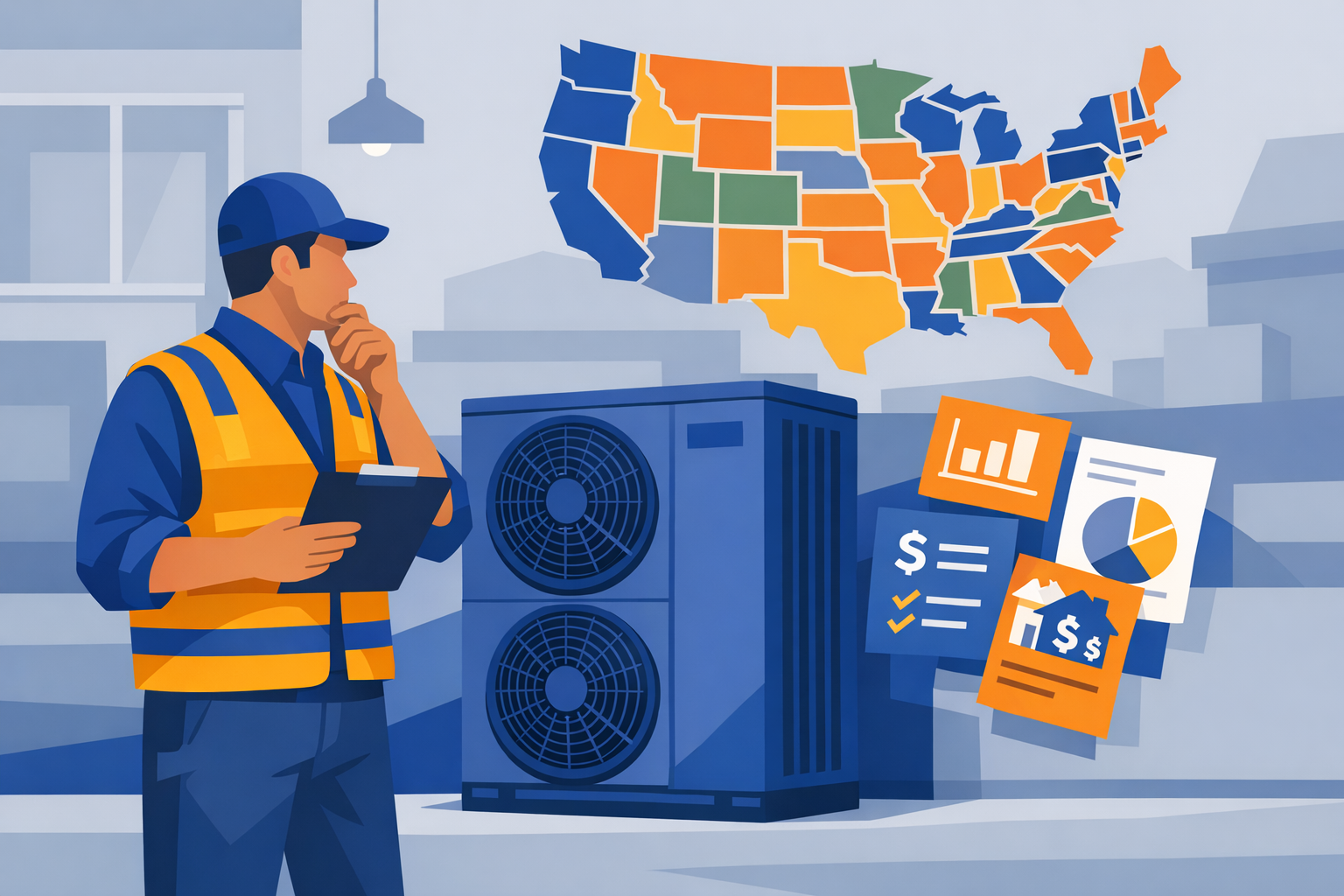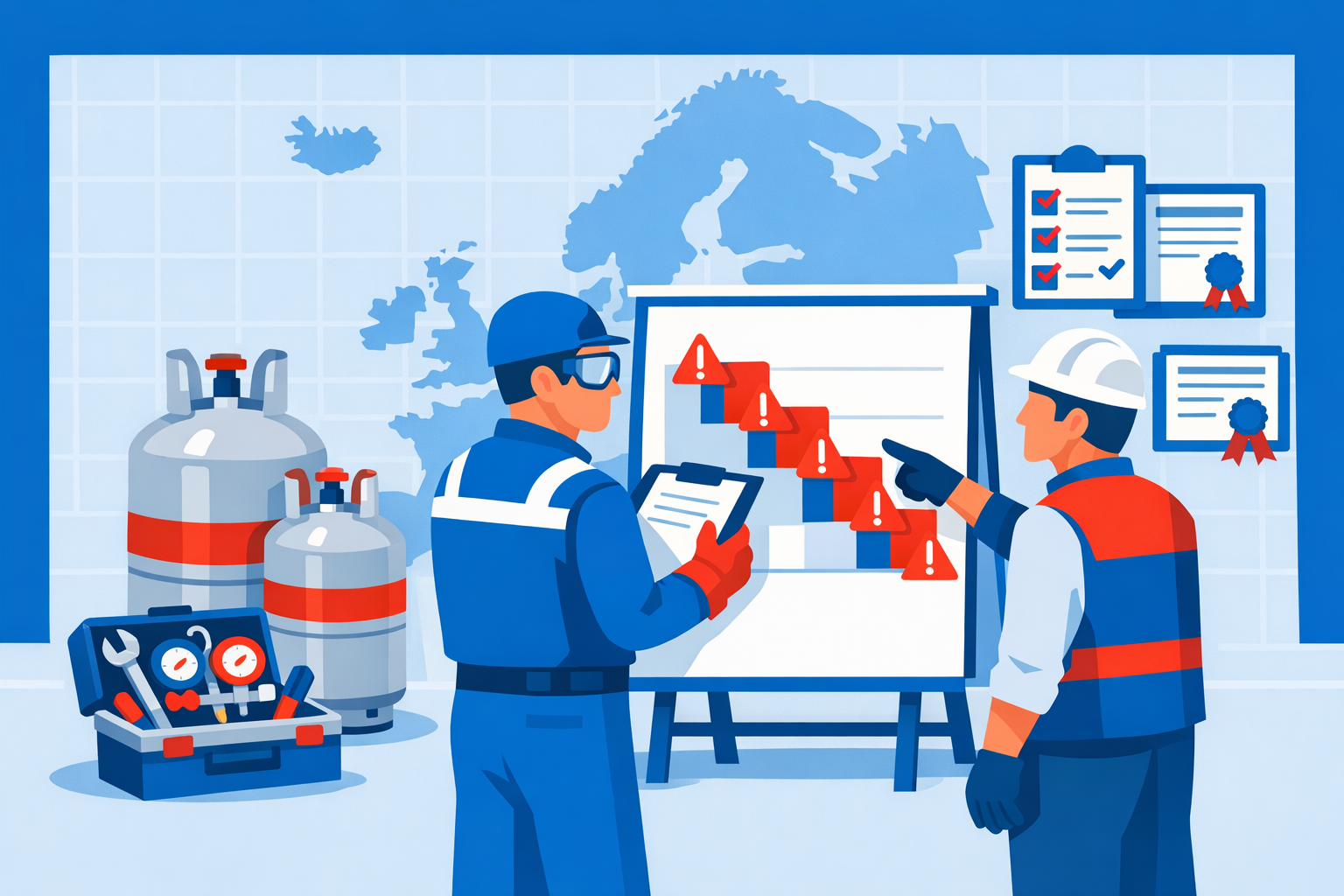
The EPA's Emissions Reduction and Reclamation (ER&R) Program took effect on January 1, 2026, introducing mandatory leak repair obligations, reclamation controls, and reporting requirements for HVAC and refrigeration operators across the United States. Compliance is not optional.
Background
Key provisions of the EPA's ER&R rule became active on January 1, 2026, expanding the AIM Act's regulatory footprint. Finalized in October 2024 under Subsection (h) of the AIM Act, the rule aims to minimize HFC releases, maximize refrigerant reclamation, and ensure technician and consumer safety.
The AIM Act, enacted on December 27, 2020, directs EPA to address HFCs in three ways: phasing down HFC production and consumption through an allowance allocation program, promulgating regulations to maximize reclamation and minimize equipment releases, and facilitating the transition to next-generation technologies through sector-based restrictions. Under the AIM Act, EPA is reducing HFC production and usage by 85% by 2036, with most of the phasedown occurring within a six-year window.
The ER&R Program is separate from the Technology Transitions rule, which governs GWP limits on new equipment and remains under reconsideration. HVAC firms must navigate both programs simultaneously.
Details
In practice, the ER&R rule introduces new leak repair obligations, tighter reclamation controls, expanded reporting, and - for large systems - mandatory automatic leak detection (ALD).
Leak repair requirements now apply to refrigerant-containing appliances with a full charge of 15 pounds or more of an HFC or HFC substitute with a GWP greater than 53, effective January 1, 2026. New appliances installed in 2026 must include ALD at installation or within 30 days. Existing systems installed between January 1, 2017, and January 1, 2026, have until January 1, 2027, to comply.
On reclamation, the ER&R rule caps virgin HFC content in reclaimed refrigerant at no more than 15% by weight, effective January 1, 2026. Refrigerant recovered from stationary equipment cannot be sold to another owner unless it has been reclaimed. EPA also limits the amount of virgin HFC used to "rebalance" reclaimed refrigerant to no more than 15% by weight. Containers of reclaimed HFC refrigerants must carry a label certifying compliance with this limit, and reclaimers must retain associated records for three years.
Reclaimers, distributors, and wholesalers of reclaimed HFC-containing refrigerants sold or distributed for servicing supermarket systems, refrigerated transport, and automatic commercial ice makers must submit two annual reports to the EPA. The first is due February 14, 2027, covering activity from January 1 through December 31, 2026. Quarterly reporting must be submitted through EPA's electronic Greenhouse Gas Reporting Tool (e-GGRT) by any entity that produces, imports, exports, recycles, destroys, reclaims, packages, or otherwise distributes HFC refrigerants.
No grace period exists for reporting under the ER&R rule. Entities reporting leaks must register and submit reports to EPA as needed during the leak repair process. Facilities in states such as California and Washington may need to report the same activity twice - once to EPA and once to state agencies - because ER&R reporting is a federal requirement, separate from state refrigerant management programs.
Looking ahead, the mandatory use of reclaimed HFCs for servicing and repair of supermarket systems, refrigerated transport, and automatic commercial ice makers does not begin until January 1, 2029. Separately, the rule requires the removal of HFC residuals - known as "heels" - from disposable cylinders by a certified reclaimer, with a compliance date of January 1, 2028.
Outlook
As of January 1, 2026, owners, operators, installers, servicers, recyclers, reclaimers, and disposers of HFC-containing appliances are subject to new requirements under both the ER&R Program and the Technology Transitions Program. Service contractors and building operators must now audit refrigerant inventories, verify reclaimer certifications, and establish recordkeeping systems that satisfy federal requirements. EPA has stated that enforcement of certain original Technology Transitions deadlines is a "low enforcement priority" pending finalization of proposed modifications - but no such leniency applies to the ER&R reclamation and reporting provisions, which remain fully active.