Federal mandates limiting virgin HFC content in reclaimed refrigerants took effect January 1, 2026, imposing new compliance obligations on contractors, distributors, and service providers across the U.S. HVAC and commercial refrigeration sectors. The requirements form part of the EPA's Emissions Reduction and Reclamation (ER&R) program, finalized in October 2024 under the American Innovation and Manufacturing (AIM) Act, and represent the most significant expansion of refrigerant management rules in decades.
Background
The ER&R program addresses the third part of the bipartisan AIM Act and arrives less than two years after President Biden signed the U.S. ratification of the Kigali Amendment to the Montreal Protocol. The AIM Act mandates an 85% phasedown of HFCs by 2036 through a schedule of gradual production and usage reductions. As virgin HFC supply contracts under that phasedown schedule, reclaimed refrigerant is expected to become the primary legal servicing supply for existing equipment running on high-GWP HFC blends.
Key provisions of the ER&R rule took effect January 1, 2026. Finalized under Subsection (h) of the AIM Act, the rule aims to minimize HFC releases, maximize refrigerant reclamation, and ensure technician and consumer safety. It applies to a wide range of entities that own, operate, service, repair, recycle, dispose of, or install HFC-containing equipment - meaning almost any commercial facility with HVAC systems is potentially affected.
Details
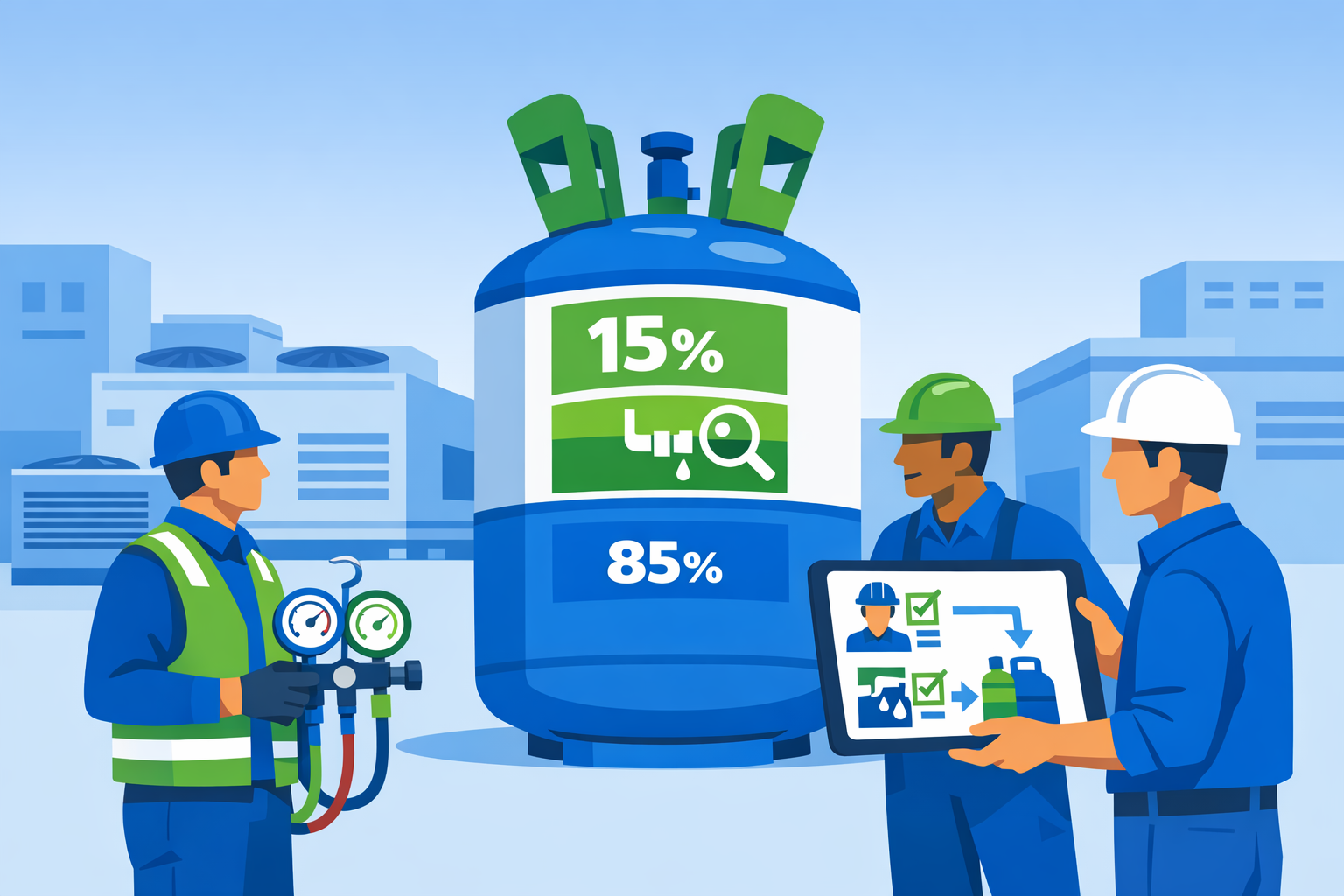
The ER&R program introduces several interconnected obligations with staggered deadlines. On reclamation standards, effective January 1, 2026, reclaimed HFC refrigerant containers are capped at 15% virgin HFC content by weight, applying at the batch level. The rule also prohibits the sale of refrigerants recovered from stationary equipment to a new owner unless the refrigerant is first reclaimed. The 15% cap applies only to the HFC portion of any blend. Containers of reclaimed HFCs must be labeled to certify compliance with the cap, and reclaimers must maintain batch-level records.
On mandatory reclaimed refrigerant use, starting January 1, 2029, servicing and repair of equipment in the supermarket system, refrigerated transport, and automatic commercial ice maker subsectors must be performed using reclaimed HFCs. Even if a company holds virgin HFCs in inventory, it will not be permitted to use them in existing equipment within these subsectors after 2029. That mandate was drafted with the assumption that a functional leak detection and repair regime beginning January 1, 2026, would progressively improve refrigerant recovery rates and build reclaimed supply. Without that foundation, the 2029 reclaim mandate risks hitting a market where reclaimers lack sufficient feedstock to meet demand.
Leak repair obligations apply to refrigerant-containing appliances with a full charge of 15 pounds or more of HFC refrigerant with a GWP greater than 53, effective January 1, 2026, though residential and light-commercial air conditioning and heat pump systems are exempt. New appliances installed in 2026 must include automatic leak detection (ALD) systems at installation or within 30 days. Existing systems installed between January 1, 2017, and January 1, 2026, have until January 1, 2027, to comply. The ALD requirement applies specifically to owners or operators of industrial process and commercial refrigeration appliances with a full charge of 1,500 pounds or more of refrigerants with a GWP greater than 53.
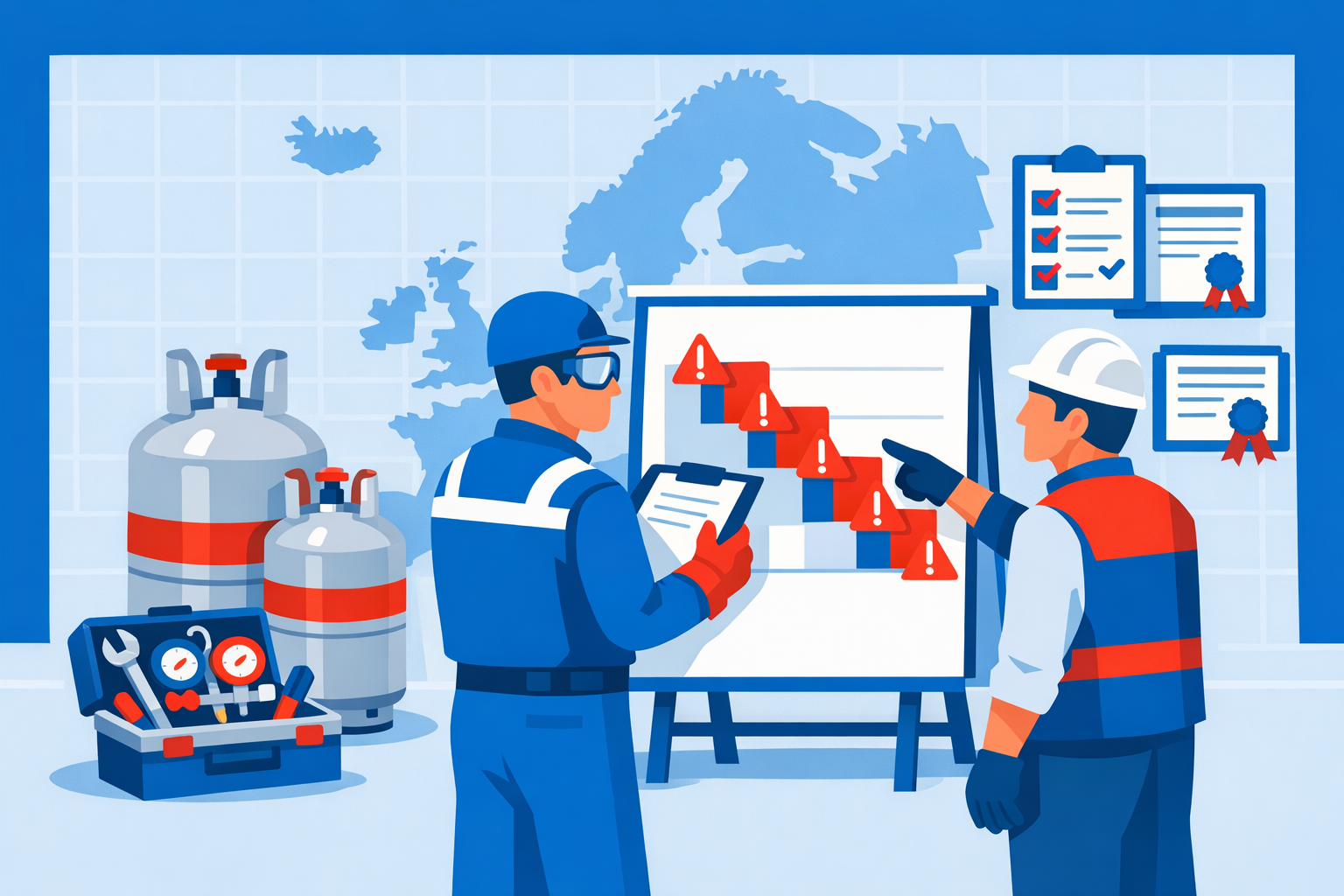
Technician training is now a codified obligation. The program requires operators to provide HFC emissions reduction training to fire suppression technicians starting January 1, 2026. For technicians hired on or before that date, training must be completed by June 1, 2026. For those hired after January 1, 2026, training must be conducted within 30 days of hiring or by June 1, 2026, whichever is later.
The EPA estimates that from 2026 through 2050, the rule will yield cumulative greenhouse gas emissions reductions of approximately 120 million metric tons of carbon dioxide equivalent, an incremental net benefit of at least $6.9 billion. Industry representatives, however, have flagged implementation challenges. At an EPA webinar, one stakeholder commented that "there aren't enough service technicians in the country to capture all of that data in a year", according to reporting by ACHR News, underscoring workforce capacity concerns that remain unresolved for many firms.
Outlook
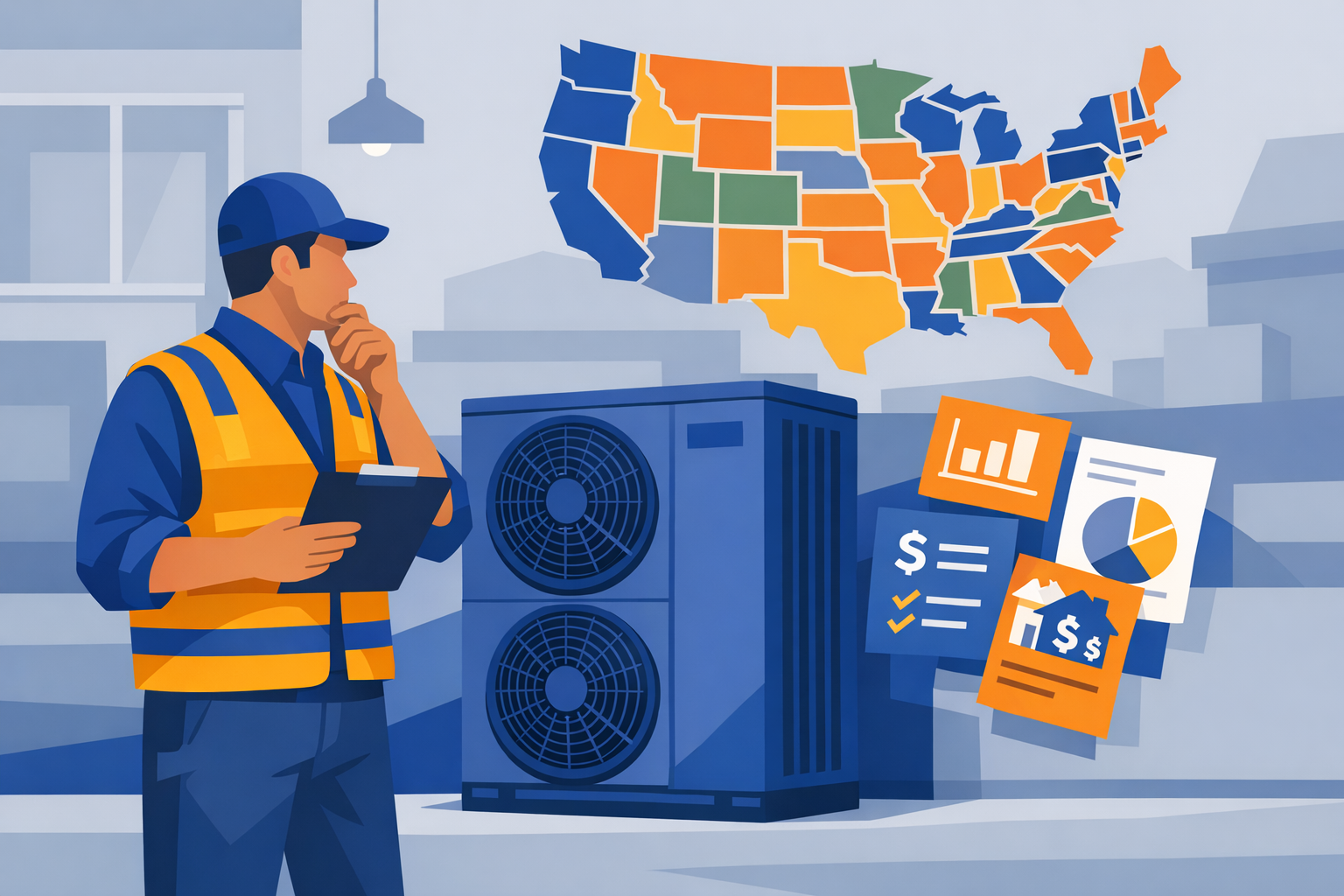
Additional reporting and usage requirements will phase in during 2027, 2028, and 2030, meaning HVAC contractors and facility managers face a rolling compliance calendar rather than a single cutover date. Several states - including California, Colorado, Washington, and New York - actively enforce HFC management regulations alongside federal requirements, adding state-level compliance scrutiny for firms operating across multiple jurisdictions. Firms that establish documented recovery workflows and reclaimer partnerships now are positioned to meet the 2029 mandatory reclaimed-use threshold without operational disruption.