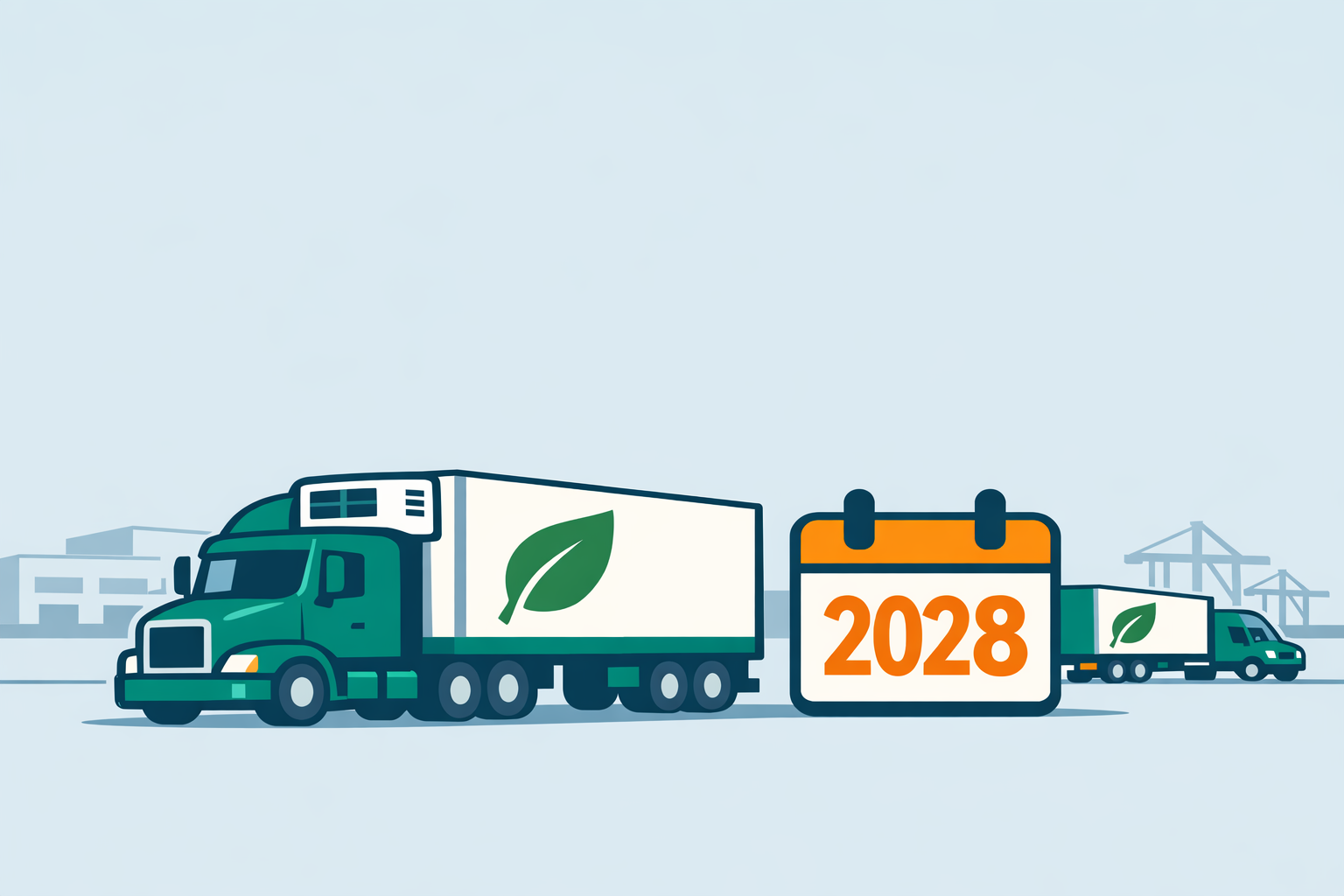
The U.S. Environmental Protection Agency (EPA) has proposed extending the compliance deadline for new transport refrigeration systems exceeding a 700 global warming potential (GWP) limit to January 1, 2028. This extension eases transition pressures for shippers, original equipment manufacturers (OEMs), and service providers. Affected systems include road-based refrigeration units using high-GWP hydrofluorocarbons (HFCs) such as R-404A and R-410B. The adjustment shifts the previously scheduled enforcement date, with potential impacts on retrofit strategies and capital planning throughout the cold chain. The proposal is part of the AIM Act's Technology Transitions Program, which aims to balance low-GWP objectives with industry readiness.
Background
The Technology Transitions Rule, under the AIM Act, limits the use of high-GWP HFCs in refrigeration by setting sector-specific GWP ceilings-usually 150 or 700-from 2025 through 2028. Transport refrigeration had earlier compliance targets, making it one of the first sectors affected. The program supports phasing down HFC use in favor of alternatives with less environmental impact.
Details
Current EPA guidance restricts installation of new transport refrigeration systems using refrigerants with a GWP over 700 after January 1, 2028. This proposal effectively extends the period in which older refrigerant systems can be installed without noncompliance.[1]
Industry analysis indicates that refrigerated transport-particularly road systems utilizing R-404A, R-410B, and other high-GWP HFCs-will benefit from the extension. The additional lead time facilitates the rollout of low-GWP refrigerants and corresponding equipment redesigns.[1]
Stakeholders across the cold chain, including intermodal reefer operators, OEMs, and service firms, can adjust capital budgets, retrofit plans, and technician training as needed. The extension also reduces risks associated with stranded inventory and underutilized assets, especially where low-GWP refrigerant supply or retrofitting capabilities are limited.
Outlook
The EPA is accepting public comment on the proposal under docket EPA-HQ-OAR-2025-0005 and expects to finalize the rule in the second quarter of 2026. Industry participants continue to monitor the regulatory process and may use available incentives or subsidies to accelerate modernization efforts ahead of the 2028 deadline.