The U.S. Environmental Protection Agency (EPA) has proposed revising compliance thresholds for transport refrigeration, while Carrier Transicold and TITAN Containers are expanding deployments of low-GWP refrigerants in container units.
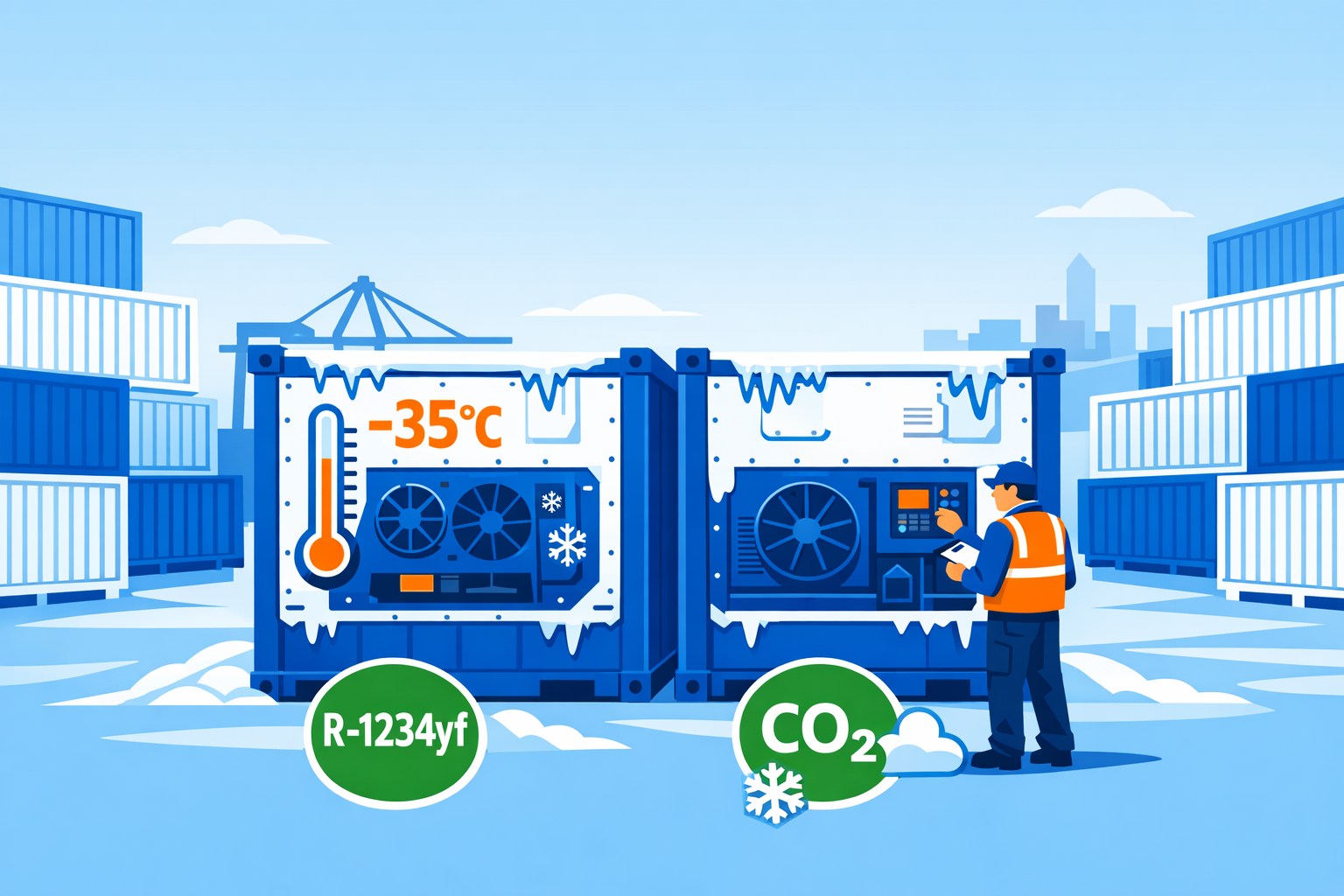
EPA's proposal would raise the lower temperature threshold for exclusions in intermodal refrigerated transport from -50 °C to -35 °C and shift the measurement point to box temperature. Units maintaining internal temperatures below -35 °C would be exempt from GWP restrictions[1]. The EPA initiated a public comment period for these changes, beginning in late 2025[2].
Carrier Transicold secured an order from TITAN Containers for OptimaLINE units charged with low-GWP R-1234yf refrigerant, alongside NaturaLINE units using natural CO₂ (R-744)[3]. Production and delivery are underway from Carrier's Singapore facility. Carrier is providing technical training to TITAN's teams in multiple countries to ensure safe operation and comprehensive maintenance[3].
Background
These actions occur during an industry-wide transition driven by the AIM Act, which mandates reductions in high-GWP refrigerants. The EPA is revisiting the 2023 Technology Transitions Rule, aiming to balance environmental goals with industry readiness by introducing adjustments to deadlines and thresholds[2].
Initially, intermodal refrigerated containers were subject to GWP limits for refrigerants in equipment operating below -50 °C. Raising the threshold to -35 °C and altering measurement criteria address industry feedback that deep-freeze transport poses technical and safety challenges for low-GWP refrigerants[1].
Carrier and TITAN's partnership supports EU F-Gas regulations for HFC phase-down and demonstrates field adoption of A2L (mildly flammable) and natural refrigerants in transportation[3].
Details
If finalized, the EPA's proposal will take effect 30 days after publication in the Federal Register, with any new or stricter AIM Act obligations set to start at least one year out[4]. The proposal allows current systems for ultra-cold applications to continue without penalty, while still encouraging adoption of low-GWP technologies.
OptimaLINE units provide triple refrigerant compatibility, allowing use of R-1234yf and other options. NaturaLINE units operate with CO₂, a non-flammable refrigerant with a GWP of 1. Carrier has invested in global technical training for safe handling and system maintenance[3].
TITAN Containers' COO stated that using low-GWP refrigerants lowers environmental impact while maintaining system performance[3].
Outlook
EPA's rulemaking will continue with further public comment and potential revisions prior to finalization. Operators transporting deep-frozen goods may benefit from relaxed thresholds but should monitor for final regulatory details.
Carrier and TITAN's actions may position them as early adopters in low-GWP transport refrigeration. Early deployment and training initiatives could provide advantages in cold-chain compliance and reliability if regulations become more stringent in the future.