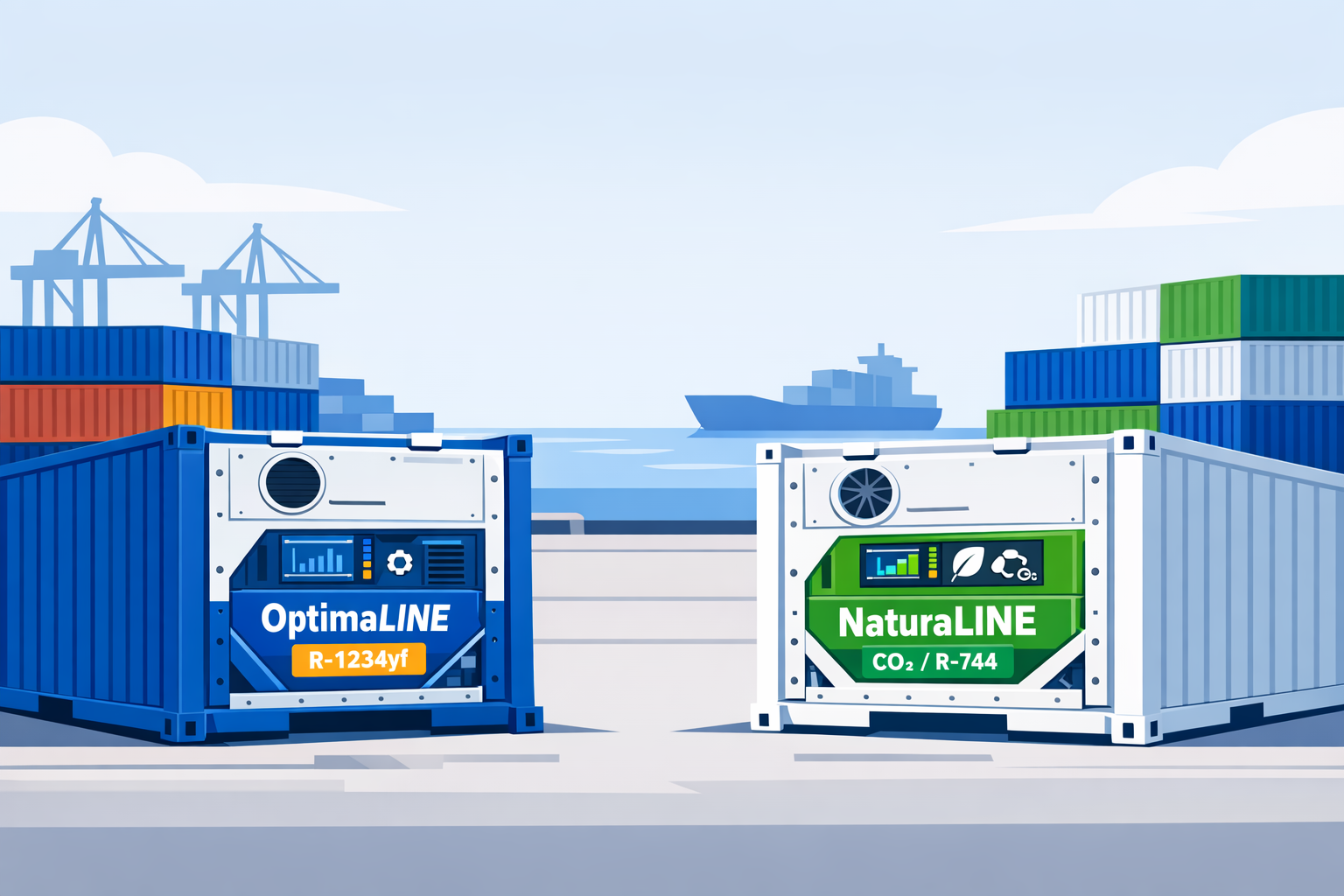
Global transport refrigeration is moving away from high-GWP refrigerants. Carrier Transicold's agreement with TITAN Containers for OptimaLINE and NaturaLINE units marks a shift, signaling that low-GWP technology is entering mainstream fleet procurement. The combination of R-1234yf (an HFO) and CO₂ (R-744) provides pathways for container operators to comply with tightening regulations while safeguarding cold-chain performance.
Key Takeaways for Cold-Chain and HVAC Professionals
- On March 10, 2026, Carrier Transicold announced an order from TITAN Containers in the Netherlands for OptimaLINE container refrigeration units factory-charged with low-GWP refrigerant R-1234yf, alongside NaturaLINE units using CO₂ (R-744).
- NaturaLINE is the first commercial container system to use CO₂, operating with a global warming potential (GWP) of 1.
- OptimaLINE's triple-refrigerant-ready architecture and factory charging with R-1234yf demonstrate scalability for low-GWP deployment beyond initial trials.
- The revised EU F-Gas Regulation (EU 2024/573) mandates climate-neutral refrigeration technology by 2050 and introduces a 150 GWP maximum for new refrigeration and freezing systems from January 2030.
- This order highlights the growing need for proficiency with A2L refrigerants, transcritical CO₂ systems, and digital reefer controls among HVACR professionals.
A New Phase in Low-GWP Transport Refrigeration
The TITAN Containers order marks an inflection point in cold-chain logistics. Previously, low-GWP refrigerants in marine containers were limited to pilot or niche applications. By integrating these units into TITAN's commercial fleet, Carrier Transicold embeds low-GWP technology as a standard in procurement decisions.
The project includes:
- OptimaLINE units factory-charged with R-1234yf and designed for triple-refrigerant compatibility
- NaturaLINE units using CO₂ (R-744) to grow TITAN's natural-refrigerant fleet
- Multi-country technical training aligning service teams with new refrigerant and safety requirements
This configuration gives TITAN operational flexibility: HFO-based A2L refrigerant (OptimaLINE) for high efficiency, and a natural refrigerant (NaturaLINE) where ultra-low emissions or natural-refrigerant alignment is preferred.
Technology Profile: OptimaLINE and NaturaLINE
OptimaLINE: Triple-Refrigerant Platform with R-1234yf
OptimaLINE is Carrier's latest platform for container refrigeration, designed for efficiency and low lifecycle emissions. It uses an HFC-134a variable-speed scroll compressor compatible with R-513A and R-1234yf.{{}}{{}}
Key features in the TITAN deployment:
Factory-charged with R-1234yf:
- OptimaLINE units for TITAN are supplied fully charged with R-1234yf from Carrier's Singapore facility, reducing commissioning time and eliminating on-site charging.
- This limits depot handling of A2L refrigerants, streamlining safety and readiness.
Triple-refrigerant readiness:
- Units built within certain model ranges can be converted from R-134a to R-513A or R-1234yf, subject to compressor compatibility and ISO 20854 for A2L refrigerants.{{}}{{}}
- Refrigerant selection becomes a lifecycle option, allowing adaptation to regulations and markets.
Efficiency and digital capability:
- Variable-speed compression and efficient heat exchangers reduce power draw, impacting generator fuel and shore power consumption.
- Integration with Carrier's Lynx Fleet and ContainerLINK supports monitoring and performance analytics.{{turn4view0}}{{turn3view0}}
OptimaLINE unifies efficiency, refrigerant compliance, and serviceability on a configurable platform adaptable to evolving rules.
NaturaLINE: CO₂ for Mainstream Container Refrigeration
NaturaLINE is Carrier's leading natural-refrigerant container platform.
Key characteristics:
Natural refrigerant, ultra-low GWP:
- NaturaLINE uses CO₂ (R-744), giving it a GWP of 1 and eliminating HFC or HFO refrigerants.{{}}{{}}
- Performance targets efficiency comparable to Carrier's PrimeLINE benchmark.{{}}
Deep-frozen capability:
- NaturaLINE maintains -40°C cargo, meeting requirements for demanding frozen food and pharmaceutical shipments.{{}}{{}}
Mature performance record:
- Deployed by global carriers including Maersk, MSC, DFDS, and others-proven viable across varied trade lanes and climates.{{}}{{}}{{}}
In TITAN's rollout, NaturaLINE expands low-GWP options for applications favoring natural refrigerants and operators experienced with CO₂ systems.
Regulatory Drivers: Why Low-GWP Matters Now
EU F-Gas Regulation and Cost Pressures
The EU's updated F-Gas Regulation (EU 2024/573) accelerates the phase-down of high-GWP refrigerants in all refrigeration sectors.
Milestones for cold-chain operators include:{{turn7view0}}
- From 2025, the EU bans refilling with virgin refrigerants above 2,500 GWP; the service limit tightens to 750 GWP from 2032.
- New refrigeration and freezing systems must use refrigerants with GWP ≤150 from January 2030; a total F-gas ban for new equipment starts in 2050.
- Several member states impose national CO₂-equivalent taxes, increasing costs for high-GWP refrigerants and favoring low-GWP options like CO₂.
For operators, this means:
- Higher risk and cost for legacy high-GWP refrigerants (e.g., R-404A, R-449A)
- Incentives to standardize natural refrigerants (CO₂, ammonia, hydrocarbons) or ultra-low-GWP HFOs
Global HFC Phase-Down
Regulatory momentum extends worldwide:
- The Montreal Protocol's Kigali Amendment targets HFCs for phasedown, aiming to avoid up to 0.5°C warming by 2100 in high-use scenarios.{{}}{{}}
- In the US, the AIM Act directs the EPA to reduce HFC production and use, encouraging adoption of low-GWP alternatives.
The TITAN-Carrier approach-R-1234yf and CO₂-aligns with long-term regulatory trends, minimizing future ban or obsolescence risk.
Comparative View: Legacy HFC vs. R-1234yf vs. CO₂
| Attribute | Legacy HFC Reefer (R-404A) | OptimaLINE (R-1234yf) | NaturaLINE (CO₂/R-744) |
|---|---|---|---|
| Typical GWP | ≈3,922 for R-404A | <1 for R-1234yf | 1 for CO₂ |
| Refrigerant family | HFC blend | HFO (A2L) in HFC-134a-based platform | Natural refrigerant (CO₂) |
| Safety class | A1 (non-flammable) | A2L (lower flammability) | A1 (non-flammable, high pressure) |
| EU regulatory headroom | Shrinking (GWP >2,500 and service bans) | Ultra-low GWP compliant | Fully compatible with natural-refrigerant strategies |
| Direct leak impact | High | Very low | Negligible vs. baseline |
| System complexity | Conventional | Similar, with A2L adjustments | Transcritical, higher pressure |
Data reflects EU F-Gas reference tables and refrigerant manufacturers' documentation.{{}}{{}}{{}}{{}}
The table underscores why container OEMs are transitioning to R-1234yf and CO₂, even as mixed fleets with R-134a and blends persist.
Cold-Chain Performance, Safety, and Service Implications
Temperature Stability and Product Quality
Container refrigeration demands fast pull-down, stable setpoints, and reliable operation in high ambient conditions.
- NaturaLINE uses multi-stage compression and variable-speed drives to sustain capacity in warm climates during transcritical operation.{{}}
- OptimaLINE features variable-speed scroll compression and digital control for closer load matching and reduced cycling.
These measures limit temperature excursions during long transport, supporting product quality and shelf life.
Safety, Training, and Diagnostics
Each refrigerant path entails specific training needs.
R-1234yf (A2L):
- R-1234yf has GWP <1, versus 1,430-1,500 for R-134a.{{}}{{}}
- Lower flammability requires compliance with leak detection, ventilation, and electrical standards, including ISO 20854 for A2Ls.{{}}
CO₂ (R-744):
- Operates at higher pressures; charging, recovery, and component changes must follow strict procedures.
- Pressure-relief and system design limits are essential for safety.
Carrier's deployment included:
- Specialized technical training for TITAN teams on R-1234yf and CO₂ systems.{{turn4view0}}
- Established tools (TechLINE Academy, ContainerLINK, service procedures) to standardize field practices.{{turn4view0}}{{turn3view0}}
A2L and CO₂ competence is fast becoming essential for work on container fleets and intermodal infrastructures.
Economics and Fleet Strategy: From Pilots to Portfolio Decisions
Total Cost of Ownership Factors
Adopting low-GWP refrigerants impacts cost structure in several ways:
Refrigerant cost and taxation:
- High-GWP fluids (e.g., R-404A) incur higher costs, especially where CO₂-equivalent taxes apply.{{turn7view0}}
- Using R-1234yf and CO₂ avoids top tax rates, aiding long-term OPEX predictability.
Energy consumption:
- OptimaLINE and NaturaLINE target high efficiency, lowering generator fuel or depot electricity use.
- Incremental efficiency gains translate into significant fleet-wide savings.
Service and downtime:
- Factory charging with R-1234yf reduces the need for specialized charging infrastructure and shortens installation.
- Standardized training and diagnostics improve service quality and reduce errors.
Strategic Refrigerant Mix
For operators serving multiple markets, mixed refrigerant technologies are a likely outcome:
- NaturaLINE for routes or customers prioritizing natural refrigerants or strict sustainability metrics
- OptimaLINE (R-1234yf-based) where A2L handling is feasible, or future conversion flexibility is desired
HVAC professionals will assess and specify optimized mixes, not single-refrigerant solutions, balancing multiple drivers.
Implications for HVAC and Refrigeration Professionals
The Carrier-TITAN initiative signals several developments for the broader SHK community.
Skill Requirements
- Growing demand for certification or demonstrated ability in:
- A2L refrigerant handling (R-1234yf and similar)
- High-pressure CO₂ systems and transcritical operation
- Advanced controller diagnostics (e.g., Micro-Link 5, Lynx Fleet, ContainerLINK)
- Familiarity with both mobile and stationary CO₂ systems is advantageous as deployment expands.
Design and Integration
Designers and engineers of port infrastructure and logistics facilities must:
- Plan for diverse refrigerants at reefer plug-in points, ensuring safety zoning and ventilation are compatible with A2Ls.
- Include IT/OT and telematics integration for comprehensive cold-chain monitoring.
- Coordinate with operators to avoid facility limitations that restrict low-GWP technology use.
Procurement and Policy Alignment
Facility owners and procurement teams increasingly encounter:
- Tender requirements for GWP compliance
- Corporate ESG metrics tracking direct and indirect cold-chain emissions
The Carrier-TITAN approach enables GWP compliance at the equipment level, creating new leverage for emissions goals without immediate plant-level overhauls.
Actionable Conclusions and Next Steps
TITAN Containers' rollout demonstrates that low-GWP transport refrigeration is now mainstream. Recommended steps for professionals:
- Map refrigerant use: Identify where high-GWP gases (e.g., R-404A, blends) remain in operations and measure CO₂-equivalent exposure.R-404A, historically common in transport refrigeration, has a GWP around 3,922 (100-year basis).{{}}
- Prioritize training: Equip teams for A2L and CO₂ standards, leak response, and procedures.
- Align with EU F-Gas milestones: Integrate 2025, 2030, 2032, and 2050 compliance dates into asset management.
- Plan data integration: Specify reefer hardware compatible with fleet data platforms for performance and compliance reporting.
- Engage suppliers early: Consult OEMs and lessors on low-GWP container options and retrofit pathways.
Carrier Transicold and TITAN Containers show that technical and commercial barriers to scalable low-GWP refrigeration have receded. Execution now depends on skills, proactive planning, and systems integration by SHK professionals.
Frequently Asked Questions
How does OptimaLINE differ from earlier units?
OptimaLINE upgrades traditional HFC-134a technology with a variable-speed scroll compressor and high-efficiency exchangers for improved energy use. It is compatible with R-134a, R-513A, and R-1234yf, subject to model and standard compliance.{{}}{{}}{{}} OptimaLINE units in the TITAN order are factory-filled with R-1234yf, providing immediate low-GWP compliance.{{turn4view0}}
Why are R-1234yf and CO₂ considered low-GWP?
R-1234yf is an HFO with a GWP below 1 (per EU F-Gas tables), compared to 1,430-1,500 for R-134a.{{}}{{}}{{}} CO₂ (R-744) has a baseline GWP of 1 and, in the NaturaLINE design, is recycled industrially, so refrigerant leakage does not increase net warming.{{}}{{}}
What does NaturaLINE's -40°C range change for operations?
It allows natural-refrigerant containers to carry demanding deep-frozen cargoes (e.g., premium frozen desserts, high-value seafood) previously requiring HFC systems.{{}}{{}} Operators can now offer ultra-low-GWP solutions across more sensitive cargo profiles.
How does the TITAN project impact retrofit strategies?
The project demonstrates parallel paths: newbuilds equipped with R-1234yf OptimaLINE and CO₂ NaturaLINE units. Existing HFC-134a fleet may be upgradable to R-513A or R-1234yf where the platform and standards allow.{{}}{{}} Conversion feasibility depends on equipment age, model, and certification-future-ready platforms are easier to adapt.
Which technical skills are now priorities for technicians?
- Structured A2L refrigerant training (R-1234yf), addressing flammability, leak detection, and ventilation
- Hands-on experience with high-pressure CO₂ systems
- Familiarity with OEM digital diagnostics (Micro-Link, Lynx Fleet, ContainerLINK)
These skills directly support technologies in the TITAN-Carrier rollout and will be required across the expanding low-GWP refrigeration landscape.