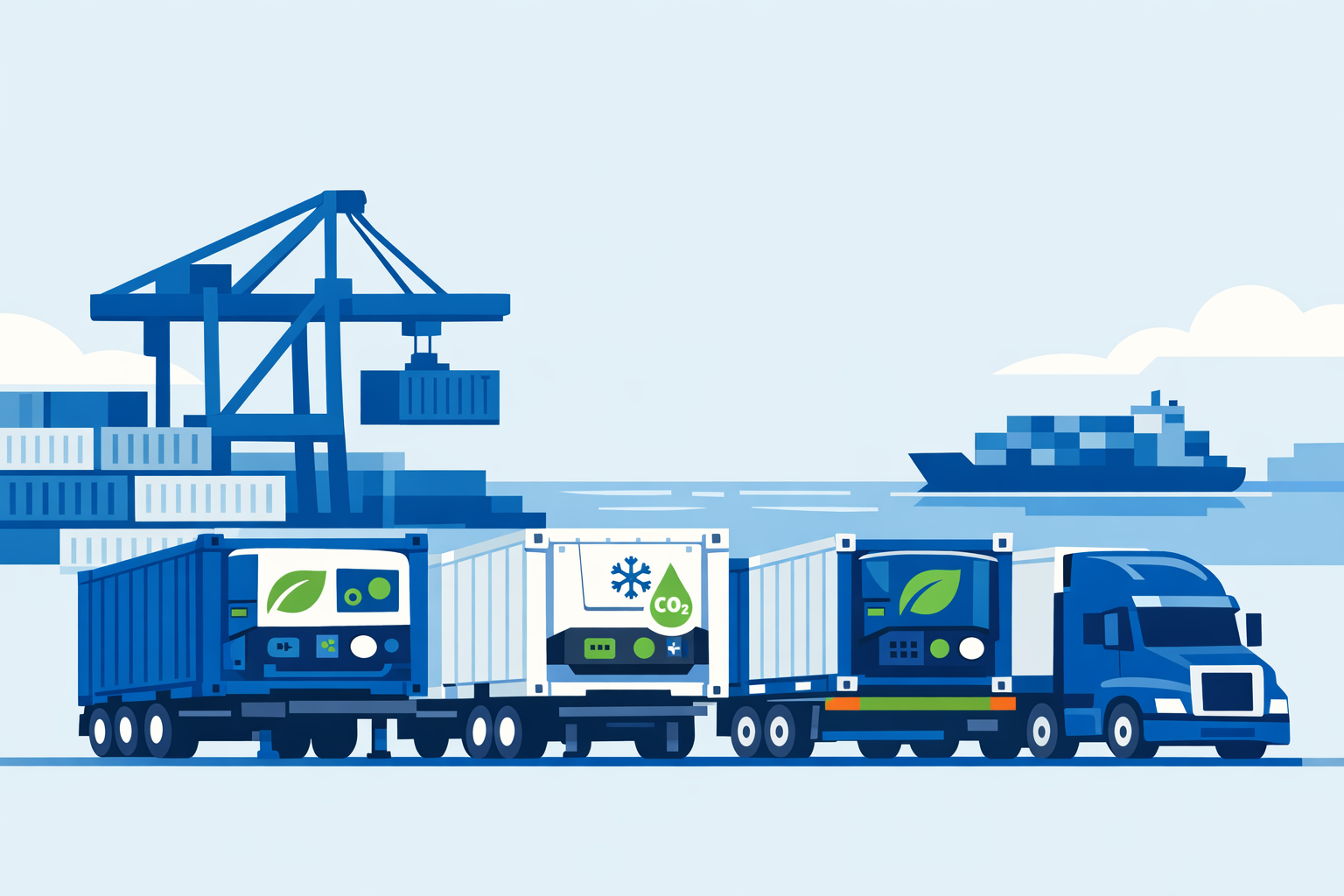
Carrier Transicold, a division of Carrier Global, has received an order from Netherlands-based TITAN Containers for OptimaLINE units pre-charged with low-GWP refrigerant R-1234yf and NaturaLINE units using CO₂ (R-744) as a natural refrigerant. The units will be delivered from Carrier's Singapore facility, supporting rapid on-site deployment and compliance with ISO and A2L safety standards. Carrier will provide technical training for TITAN personnel across multiple countries, covering the safe operation and maintenance of these low-GWP systems. OptimaLINE units operate with non-fluorinated R-1234yf, while NaturaLINE uses CO₂, which has a GWP of 1. Lukas Bentsson, COO of TITAN Containers, stated that this initiative aligns with tightening environmental regulations and supports emissions reduction while maintaining operational performance. Fully charged units will reduce onsite installation time and labor requirements. (Carrier Transicold; Container News)
Background
Adoption of low-GWP refrigerants has accelerated due to the EU F-Gas Regulation and U.S. requirements mandating that new transport refrigeration equipment use refrigerants with GWP below 700 from 2025. R-1234yf offers a GWP of approximately 0.5, in contrast to R-134a's ~1,430, with CO₂ (R-744) at a GWP of 1. Regulatory mandates and corporate sustainability targets are driving the transition to natural and ultra-low-GWP refrigerant alternatives. (TITAN sustainability report; pv magazine; Carrier sustainability report)
Details
OptimaLINE's triple-refrigerant capability provides operational flexibility, with units shipped fully charged with R-1234yf to reduce on-site refrigerant handling and accelerate commissioning. NaturaLINE with CO₂ delivers ultra-low GWP performance, approaching climate neutrality regarding refrigerant impact. Carrier's technical training program addresses full lifecycle safety, regulatory compliance, and maintenance of both R-1234yf and CO₂ systems. (Carrier Transicold press release; Container News)
TITAN Containers is advancing its sustainability strategy by transitioning its entire fleet from high-GWP to low-GWP refrigerants, starting in 2025 and aiming for completion by 2040. TITAN's 2024 Sustainability Report outlines this plan and targets extending container service life to 50 years. (TITAN Sustainability Report 2024)
Industry-wide, refrigerated container availability remains tight amid growing demand, extended lead times, and high energy costs. Adoption of low-GWP, energy-efficient systems is key to managing lifecycle costs and improving cold chain reliability. (Arcon container market update)
Outlook
Broader deployment of low-GWP intermodal reefers could influence cold-chain logistics, including routing, maintenance, and cost structures. Increased system reliability and carbon footprint reductions are anticipated, contingent upon effective training and spare-parts support for new refrigerant systems. Expansion is expected to proceed through 2026 and beyond, depending on regulatory coherence and supply-chain capacity.