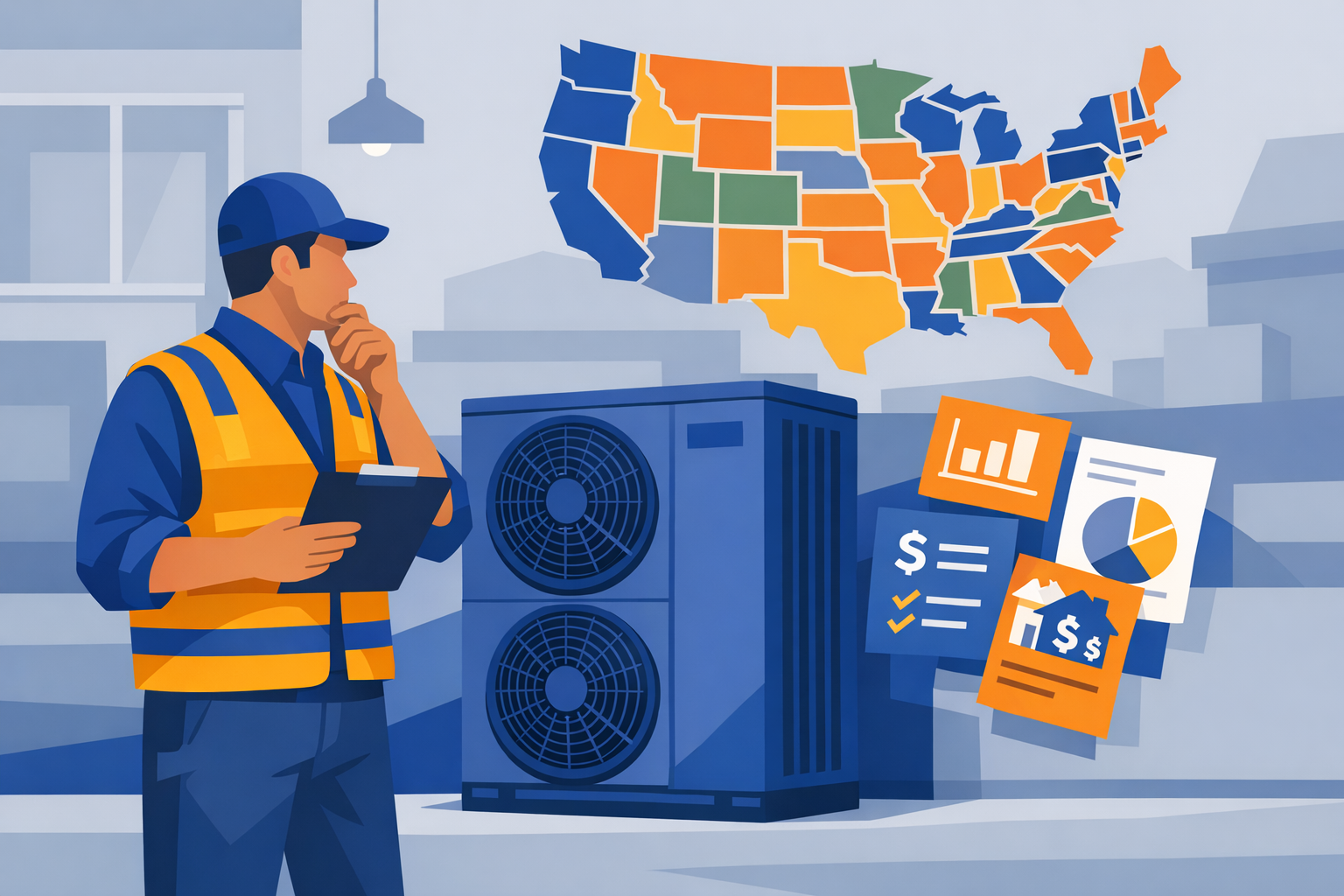
HVAC distributors across the United States are restructuring refrigerant inventory strategies and adjusting pricing models as the mandated transition to R-454B accelerates, exposing supply chain vulnerabilities that reverberate through installation, maintenance, and retrofit operations.
Background
The EPA's American Innovation and Manufacturing (AIM) Act of 2020 directed the agency to phase down hydrofluorocarbon (HFC) refrigerants to 15 percent of their historic baseline levels by 2036. Under the AIM Act's Technology Transitions Rule, manufacturing and importing of new residential and light commercial air conditioning and heat pump systems using refrigerants with a Global Warming Potential (GWP) above 700 was prohibited beginning January 1, 2025. R-454B - a blend of R-32 and R-1234yf classified as A2L (mildly flammable) - carries a GWP of 466, approximately 78% lower than R-410A's 2,088, making it the primary successor refrigerant for new residential equipment from major OEMs including Carrier, Trane, and Lennox. Higher-GWP equipment manufactured before January 1, 2025, was permitted to be installed through January 1, 2026.
The EPA further signaled regulatory flexibility in late December 2025, stating it would not prioritize enforcement of the installation ban while the deadline remains under review. The announcement offered short-term relief to distributors still holding legacy R-410A inventory.
Details
The physical transition from R-410A to R-454B has been anything but linear for distributors. According to Pat Newland, vice president of business development at Hercules Industries in Denver, distributors were forced to stock up on R-410A in the first half of 2025 due to very limited R-454B production, only to find R-454B became abundant in the latter half of the year - leaving large amounts of R-410A inventory stranded and effectively obsolete. David Holt, general manager of HVAC Distributor University, described the period as "compressed change," noting that distributors were simultaneously contending with regulatory shifts, supply chain constraints, pricing volatility, and customer uncertainty.
On the supply side, the core bottleneck has not been the refrigerant chemistry itself but the availability of DOT-approved A2L-rated cylinders required to store and transport it. Pandemic-era steel shortages, followed by new fire-testing requirements, cut cylinder production capacity, while simultaneously every OEM shifted spring 2025 builds to R-454B - creating a waiting list of up to 90 days in high-demand summer markets. Some distributors, including Gustave A. Larson Co., responded by rationing R-454B supply and tying cylinder sales to full system purchases, effectively squeezing smaller contractors out of standalone refrigerant procurement.
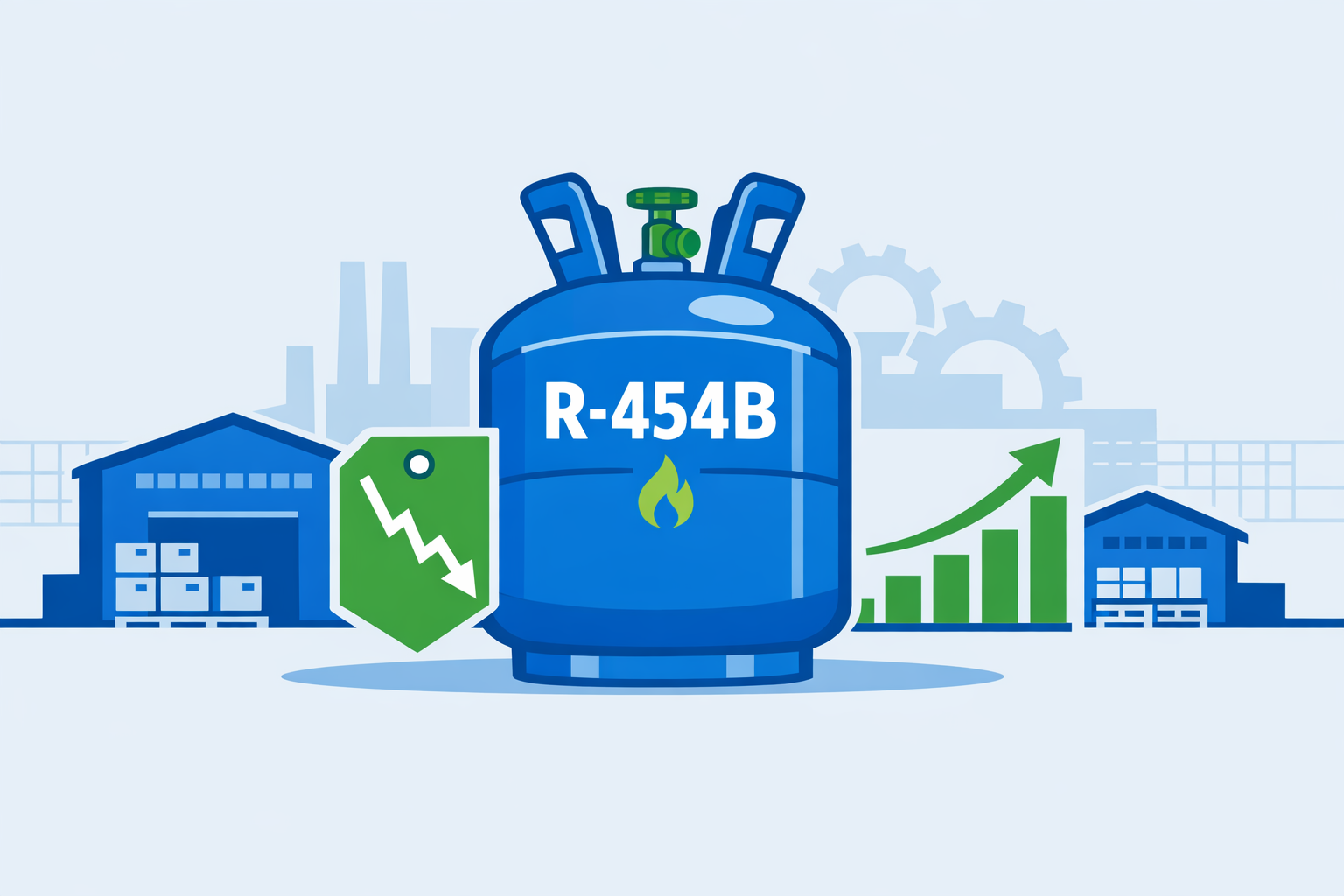
Pricing consequences have been severe. Honeywell, a major R-454B manufacturer, announced a $4/lb price increase on new orders as of April 9, 2025, accompanied by a 42% surcharge, citing "unprecedented demand" that domestic production alone cannot meet. The company also disclosed plans to source a portion of supply from international markets, exposing it to tariffs imposed by the Trump administration. Chemours separately raised prices by $2.85 per pound. The combined effect has pushed R-454B 20-pound cylinder prices from approximately $345 in 2021 to a range of $650 to over $2,000 in 2025.
At the equipment level, systems using R-454B are now priced 10-20% above their R-410A predecessors, with distributors passing costs to contractors and end users, particularly for premium 2-5 ton split systems. According to wholesaler reporting cited by HARDI, price hikes are expected to continue through the third quarter of 2025, especially for multi-zone and high-efficiency configurations. In January 2025, Lennox announced a 10% price increase on its new R-454B residential products, while Bosch implemented price adjustments of up to 10% on select HVAC products effective April 1, 2025.
OEM earnings data confirms the pricing environment. Lennox International reported that approximately 50% of its equipment sales in Q1 2025 were new R-454B products, with revenue up 7%, driven by positive product mix. Carrier Global CEO David Gitlin noted that about 75% of its residential refrigerant mix in Q1 2025 was R-454B, with R-454B units carrying approximately 10% higher pricing than R-410A equivalents. Trane Technologies disclosed that approximately 80% of residential sales in Q1 2025 were R-454B products and that 100% of current shipments are R-454B equipment.
For service fleets managing existing R-410A installations, downstream pressure is building separately. R-410A wholesale spot prices moved from $8-$12 per pound to $25-$45 per pound in some markets within 18 months of the phase-out taking effect, increasing the cost of routine maintenance and leak-repair top-offs on legacy systems. A2L-rated service equipment - including new recovery machines and leak detectors - represents an additional capital outlay for technicians transitioning their toolkits.
Outlook
According to a HARDI report, over 70% of HVAC distributors had restructured inventory strategy since Q3 2024, shifting from just-in-time procurement to forward-buy and stockpiling approaches. The EPA is still reviewing the January 2026 installation deadline for pre-2025 R-410A equipment, and a final determination is not expected in the near term. The dual-inventory challenge for distributors will therefore persist into 2026. New R-454B production capacity is in development, but industry observers note that ramp-up timelines for A2L-rated filling infrastructure remain a constraint on meaningful supply normalization.