A convergence of federal tax credits, state grant programs, and real-world performance data is accelerating the deployment of geothermal heat pump (GHP) systems in rural K-12 school districts across the United States, displacing fossil-fuel heating infrastructure and reshaping local HVAC service markets.
Background
The Inflation Reduction Act (IRA) of 2022 introduced a direct-pay - or elective-pay - mechanism that for the first time allowed tax-exempt public entities such as school districts to receive a cash payment from the IRS equal to the value of clean energy investment tax credits, potentially as high as 30% of eligible project costs. Prior to this provision, non-taxpaying entities such as public schools could not directly access federal investment tax credits, limiting their ability to finance geothermal retrofits without third-party financing arrangements.
GHP systems qualify for the Section 48 Investment Tax Credit, which remains in force through 2032 under modifications introduced by the One Big Beautiful Bill Act (OBBB), signed into law on July 4, 2025. Unlike solar and wind credits - which face accelerated phaseouts and foreign-entity-of-concern restrictions under the OBBB - geothermal heat pump credits are not subject to the new foreign-entity restrictions, according to tax advisors reviewing the legislation. For school projects under 1 megawatt - covering virtually all campus-scale GHP installations - the full 30% credit applies automatically without requiring prevailing wage or domestic content compliance.
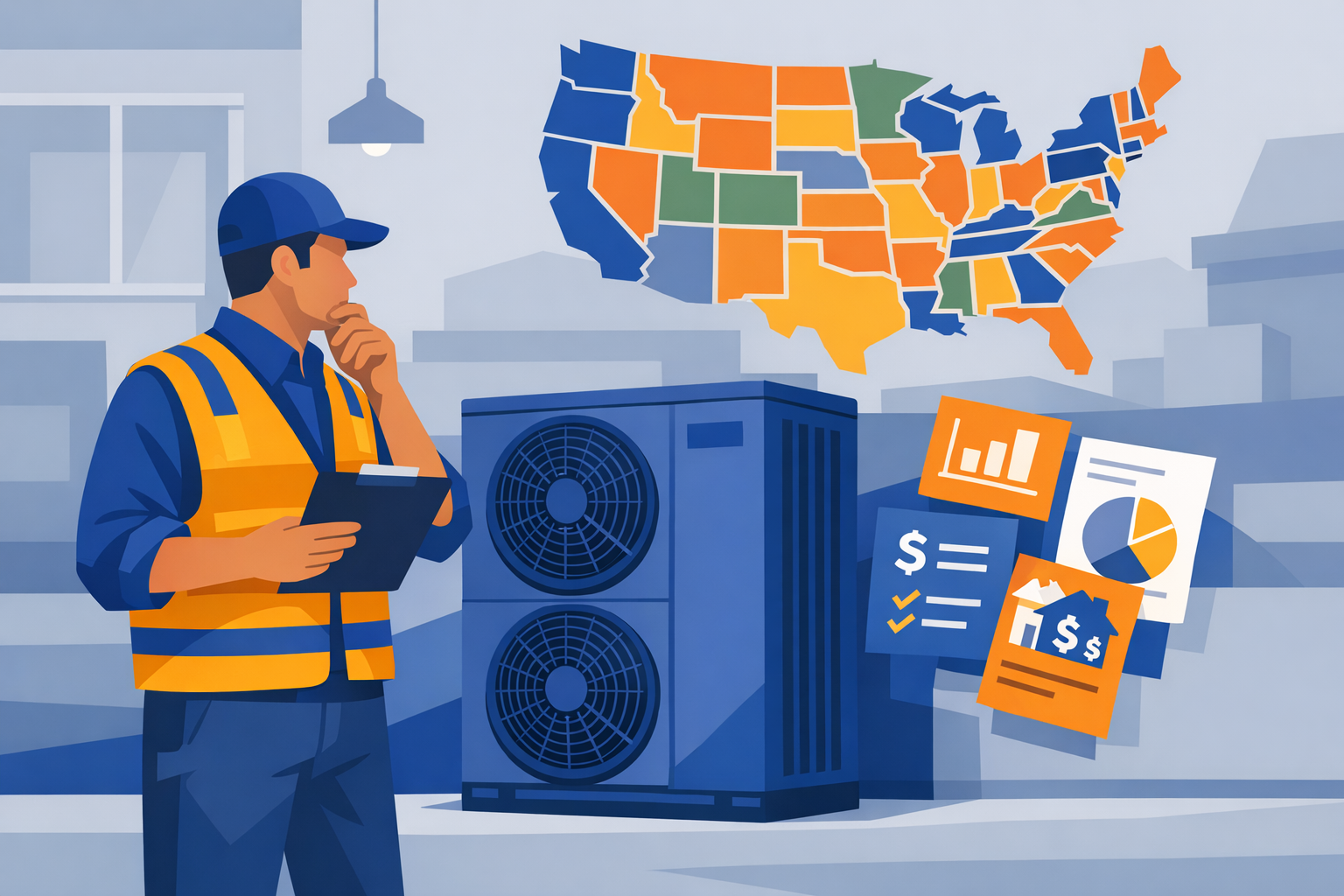
At the state level, dedicated programs are compounding federal incentives. Minnesota's Department of Commerce offers geothermal planning grants of up to $150,000 to public entities, covering test well drilling, geological assessment, and financial analysis. Colorado has distributed more than $23 million in geothermal incentives to communities statewide, spurred by Governor Jared Polis's "Heat Beneath Our Feet" initiative and a series of statehouse bills passed between 2022 and 2023. In August 2024, Dorchester County Public Schools in Maryland received a $1.6 million award from the Maryland Energy Administration's Decarbonizing Public Schools program.
Installation Details and Documented Performance
Documented results from districts that completed installations ahead of the current funding wave illustrate why rural administrators are moving forward. Berkeley County School District in West Virginia upgraded 10 schools to GHP systems, drilling approximately 27 miles of boreholes across 400 wells and reporting a 75% reduction in energy use across those buildings. All 10 schools were retrofitted over two summer breaks to avoid disrupting the school calendar, according to the U.S. Department of Energy.
Seattle Public Schools, which began installing GHP systems in 2006, has completed upgrades in 15 schools, eliminating gas-fired boiler systems in each building and achieving energy use intensity reductions of 30%-77%. The district now targets two to three geothermal retrofits per year, according to DOE case study documentation.
More recently, Aspen School District received a $5 million funding award for a geothermal heat pump project, with total costs anticipated at $20 million to $35 million and further supported by a 30%-40% federal tax credit and a district-wide bond measure passed by voters in 2025. The district's Director of Operations stated the grant would fund the design phase, with drilling expected no earlier than spring 2027.
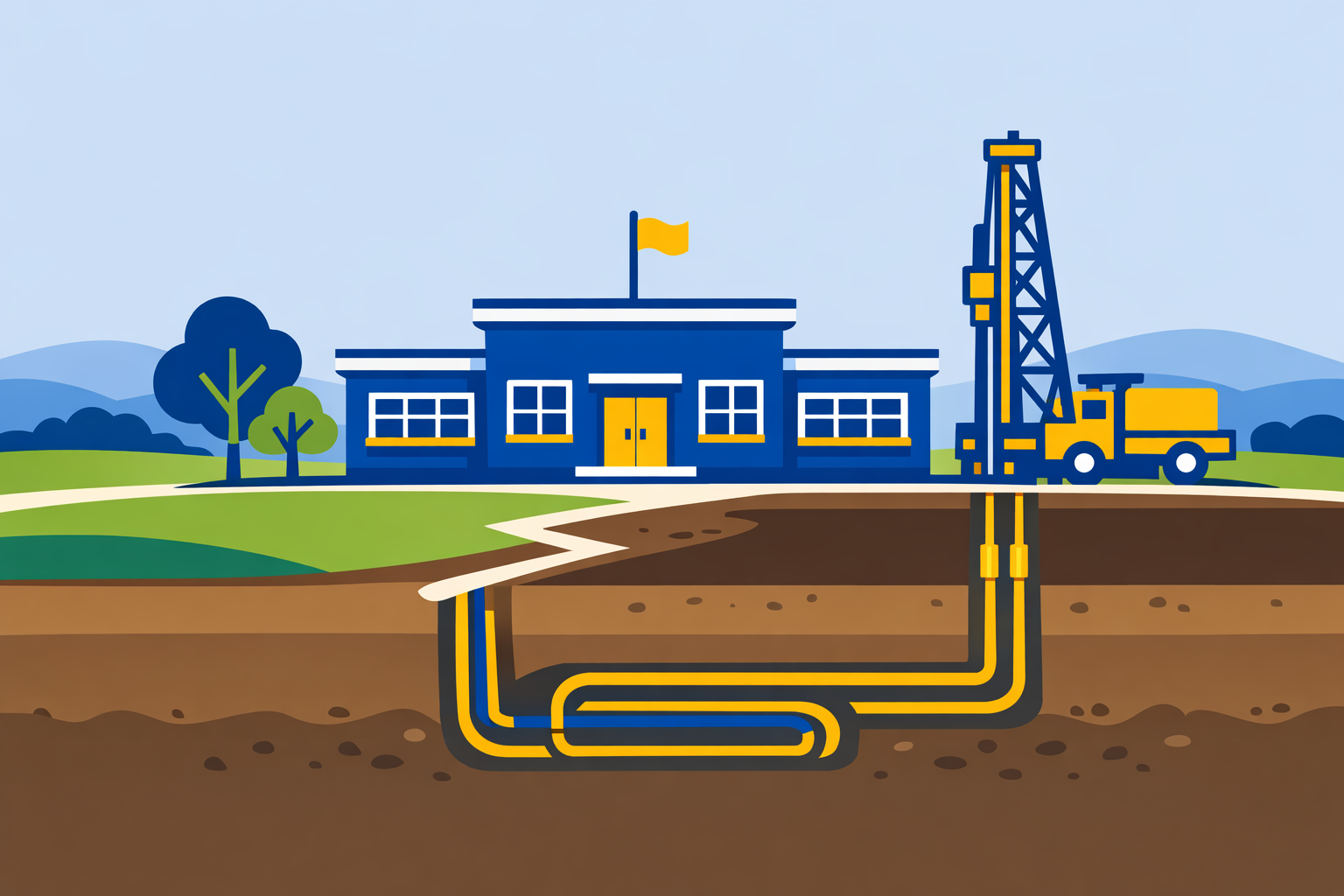
Ann Arbor Public Schools activated full geothermal systems at Forsythe and Clague Middle Schools in 2025, with both projects anticipated to receive direct-pay tax credits under the IRA's elective-pay mechanism. Large-scale campus GHP systems require vertical closed-loop boreholes often hundreds of feet deep to meet the thermal capacity demands of multi-building applications, according to project engineers quoted in district communications.
The stacked funding model is attracting construction firms to K-12 geothermal work. In early 2024, construction firm Kraus-Anderson was actively working with 10 project teams to pursue IRA federal funding opportunities, with expected project awards ranging from $400,000 to over $12 million each.
Workforce and Supply Chain Constraints
The pace of new GHP project commissioning is exposing structural constraints in the installer and driller workforce. According to analysis cited by the Geothermal Drillers Association, the DOE's GHP deployment pathway to 80 million homes by 2050 would require 21,000 two- to three-person drill crews producing 600 boreholes per drill rig per year. Geothermal drillers currently require two to three years of training, and the industry has historically sourced skilled workers from oil, gas, and water well drilling sectors.
Geothermal heat pump systems account for only approximately 1% of U.S. heating and cooling installations, despite significantly higher coefficients of performance compared to air-source heat pumps. Industry organizations including the International Ground Source Heat Pump Association (IGSHPA) are responding with modular training programs to certify a wider pool of field technicians more efficiently, according to reporting from The Driller trade publication.
For rural districts, the challenge extends beyond drilling crews. Project timelines hinge on geological feasibility studies and test well results before full borefield designs can be finalized, adding six to nine months to pre-construction phases. Districts must also structure long-term operations and maintenance contracts for GHP infrastructure with which local service providers may have limited experience. GHP systems use 25%-50% less electricity than conventional heating and cooling systems, according to the Geothermal Rising Conference technical program, which increases operational savings over the system's life but requires technicians trained in ground-loop diagnostics rather than combustion equipment.
Outlook
The OBBB's preservation of the Section 48 GHP credit through 2032 provides a longer planning horizon for rural districts navigating multi-year project timelines. Tax and legal advisors recommend that districts begin IRS pre-filing registration and feasibility assessments now, given that the window to combine planning grants with full federal credit values is time-limited. Workforce training bottlenecks and a continued shortage of experienced geothermal drillers in rural markets remain the primary operational constraints on scaling deployments beyond early-mover districts.